
Vox Populi
A curated webspace for Poetry, Politics, and Nature with over 6,000,000 visitors since 2014 and over 9,000 archived posts.
Wayne Hsiung: The 10,000-Year Famine
We had no idea how long she had been trapped. The piglet’s hips and back legs were jammed through a gap in the bars and hanging outside the cage. She was skeletal, perhaps half the size of the others, and had the delirious look of a being defeated by starvation. It took me a moment to confirm that she was not dead.
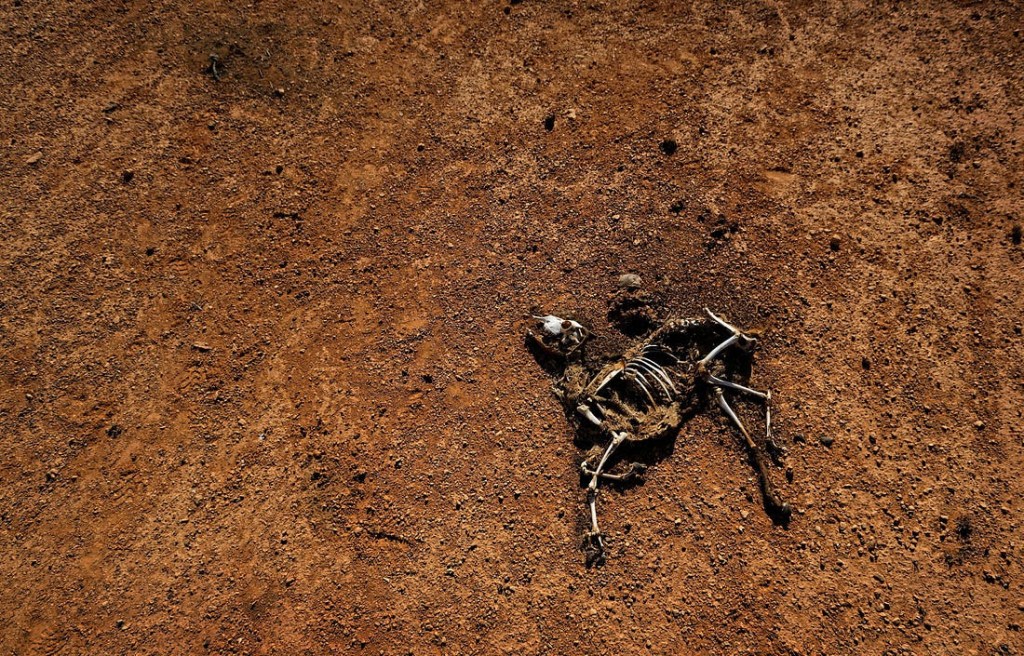
The world is rightly talking about the hunger in Gaza. Last week, a panel of experts in food insecurity declared that the region is officially suffering from famine. But for those of us who are close to the suffering of animals, starvation is a recurring image that has been unfolding endlessly for decades. It is so common in factory farms – hundreds of millions of animals die every year because they are too sick or weak to reach food and water – that there is a complex named for it. And there are similar stories from habitats across the planet. Wild mammals have been erased from the planet by Homo sapiens and our livestock, and famine has been one of our principal weapons in this one-sided war. One study found that 71% of endangered koala bears have died from starvation caused by human development. We burned down their eucalyptus trees to make room for our cattle ranches; now, their families starve.
There is a one-sentence story that an extraterrestrial visitor might tell about our species: For 10,000 years, they have starved the animals of Earth and replaced them with livestock in cages.

If you are shocked by these facts, then you are not alone. Too often, even the most extreme suffering of other beings is ignored by the core stories we tell about ourselves or our species. Not many humans will have heard the extraterrestrial’s story of the 10,000-year famine, despite major corporations openly admitting that large percentages of animals in their care – at least 43% of total mortality in one study – are dying from being “emaciated” or “dehydrated.”
Similarly, not many Israelis have heard the story of starvation in Palestine. The Israeli journalist Emmanuelle Elbaz-Phelps notes that the drumbeat of Gaza coverage in Israel is almost completely lacking any stories about, well, the actual people of Gaza. In Israeli media, she explains, “you would see Gaza only when you would see destruction from above, kind of to show how IDF is winning. But you wouldn’t see anything that is really human.”
This failure of storytelling leads to calamity. The philosopher Hannah Arendt, in her studies of atrocities, notes that they are typically the result of inattention rather than malice. Adolf Eichmann, one of the chief architects of the Holocaust, barely mentions animosity for Jews in his notes on the Final Solution; in fact, he barely mentions Jews at all. When our core story leaves out important characters – those devastated by unfolding events – then atrocity can be the result.
So how does one go about changing these stories? It was not until the last few years that I realized that “changing our storytelling” is, fundamentally, the province of theology. The Protestant theologian Serene Jones describes theology as “[f]inding your core stories and then reflecting on their greater significance.” Indeed, religion and theology are the most powerful narrative devices in human history.
And right now, our theology is taking a dark turn. At home, Vice President JD Vance has cited Christian theology to justify mass deportations. “Your compassion belongs, first, to your fellow citizens.” Abroad, the Israeli Prime Minister Benjamin Netanyahu asked his soldiers to “remember what Amalek has done to you. It was an apparent reference to a biblical genocide where God commanded his people to “destroy all that belongs to [the Amalekites]. Do not spare them; put to death men and women, children and infants, cattle and sheep, camels and donkeys.” Theology of this sort – call it dark theology – casts a fog over our moral vision and blinds us to the interests of those around us.

If dark theology is the disease, then bright theology is the cure. The Christian theologian Claudio Carvalhaes tells the story of a God who praises his followers for feeding him when he was hungry. When his followers react with surprise, saying that they never saw him hungry, God responds, “Truly I tell you, whatever you did for one of the least of these brothers and sisters of mine, you did for me.” The Sikh writer and professor Simran Jeet Singh tells the story of a congregation in Wisconsin that responded to an attack by a mass shooter, not with Amalekian vengeance, but with the Sikh concept of chardi kala, i.e., grace and hope even in the face of suffering. Indeed, aspects of all the major theologies of our world challenge their practitioners to look beyond self-interest to greater purpose. And what greater purpose could there be – what greater story – than that of a protagonist who changes from destroyer to caretaker. It is the moral of every fairy tale or superhero story.
Then why hasn’t bright theology replaced the dark? There are many possible explanations. But one remains stuck in my mind: our attempts at bright theology are simply too dark. Advocates who are trying to fight dark theology tell stories of starvation and violence to bring our audience to the light. But we cannot cast out darkness with darkness. Stories of atrocity do not inspire people to engage or act, but to close their eyes and turn away. (Animal rights activists know this well.) To the contrary, to fight darkness, you need light. It is only when a child is saved, or a piglet is rescued, that people are drawn to the cause. We should tell these stories more.
I wish I had understood this when I witnessed the piglet trapped in a cage at a factory farm. We left her to die on that day, believing that the best we could do was “tell her story.” I should have considered another possibility: nurse her back to life, then tell an even brighter story. (When we have done that, we have unlocked immense power to create change.)
I wish advocates for the children of Gaza understood this. They focus so much attention on the horror of famine. But what of rescue? Why should the world believe that the children of Gaza can be saved when advocates don’t believe it ourselves? “The children of Gaza will be saved.” This, and not stories of suffering, should be our North Star.
But it’s not too late. There is time for new stories. We do not have to bomb the children of Gaza. We can feed them. We do not have to starve the koala bears and other animals of this earth. We can save them.

The 10,000-year famine will end. We just need to find the core stories – the bright theology – that light the path to that destination.

Wayne Hsiung is an American activist and attorney. Hsiung is a co-founder of The Simple Heart Initiative and previously led the animal rights group Direct Action Everywhere (DxE), which he also co-founded. During his time as a lawyer, he worked with the law firms DLA Piper and Steptoe & Johnson, was a Searle Fellow and visiting assistant professor at the Northwestern University School of Law, and a National Science Foundation-funded graduate student at the Massachusetts Institute of Technology. Hsiung ran for mayor of Berkeley, California, in 2020, largely focused on the issue of animal rights, and earned 24% of the vote, defeated by incumbent Jesse Arreguin.
Hsiung was incarcerated in November 2023 after being convicted of felony trespassing for his role in an open rescue of sick and dying chickens from Sunrise Farms in 2018. Prior to this trial, Hsiung had been found guilty of two felonies; in other jurisdictions he has faced charges of up to 60 years in prison. In the most serious case, Hsiung was offered resolution that involved no prison time, on the condition that he refrain from criticizing the company he had investigated, Smithfield Foods; he and co-defendant Paul Picklesimer refused the offer and were acquitted after trial in October 2022.
~
A note from Wayne Hsiung:
Are you interested in the ideas in this article? And are you in New York City? I just arrived at seminary in NYC and plan to start organizing. Reach out if you’re local and interested in getting involved — especially if you have special talents or commitment!
First published in The Simple Heart, a reader-supported publication. To receive new posts and support my work, click here to become a free or paid subscriber.
Discover more from Vox Populi
Subscribe to get the latest posts sent to your email.

What a grim and honest article, on so many levels. “Too often, even the most extreme suffering of other beings is ignored by the core stories we tell about ourselves or our species.”
LikeLiked by 2 people
Our interactions when speaking truth to power need a brightness, rather than just darkness-infused mudslinging. But yesterday I read some poems by Lucille Clifton. She crafted stories of bright and dark hues. Both types moved me, but not enough to change my behavior. I fed my random squirrels, as usual. They know where the peanuts are. But I also fantasized over the glorious taste of bacon. Our appetites have stories of their own, hard to turn into candles of truth and beauty. But Hsiung knows the importance of making a start.
Thanks for this thoughtful theological essay. Best wishes to brightness- bringer Wayne Hsiung, as he organizes stories of light at the NYC seminary. And best wishes to all the citizens of this Earth.
LikeLiked by 2 people
Thanks, Jim. I think Wayne Hsiang is right. We need stories to stir us to action. I love the video Wayne includes of the Australian woman saving the baby koala from the brush fire. I want to be like her.
>
LikeLiked by 2 people
did I miss the naming of patriarchal/white supremacy, two vehicles of Dominance that drive the narrative
LikeLiked by 3 people
Thanks for pointing this out, Mary. I agree.
>
LikeLiked by 2 people