
Vox Populi
A curated webspace for Poetry, Politics, and Nature with over 6,000,000 visitors since 2014 and over 9,000 archived posts.
Stuart Sheppard: The War Against Aesthetics in Contemporary Literature
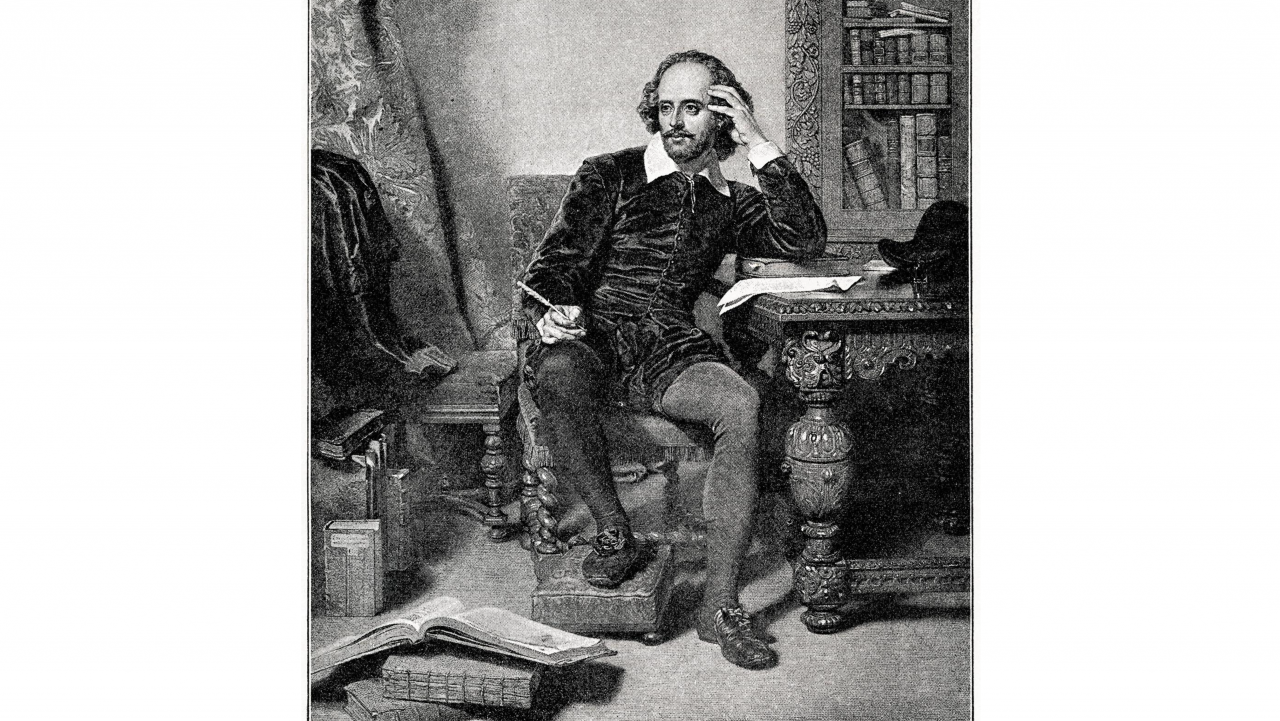
There used to be a saying in the painting department at the prestigious Rhode Island School of Design, “If you can’t make it good, make it red; if you can’t make it red, make it big,” which, as I understand, was not meant to be cynical, but to mock those attending art school for reasons other than talent. This mantra arose back in the transgressive, anything-goes, 1980s, when evidence of talent started to matter less than a purported artist’s ability to attract attention and, most important, dollars. Art at this time also became unabashedly political, and the “artist statements” mounted on gallery walls often blossomed into manifestos, telling viewers what they were supposed to see, rather than letting the works visually speak for themselves.
It could be argued that today we have a similar situation in literature, especially poetry, as we are increasingly being told that it is not important how well a poet writes; rather, the crucial issue is what a poet says.
This resonates with the progression of what might be called the emphasis of moralism over aestheticism, and which is notoriously apparent in the myriad curriculum battles, cancellations of free-thinking professors, and deplatforming of — rather than engagement with — potentially adversarial public speakers. This trend goes back to the 1990s, and the seeds of it can be found in the birth of the culture wars of the 1970s — on both sides of the political spectrum — but never has the attack on aesthetics been so virulent.
For example, the influential group #DisruptTexts, formed by four women teachers, has led an effort to cancel many “classic texts” commonly taught in American school curricula. Their mission is to “challenge the canon,” as they believe that “the classic texts function as Confederate statues,” which should be removed from classrooms, not only in America, but around the world. They further argue that these texts should be replaced by contemporary ones that manifest their sanctioned political viewpoint, which sounds a lot like the forced doctrine of Socialist Realism in art during the era of the Soviet Union. Thus, writers such as Shakespeare, Homer, Twain, Fitzgerald, Hawthorne, et al. are their chief targets, and these teachers regard the Western Canon — a collection of influential books that have withstood critical scrutiny and enjoyed readership for decades, centuries, and even millennia — as the Worst Canon.
The key paradigm shift that these “Textruptors” and their followers have achieved is to focus on and, in fact, stipulate that it is the moralistic character of literary works that matters, not the artistic merit inherent in those works. You can see this in their tendentious language choices, often utilizing technical-sounding words such as “text,” instead of something warmer, like novel or poem. It’s as if by speaking about authors they don’t approve of in clinical terms, they can be objectified, and then dismissed more readily. Here, for example, is the summation of their perspective on Shakespeare:
“Overall, we continue to affirm that there is an oversaturation of Shakespeare in our schools and that many teachers continue to unnecessarily place him on a pedestal as a paragon of what all language should be. Though we enjoy reading some of the plots in his plays and acknowledge the depth and complexity within many of his plot arcs and characters, we also find that educators are often taught to see Shakespearean plays as near perfection, his characters as ‘archetypes,’ and to persist in oj (sic) indoctrinating students into a false notion of the primacy (and superiority) of the English language. We do not see these same problematic approaches in other plays where whiteness and the male voice are not centered.”
Curiously, they have nothing to say about his poetic genius. Or his transformative impact on the evolution of the English language. Or his unparalleled universality. What they do offer is a list of specious characterizations of Shakespeare which are nothing more than straw-man fallacies.
But there is a deeper issue here being glossed over: Why have writers like Shakespeare been admired by so many for so long?
Great art is great because of its strength — not its moralism, even less so its authorship — and strong art is that which most achieves the sublime. One definition of the sublime — in its most essential form — is that it is the ineffable made effable; the inexplicable, understood. It manages to speak to the individual in the most universal, transcendent way. Thus, when we encounter Shakespeare, we recognize that he is one of the most sublime writers in the English language.
Great artists such as Shakespeare, Michelangelo, or Beethoven do not depend on conveying any message, or dogmatic truths in their works, only revelation (on the part of the creator), and recognition (on the part of the audience). Hence meaning, through the sublime, is completely open to interpretation, which makes it unattractive to coercive schools of thought.
Lorena Germán, one of the founders of #DisruptTexts, rationalizes the movement’s manipulation of the canon this way, “Did y’all know that many of the ‘classics’ were written before the 50s? Think of US society before then & the values that shaped this nation afterwards. THAT is what is in those books. That is why we gotta switch it up. It ain’t just about ‘being old.’” This kind of false logic — assuming that what is true of the whole is necessarily true of the part (which logicians call a “fallacy of division”) — leads to dichotomous curriculum choices that only serve to antagonize teachers, parents, and students. And statements such as this illustrate how the fight really isn’t about inclusion for the Textruptors; it’s about exclusion.
Perhaps a better and much simpler solution was put forth as far back as 1950 in the seminal study “The Lonely Crowd,” which suggested offering a contextual choice: “What the story of George Washington could be for a white child the story of Booker T. Washington could be for a black one.” In other words, why fight over a curriculum if the curriculum can be diverse instead of ideologically mandated?
Whereas the Textruptors denounce books on moralistic grounds, there is even a bolder — and more contumacious — school of reaction that attacks the idea of aesthetics itself. In an essay called “Ars Poetica for the Next Decade,” which appeared in this year’s May/June issue of The American Poetry Review, poet and MFA professor Christine Kitano strongly urges for the reading and evaluating of poetry on political versus aesthetic grounds. She insists that “aesthetics are never distinct from the social,” that they can never be separate from the “biographical” aspects of the poet (her euphemism for gender and race), and finally, asserts that “we define greatness as literature that, beyond mere pleasure, also instructs.” Her ire is directed at students and scholars who “evaluate art on aesthetic merit,” which ultimately is as silly as it is paradoxical. Taking the aesthetic out of art is like taking the spiritual out of religion.
Kitano’s didactic requirement of “great” poetry resonates with the need for control, which the Textruptors also evince. An art form that must instruct, or follow some external dictate, is usually weak. As the Roman poet Horace observes in his “Ars Poetica,” (the title of which Kitano appropriated for her essay):
But things entrusted to the ear
Impress our minds less vividly than what is exposed
To our trustworthy eyes so that a viewer informs himself
Of precisely what happened.
This is basically the maxim “show don’t tell,” which students hear in every introductory composition class. The first-century writer Longinus, in his influential treatise “On the Sublime,” put it this way: “Great writing does not persuade; it takes the reader out of himself.”
Even more disturbing, Kitano insists that readers interpret her poems only in the way she prescribes: “When I hear that they are reading my poem and receiving meanings I did not want or intend . . . I rearrange these words, maybe choose new words, and ideally . . . everyone reads the poem correctly.”
The contention that there is a correct way to read a poem, or a novel, or view a work of art is absurd. The fact that one of the leading literary journals in America would publish such an obtuse indictment of literary aesthetics by an MFA professor perhaps indicates why the vast majority of MFA poetry is so artless today.
French critic Maurice Blanchot in “The Space of Literature” takes a position completely antipodal to this perspective, dismissing the relevance of “biography” or authorship entirely:
“The work of art does not refer immediately back to the person who presumably made it. When we know nothing at all about the circumstances that contributed to its production, about the history of its creation — when we do not even know the name of the person who made it possible — it is then that the work comes closest to itself.”
A simple and pure idea. But is it too idealistic for our current, antagonistic literary environment when there is something potentially much larger at stake: economic interest?
Like any business segment, the publishing industry needs new products to survive. It’s hard to make money from Shakespeare or Homer these days (you can’t sell the film rights to “Hamlet”). Publishers, agents, editors, writers, and the entire literary ecosystem must generate new revenue streams. Not to mention the flood of young MFA graduates (there were 79 degree-granting programs in creative writing in 1975; by 2010 there were 854) who need to publish work to justify their degrees (and pay off those huge student loans), and the concurrent swell of new literary magazines in which to issue all this nascent work.
However, this leads to the problem of demand. If the market is saturated with products, you either must innovate to produce something that people want or go broke. The only way to convince readers to buy your books is to convince them to not spend their limited dollars on other books. Thus, again, with so much at stake in the lucrative scholastic market, one must kick Shakespeare and Homer off the shelves to make room for the new stuff. But how does one justify that, especially when competing with products that have stood the test of time? One would have to change the criteria of comparison and, moreover, invent some inherent fault to disparage the competition. Like making the charge of deficient morality, which certainly would work to the advantage of the new MFAs who, with their limited life and writing experience, might find it hard to compete on aesthetic merit.
In fact, moral indictment has been one of the most effective ways to denigrate strong and threatening modes of thought throughout history, such as accusing — and then executing — a philosopher for corrupting the minds of a city’s youth (Socrates), labeling an influential woman with countervailing spiritual teachings a prostitute (Mary Magdalene), or condemning and imprisoning a scientist whose theories threaten contemporary religious dogma (Galileo).
In addition, it should be noted that #DisruptTexts is run as a for-profit platform which generates consulting fees, book deals, and other channels of revenue for its founders. Thus, it becomes hard to deny that “replacing the canon” is just as much a capitalist, as it is a moral, endeavor.
But perhaps there is hope. Some commentators do not see the contentiousness of these cultural wars as a zero-sum game, and in fact consider the polemical crossfire to be beneficial. As scholar Amia Srinivasan suggests in a recent New Yorker essay entitled “The Sex Wars” (which reads much like Thucydides’ account of the Peloponnesian Wars), “My students soon find, in turn, that the vast body of feminist theory is riddled with disagreement. It is possible to show them that working through these ‘wars’ can be intellectually productive, even thrilling.”
We could also benefit from the extraordinary experience of al-Andalus, in medieval Spain, where for approximately seven centuries, scholars, writers, and artists came together in varying degrees of harmony to promote learning across Jewish, Arabic, and Christian traditions. It often took multiple translators working in concert to bring a lost or important text to life, from ancient Greek or Hebrew, to Latin, and then into Arabic, or in other multivarious combinations.
Al-Andalus ran like a songline through Asia, Africa, and Europe, existing more as a state of mind than a physical location, although it certainly was both. In her compelling book, “The Ornament of the World,” professor María Rosa Menocal explains, “In our casual acceptance of the notion that there is some critical or intrinsic division between Africa and Europe, we are likely to neglect just how central this southern shore of the Roman world was.” She points out how this was a time “when Jews, Christians, and Muslims lived side by side and, despite their intractable differences and enduring hostilities, nourished a complex culture of tolerance,” and furthermore notes, like feminist scholar Srinivasan, “that contradictions — within oneself, as well as within one’s culture — could be positive and productive.” Most strikingly, she concludes, “It was, in other words, a culture that rejected religious or political correctness as the basis for any sort of aesthetic or intellectual value.” It shouldn’t escape our notice that this vibrant and tolerant cross-cultural synergy produced much of what is so vehemently contested today as the Western Canon.
In another type of positive response, an attempt of compromise has arisen as various “Expand the Canon” movements proliferate across many arts organizations. Although noble-minded, history has demonstrated that a canon cannot be dictated; it can only be formed organically through time. The classical scholar M.I. Finley relates just how hard it is for canonical works to survive, especially over thousands of years:
“The names of 150 Greek authors of tragedy are known, but, apart from odd scraps quoted by later Greek or Roman authors and anthologists, the plays of only 3, Athenians of the fifth century B.C., are extant. Nor is that the end of it. Aeschylus wrote 82 plays, and we have 7 in full. Sophocles is said to have written 123, of which 7 still exist, and we can read 18 or 19 of Euripides’ 92.”
This is because “What has survived . . . was deemed worthy of being copied and recopied for hundreds of years of Greek history and then through hundreds of years more of Byzantine history, centuries in which values and fashions changed more than once, often radically.” He points out how strongly Homer, for instance, has been attacked throughout history, but has endured based on the strength of his readership. It is not up to a cultural authority, or a committee, or a for-profit online movement to shape the canon. It is up to the common reader.
Perhaps it would be most fitting to conclude this discussion with the person most responsible for the present canonical battle, the iconoclastic critic Harold Bloom, who fired the first shot with his 1994 polemic, “The Western Canon: The Books and Schools of the Ages.” (It’s no coincidence that Kitano, the MFA professor, began her piece by attacking him). Bloom’s basic premise is that “the aesthetic and the agonistic are one.” He elaborates, in direct repudiation of the Textruptors and the anti-aesthetic school:
“Tradition is not only a handing-down process of benign transmission; it is also a conflict between past genius and present aspiration, in which the prize is literary survival or canonical inclusion. That conflict cannot be settled by social concerns, or by the judgment of any particular generation of impatient idealists, or by Marxists proclaiming, ‘Let the dead bury the dead,’ or by sophists who attempt to substitute library for the Canon and the archive for the discerning spirit.”
Bloom holds true to his own theory and is not guilty of the double-standard employed by most canonical critics, as he states, emphatically, “No one has the authority to tell us what the Western Canon is, certainly not from about 1800 to the present day. It is not, it cannot be, precisely the list I give, or that anyone else might give.”
It should be noted that while many writers of diverse race and gender have been added to canonical lists, as well as to required curricula, the choice of their inclusion still feels unsatisfying to many. In a recent essay on Literary Hub entitled, “Toward an Expanded Canon of Black Literature: How Some Black Writers Live, and Some Die,” novelist Mateo Askaripour struggles to explain the dilemma of his own title:
“No, there is a deeper answer here. And it’s not that the likes of Morrison, Baldwin, or Ellison are more palatable to the average American reader’s tastes; to claim that would be both incredibly ignorant and incredibly wrong. It’s not that their work is more timely, better written, or more deserving of praise.
But I can’t tell you what the exact answer is, because I do not have it.”
The culling is as frustrating as it is mysterious. While “Expand the Canon” is a worthy and au courant sentiment, it tries to bring the endgame to the opening moves of a very long, agonistic, and iterative process. You can’t fiat a canon. Only time can, and canonical works survive based on aesthetic strength, which is eternal; not moralism, which is ephemeral. But ultimately, what is the actual importance of such a list? Why do we need a canon? Isn’t it more important that the widest diversity of writers have the opportunity to be published, which is something that we actually can engender? Askaripour concludes, with restrained optimism, “the tide is changing, and we press on.”
Homer has won his battle. So has Shakespeare. Even though people have been trying to silence their words for several millennia and centuries, respectively. But this has actually been to their benefit in the agonistic sense, as the battle never truly ends. In “Twilight of the Idols,” the German philosopher Nietzsche produced one of his most sublime aphorisms, which explains why this process is inevitable and necessary: “Out of life’s school of war — What does not kill me makes me stronger.”
All artistic creations need challenges to their vitality and relevance — such as the Textruptors and anti-aesthetes — to test and affirm what is strong within them, much like any athlete needs to be challenged by the contest of the game to truly excel. Weak works rarely survive, no matter how much propping up they may receive. Returning to the art school mantra that began this essay, the best advice to today’s MFA graduates might be, simply, “If you can’t make it good, don’t write it.”
~~~~~

Stuart Sheppard is an award-winning critic, essayist, novelist, and poet who writes “The Hamlet Machine” column for Pittsburgh Quarterly.
Copyright 2024 Stuart Sheppard. First published in the Pittsburgh Quarterly
Discover more from Vox Populi
Subscribe to get the latest posts sent to your email.

To my mind, the canon is always open. If not, there’d have been no Joyce or Woolf, to pick two random examples. To be sure, there have and remain sociological and economic strictures that favor one writerly enterprise over another, but I believe the point still stands.
My real question, though, is this: if moral or political (or whatever) instruction is the aim, why go at it by way of so-called creative literature in the first place.?Instead of reducing a poem, say, to an essayistic lesson in justice of whatever sort, why not just write yourself an essay and skip that lah-dee-dah satchel full of literary effects?
My own sense is that, as in Socialist Realism, if the writer knows what her aim is a priori, the result will be wooden. “No surprise in the writer, none in the reader,” said Frost, and aptly here.
Oh, but I forgot: Frost was just an old white man who sprang from Judaeo-Christianity. He should not be listened to; indeed, he should be erased from our collective consciousness.
LikeLike
Thanks, Syd!
>
LikeLike
Years ago a friend of mine was writing a biography of a living person. One day I asked how it was going. He laughed and said “I’ll never finish. [Subject’s name] keeps doing new stuff.” And that’s sort of the problem with a canon, except more so. The population of the world in Shakespeare’s time was about 600 million, most of them illiterate. By 1960, when James Baldwin and Barbara Tuchman were writing, it was 3 billion with a growing portion highly literate. Now we’re at 8.2 billion … and while the test of time is a pretty good test, it should only apply to very old material. We can’t wait centuries before reading Ishiguro, or Olga Tokarczuk. And if you want to be conversant in literature today, you really should read those authors plus a bunch of others. Bottom line, it has gotten really tough to decide what to put on a reading list.
And though Shakespeare still belongs, he raises yet another issue. Mostly he wrote plays. Which are not meant to be read. They’re meant to be performed and watched.
LikeLiked by 2 people
Well-said, Mike
>
LikeLike
Too man of us highly evolved monkeys at too many highly evolved typewriters.
LikeLike
I think for me, personally, the other element to the changing of the canon, is the grief I feel at the loss of what seemed a certainty, or an eternal truth, but wasn’t/isn’t or was too narrow mindedly understood. That change of the universe I’m used to and part of can contain psychological mourning for an old white male like me.
LikeLiked by 2 people
Yes, some of my favorite poets, such as James Wright and William Matthews, are no longer talked about. Young poets haven’t even heard of them, much less read them. I grieve for the loss of their beautiful voices.
LikeLiked by 1 person
Stuart’s essay is brilliant. He argues against what I’ve long called “aesthetics by manifesto.” His arguments are cogent and logical. As for the idea that the classical cannon isn’t relevant, a tool for suppression, I must respectively disagree. In 1970, when I wrote a document to my draft board stating my conscientious objection, I based it on Spinoza’s pantheism. My contention is that, if one feels that the classics lack relevance, the deficiency isn’t in the texts.
LikeLiked by 2 people
Well-said, Charlie. Thanks.
>
LikeLike
For my letter to the draft board, in 1971, I quoted Gandhi and Thoreau, and Jesus. At my hearing the real world intervened. They told me that these guys were full of bullshit, except Jesus, and I misread him. But they granted me my CO classification…because the Courts told them they had to for someone. They chose me because I had two ministers write letters of support. They had never heard from two ministers before. I have no idea what the ministers wrote. Thanks. I disagree with some of what Sheppard wrote, but he struck me with his cogent comments on capitalism, and the need of the marketplace to make something new.
LikeLike
Aren’t we talking about two different things here? Art and instrution? I am not familiar with the US way of educating. But for me it was (so it seems now at the end of my life) essential to read, see and admire art from all cultures, all times, the classics and the ‘moderns’, and to read many different arguments about political, geopolitical history, propositions, failures, and possibilities. It has been important to me to see a Vermeer van Delft as much as understanding Soviet social realism. There is one takeaway from Shakespeare and another from ‘The Grapes of Wrath’ or ‘His Name Is George Floyd’. Ought we not to be exposed to it all and taught critical thinking and appreciation of art?
–Rosmarie Epaminondas (Rose Mary Boehm)
http://rosemaryboehm.weebly.com/https://www.rose-mary-boehm-poet.com/ https://www.rose-mary-boehm-poet.com/* https://www.youtube.com/channel/UCR9fygcz_kL4LGuYcvmC8lQ https://www.youtube.com/channel/UCR9fygcz_kL4LGuYcvmC8lQ
LikeLike
The existence of a literary canon is useful for students and teachers, and perhaps for the culture as a whole. However, it should be constantly in flux as the needs of the society change. As an undergrad in the early 1970s, I was educated in a “Great Books” program in which we read a chronological pile of translated works of what were believed to be the most important masterpieces of Western Civilization, starting with Gilgamesh, then moving to Homer, Plato, Augustine, Dante, Chaucer, Shakespeare, Coleridge, Whitman, Twain, Eliot and Einstein, leading inevitably to us, the occupiers of the pinnacle of civilization located in a very white campus in Dallas, Texas. Although I had excellent teachers, and I loved reading many of the books, it’s clear to me now that this list was woefully inadequate as a reading program for young people, not to mention heavily weighted toward a racist view of history. After all, during this time we were seeing a televised war in Vietnam, and yet there was nothing in the reading list that would give us any insight into what was happening. It was an era of activism on issues of racism, war and the role of women, and yet in the reading list there was nothing to give us insight on these matters. If the goal is to provide guidance on living an enlightened life, a list of great books at that time might have substituted Lao Tsu for Plato, the Buddha for Augustus, Hildegard of Bingen for Chaucer, Frederick Douglass for Twain and HD for Eliot. A canon, in order to be relevant, must evolve with the prevailing ethos; otherwise, it is nothing more than a sophisticated tool for suppressing dissent.
LikeLiked by 4 people
I certainly would add Emerson and Thoreau to the list. It seems us old guys that remember the sixties and seventies and participated in the protests and activism might have had our own reading list.
LikeLiked by 1 person
E and T are two of my faves.
>
LikeLike
I taught at a Catholic Women’s University in St. Paul. In the 1990s these debates came to a head, when the old guard faculty were retiring, and a new canon, if you can call an individual instructor’s reading list a canon, came about: Shakespeare remained, but different aspects of Shakespeare were emphasized. The undergrads, all female-identifying, got Toni Morrison and Zora Neal Hurston, but no more Dryden or way less Stevens, more Sylvia Plath. Catch 22, Women’s ways of knowing. But also discernment as an aesthetic tool. This paralleled the rise of deconstruction, where it turned out many of the liberating theorists of that tool were once Nazi publicists and/or sympathizers. So the maelstrom of aesthetic theory, text vs. author, etc. go on. If you asked my son or his friends what they read, canon or newer authors, I’d get: “who reads books?” Screens and screeds and textovers on you tube videos. To make art for him, I make mini-movies. I still read Thoreau, but also many nature writers or wild eyed seekers from today.Retirement is anti-canonical, too.
LikeLiked by 2 people
I’m glad there are scholars who get off on myriad tangents or devote their lives to preservation. It adds spice to the pie to follow their tirades when I want to. I enjoy beinging introduced to things I thought I would dislike. I like classics, I like some doggerel, some hip hop, a lot of poetry forms. I’ll read, study, argue, but at the end of the day, they are my tastebuds and probably sense differently from anyone else’s. When cooks/poets serve up something delicious, I savor it. Anything in excess tires me. I will gorge on a poet, tuck them away when something new that tickles my palate. Often return. Sometimes I don’t. Taste buds change over time.
LikeLiked by 3 people
well-said, Barbara. thank you.
LikeLiked by 1 person
Oof. Oh my. I confess I didn’t know about all this Textslaughtering movement — and I’ll confess, too, that I’ll proudly continue to ignore it. I seriously plan to exercise in the great joy of ignoring them darn Textruptors, and will not give a cent of my pension to subscribe to the for profit #DisruptTexts. Sure, sure, yes: live & let live. I’m all for it. But gratefully, blessedly & joyfully, I’ll continue to read the books that sing to me, because & thanks to their craft & imagery & tone & sound & syntax & rhymes & off ones & metaphors & form & line-breaks & cadences & leaps & beauty & heart, thank you very much.
LikeLiked by 3 people
Thanks, Laure-Anne.
>
LikeLiked by 3 people
It is so nice just to be a poor, simple-minded reader, and occasional writer, who really doesn’t give a crap what critics or literary scholars said or think. As the saying goes, “Beauty (and I might add, relevance) is in the eye of the beholder.”
LikeLiked by 4 people
Thanks, Leo. Your comments here over the last ten years(?) have been a gift to me and our readers.
>
LikeLiked by 3 people
Thank you, so much. That means a great deal to me!
LikeLiked by 2 people
Nope. This is a hot air balloon of an essay looking down from its reactionary heights. The writer seems ignorant of how opinions about works accrue across centuries, ascribing the survival of certain works to a mysterious force called aesthetics, as if aesthetics were derived from some unchanging Platonic ideal, and not from the kind of pushing and shoving and competing on grounds of fashion, politics, and ethics that he decries in our moment. That iconoclasts always go too far is almost a truism; however, the “reaction” to that ought to be a return to the complex dialogue between the present and the past, not a doubling down on a narrowly defined tradition. In fact, if that had been the dominant view in Al Andalus during the period the author cites, or in Europe during the Renaissance, we would not have the works — in translation — that make up this writer’s beloved canon.
LikeLiked by 4 people
Thanks, Richard. You’ve made the counter argument to the essay eloquently.
LikeLiked by 3 people