
Vox Populi
A curated webspace for Poetry, Politics, and Nature with over 6,000,000 visitors since 2014 and over 9,000 archived posts.
Vegan Kitchen: Holy Guacamole!
When I was growing up in Texas in the 1950s and 60s, guacamole was a customary side dish at many meals, so I’m glad to see in recent decades this delicious and nutritious dish has become America’s favorite dip at parties. Its smooth texture and ability to absorb flavors make it extremely versatile. You probably know the word guacamole as well as the dish itself are originally from Mexico where avocados have been cultivated for thousands of years. The name is derived from two Aztec Nahuatl words—ahuacatl (avocado) and molli (sauce). All you really need to make guacamole is ripe avocados and salt, but usually other ingredients are added to create a variety of textures and flavors.
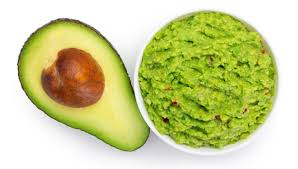
Dozens of varieties of avocados are commercially grown in the Americas, and they vary greatly in size, skin texture and color, but all of the varieties can be used to create guacamole. In the United States, the most common variety of avocado is the Hass, developed by mail-carrier and amateur horticulturist Rudolph Hass in La Habra Heights, California in the 1930s. The Hass is a large black rough-skinned fruit available year-round.
The avocado tree is a member of the laurel family and is believed to have been first cultivated in Mexico five thousand years ago. The fruit, a type of berry with one large seed, is amazingly nutritious with high levels of vitamins E, K, B2, B3, B5, B6, folate and potassium, as well as significant amounts of fiber and healthy fats. Avocados can suppress inflammation, reduce the chances of hypertension and stroke, and protect against inflammatory bowel disease, oxidative damage and cancer.
The first step in making guacamole is to choose perfectly ripe avocados. Too early, the flesh of the fruit will be hard and flavorless. Too late, it will be black and unappetizing. To check for ripeness, gently press the skin of the avocado. The fruit should give a little, but not much. If there is no give, the avocado is not ripe yet. If there is a little give, the avocado is ripe. If there is a lot of give, the avocado is too ripe and not edible.
To slice open an avocado, cut it in half lengthwise with a sharp knife and twist apart. Then tap the knife against pit and twist to dislodge it, or you can push the point of the knife into the pit and pry it out. If the pit is difficult to dislodge, then the avocado is not ripe yet. A slightly unripe avocado can still be used, however. Simply cut the unripe parts into tiny pieces before mashing.
Guacamole is a versatile dish. It can be used as a party dip, sandwich spread, or as a traditional side dish for enchiladas, tacos, or beans and rice. The best sandwich I’ve ever eaten I bought at a food stand in the Austin airport fifteen years ago. A thin layer of guacamole on one thick slice of seed bread, a thin layer of humus on the other slice, and bean sprouts, chopped tomato and pepper relish in between. Since then, I’ve made variations on that sandwich many times.
Guacamole is always best eaten immediately after it’s made because avocados start to turn brown after they’re cut. Including lime or lemon juice in the mix can slow down the oxidation process, as does covering the guacamole with plastic wrap and pressing down with your hands to squeeze out the air pockets, but certainly you don’t want to serve the dish more than an hour or two after it’s ready. I’m not a fan of day-old guacamole.
Classic guacamole often includes chopped tomatoes, cilantro, or onions, but the dish is so versatile many people add other ingredients. I’ve seen caterers add chunks of strawberries, peaches, pineapple, mangoes, watermelon and even pomegranate seeds to their guacamole. Some cooks mix sour cream or salsa with the avocados to create a creamier texture and deeper flavor. Others mix in jalapeño peppers, but I prefer to keep the dish simple: avocados, onions, salt, and spices. If I want to add fruit, I can surround the dish with a perimeter of tomato and lime wedges or chop tomatoes, peppers and cilantro and spread them as a garnish across the guacamole. Another healthy option is to serve the guacamole on a bed of fresh greens.
Ingredients
6 small avocados or 3 large ones
2 limes (or lemons)
1 scallion (or onion)
1/2 tsp salt
1/2 tsp black pepper
1/2 tsp cumin powder (or curry)
1/2 tsp
3-4 sprigs of cilantro or parsley (as garnish)
6 cherry tomatoes or 1 medium size tomato (as garnish)
1 celery stalk (as garnish)
1 cucumber (as garnish)
- Cut avocados in half. Remove seeds. Dice the flesh for easy removal. Use a tablespoon to scoop the flesh from skin. Compost skin and seeds.
- Remove discolored portions of avocado and discard. The remaining portions should be varied shades of green and yellow.
- Place avocado flesh in a wide bowl. Use a fork to smash the avocado until it has a chunky semi-smooth consistency. If portions are hard, then chop them into tiny bits, then mash them.
- Chop scallion into 1/8 inch portions and mix gently into avocado.
- Add salt, pepper and cumin powder. Gently mix into avocado.
- Cut limes into quarters. Squeeze one lime into the avocado, and gently mix.
- Scoop the guacamole onto a serving dish.
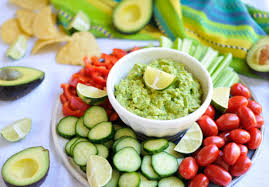
- Garnish with lime and cilantro on top and lime, tomato, celery and cucumber around the edges.
Serve with tortilla chips, chapati, or toasted naan.
Makes one party bowl dip or six individual side dishes.
~~~~~
Copyright 2024 Michael Simms
This article is for general educational purposes only and not intended as medical or health advice.
Discover more from Vox Populi
Subscribe to get the latest posts sent to your email.

Supposedly ones grown from dead do not produce fruit, but I have one planted from seed that is so tall I cannot pick the abundant fruit with a long poles picker.
LikeLiked by 1 person
Grown from seeds
LikeLiked by 1 person
And you can stick three toothpicks into the seed, suspend it over a jar with water covering the bottom of the seed, wait until it puts down roots, then plant it and have an avocado tree as a house plant.
LikeLiked by 2 people
Love it! Avocado plants are so lovely.
>
LikeLiked by 2 people