
Vox Populi
A curated webspace for Poetry, Politics, and Nature with over 6,000,000 visitors since 2014 and over 9,000 archived posts.
Michelle D. Holmes, MD: What accounts for the racial disparity in breast cancer survival?
Studies show that the lack of Black doctors may contribute to the disparity.
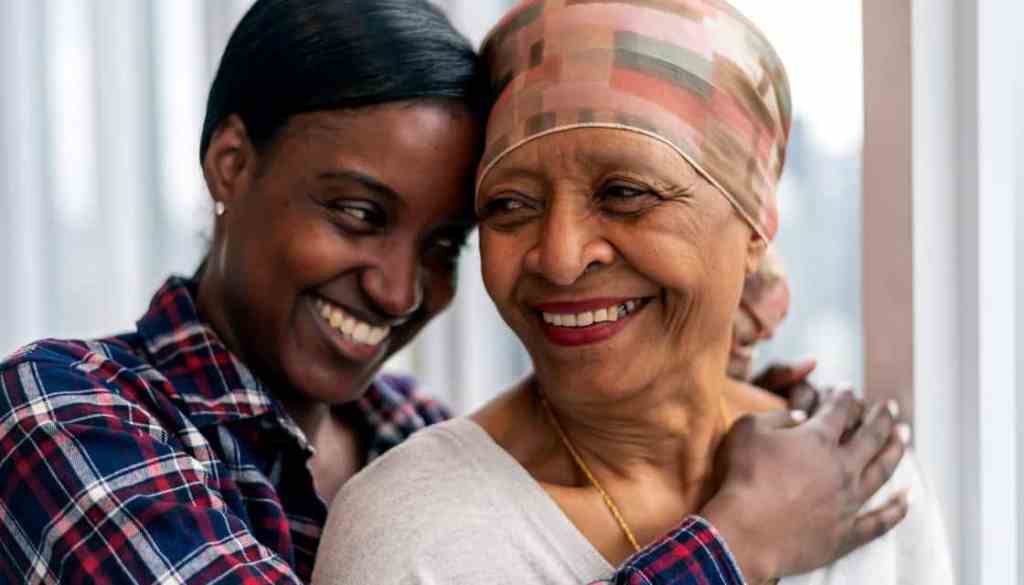
Black women are 42 percent more likely than White women to die from breast cancer disease at every age. This is despite Black women having approximately the same incidence of breast cancer as White women, although higher in women under age 45 and lower over that age.
Some of this disparity comes from higher incidence of more aggressive hormone receptor negative tumors in young Black women; the reasons for this disparity in subtypes is unknown. A host of possible associations for the mortality disparity have been explored, with none offering a singular definitive answer. They include genetic mutations, less physical activity, poorer diet, higher prevalence of obesity and lower levels of Vitamin D. They also include medical mistrust, more reliance on spirituality rather than doctors, and reproductive and breastfeeding practices. Researchers have also considered ties between low socioeconomic status and decreased mammography screening, less health insurance, inability to take time off from work for medical care, and ultimately, inadequate treatment. [1]
There may be another critical reason why answers currently elude the medical community. It may be because the general framing of research is too narrow. Most risk factor research for increased mortality in Black breast cancer patients is conducted primarily at the level of the individual. It is absent of the potential influence of systemic social policies and the culture of the medical profession itself.
For instance, the framing of low socioeconomic status as “poverty” among Black Americans can be seen as a characteristic of the individual, rather than a result of social policies that concentrate poverty, such as redlining. The subtle implication is that while unfortunate, the reasons for racial disparities in breast cancer survival are either inevitable (like genetic mutations) or are the sole responsibility of the individual – not society – to fix them. Modern racism theory calls such framings “Disowning Responsibility,” a form of victim blaming [2].
If we instead added the consideration of systems to our inquiries, we might conduct a more holistic analysis that includes the unconscious biases and behaviors we ourselves as researchers and clinicians inherit and display in the context of living in the United States. One clear direction such an inquiry would lead is to whether one major factor in breast cancer racial mortality disparity is the lack of Black physicians treating them.
In July 2020, the US was embroiled in a national questioning on race after the graphic police murder of George Floyd, enhanced by our COVID-19 pandemic induced isolation. A seminal article was published in the Proceedings of the National Academy of Science on racial concordance between physicians and patients that caused shock waves in some quarters. While several articles had shown that racial concordance enhanced physician-patient communication, this was the first to show it had actual survival benefits.
Overall, in the U.S. Black newborns die at triple the rate of White newborns. But Greenwood, et. al. found that when Black infants in Florida were cared for by Black physicians, the disparity in mortality was halved. This was despite Black physicians having higher caseloads and more complex patients than White physicians. There was no difference in mortality for White infants cared for by White or Black physicians. The benefit of racial concordance was similar for Black infants whether they were cared for by non-pediatricians, pediatricians, and neonatologists. [3]
The finding came amid a backdrop where the chances of anyone having a Black pediatrician is slim. While 13 percent of the US population is Black, 7.4 percent of pediatricians and 5.7 percent of physicians are Black [4]. A Black newborn has about a one-in-14 chance of being taken care of by a Black pediatrician that could halve its chance of dying in the perinatal period.
We do not know if racial concordance between physicians and patients operates similarly for patients with breast cancer. Greenwood, et. al. makes it reasonable to consider the possibility. If the effect indeed occurs more broadly across other medical specialties, the effect may actually be compounded in cancer care. Birth is a one-time event, and most newborns are likely to have their care directed by one pediatrician. Patients with breast cancer typically encounter a host of clinicians in sequence.
But physicians in cancer care are often far less likely to be Black than those caring for a newborn. No category of physician is at parity with the Black percentage of the U.S. population. The categories of primary care physicians who might order mammographic screening range from 6.7 to 10.7 percent Black. The field of radiologists/diagnostic radiologists performing biopsies is a mere 2.7 percent Black. The percent of surgeons performing lumpectomies are 6.1 percent Black [4].
Then there is the oncologist, who is the least likely of all to be Black. The American Society for Clinical Oncology (ASCO) reports that only 2.3 percent of oncologists are Black [5]. A Black breast cancer patient has a one-in-43 chance of being taken care of by a Black oncologist.
If not having a Black physician can substantially, if not completely, explain excess Black infant mortality, Greenwood et. al. should make us consider the possible detrimental effect of having multiple non-Black physicians in cancer care. A similar halving of the mortality disparity for Black women would be hailed as a massive step forward in medical equity.
Such a provocative question raises the obvious challenge of increasing the percentage of Black physicians. Greenwood, et. al said its findings with newborns “serves as an important call to continue the diversification of the medical workforce. Prior work suggests stereotyping and implicit bias contribute to racial and ethnic disparities in health. Taken with this work, it gives warrant for hospitals and other care organizations to invest in efforts to reduce such biases and explore their connection to institutional racism.”[3]
The world of cancer care would be wise to heed this message. A problem with Black women’s breast cancer mortality may not be poverty. It may be the poverty of our own profession.
~~
References
1. Yedjou, Health and Racial Disparity in Breast Cancer. Adv Exp Med Biol., 2019: p. 31-49.
2. Batts, V., Is Reconciliation Possible? The Question Remains. Bridging Troubled Waters. 2018: Visions, Inc.
3. Greenwood BN, H.R., Huang L, Sojourner A. , Physician–patient racial concordance and disparities in birthing mortality for newborns. PNAS, 2020. 117(35): p. 21194–21200.
4. AAMC, Active physicians who identified as Black or African-American, 2021, in Physician Specialty Data Report. 2021, Association of American Medical Colleges.
5. ASCO, Facts & Figures: Diversity in Oncology. 2016, American Society of Clinical Oncology.
Dr. Michelle D. Holmes is an internist in Boston, Massachusetts and is affiliated with Brigham and Women’s Hospital. She received her medical degree from Harvard Medical School and has been in practice for more than 20 years.
Copyright 2024 Michelle D. Holmes. No outside funding underwrote this article. First published in PubMed. Included in Vox Populi by permission of Michelle D. Holmes.
Image credit: Mayo Clinic
Discover more from Vox Populi
Subscribe to get the latest posts sent to your email.

Main theme: We do not know… May be…
LikeLike