

Vox Populi: A note from the editor
Please forgive this blatant self-promotion, but I want to share with you a link to a review of my new collection of poems American Ash in the highly regarded and popular magazine Cultural Weekly, curated by Alexis Rhone Fancher.
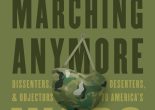
Frida Berrigan: ‘I Ain’t Marching Anymore’ chronicles 260 years of war resistance and conscientious objection
From the American Revolution through the Global War on Terror, author Chris Lombardi tells the inspiring stories of people who refused to kill.
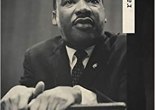
Kathleen O’Toole: For Such a Time as This
The poet’s ability to inhabit the events, and actors, with King himself center stage, contribute to the power of this collection. Moreover, the questions these poems raise could not be more timely.
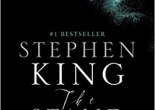
Tony Magistrale: When Viruses Collide: Covid-19 Meets Stephen King’s The Stand
Published in 1978, The Stand, a narrative that centers on a pandemic virus that decimates 99% of the world’s population, has perhaps hit a bit too close to home.

Lyndsey Stonebridge: The plague novel you need to read is by Bachmann, not Camus
What does it mean to live in the plague – every day, across generations and without an exit strategy?

Mike Schneider: Against Walls | John le Carré (1931-2020)
Among reasons we’ll remember le Carré, not least is his 1963 breakthrough novel, The Spy Who Came In from the Cold. Set in Cold War Berlin, it’s a classic story of love and espionage centered on the Berlin Wall, both as physical reality and symbol of separation between people — a wall that resonates with 21st-century politics.


S. Brent Rodriguez-Plate: Here’s why Christmas movies are so appealing this holiday season
Holiday movies are popular not simply because they are “escapes.” Rather, these films offer viewers a glimpse into the world as it could be.

Michael Simms: André Breton and the Birth of Surrealism
The Poem was worried. He’d heard rumors of Rondels in other lands being infested with illogic, and there was no known cure.

Michael Simms: Blue Notes
I think of Fats Waller whose left hand leaped down the keys, showing the path for every jazz pianist who followed, including the great Art Tatum and the minor Billy Joel.

Angele Ellis: Kelli Stevens Kane’s Songs of Innocence and Experience
In fifty numbered verses—many with the diamond-like compression of Emily Dickinson—Stevens Kane explores how the daily reality of the body suddenly can become extraordinary, paranormal—and how the science of events—such as gravity—can give way to the spiritual…
Michael Simms: Writing Prompt #1 | The Quotidian Poem
This post marks the beginning of a new irregular feature in Vox Populi. I hope readers of Vox Populi, many of whom are writers, will find the prompt helpful in stimulating their creativity.
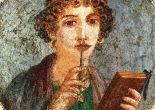
Deborah Bogen: Risk
In Sappho, the spaces name nothing — but the emptiness still speaks.

Charles Davidson: The “State of Confession” for Christians in the November Election
On the cusp of the most important election in these United States since the eve of the Civil War, a sobering fact is that our own history has eerily caught up with us, just as our history caught up with the Nazis of Germany between the First and Second World Wars.
