
Vox Populi
A curated webspace for Poetry, Politics, and Nature with over 6,000,000 visitors since 2014 and over 9,000 archived posts.
Philip Landrigan & Ella Whitman: Pittsburgh’s air pollution estimated to claim 3,000+ lives per year − and EPA rollbacks aren’t helping
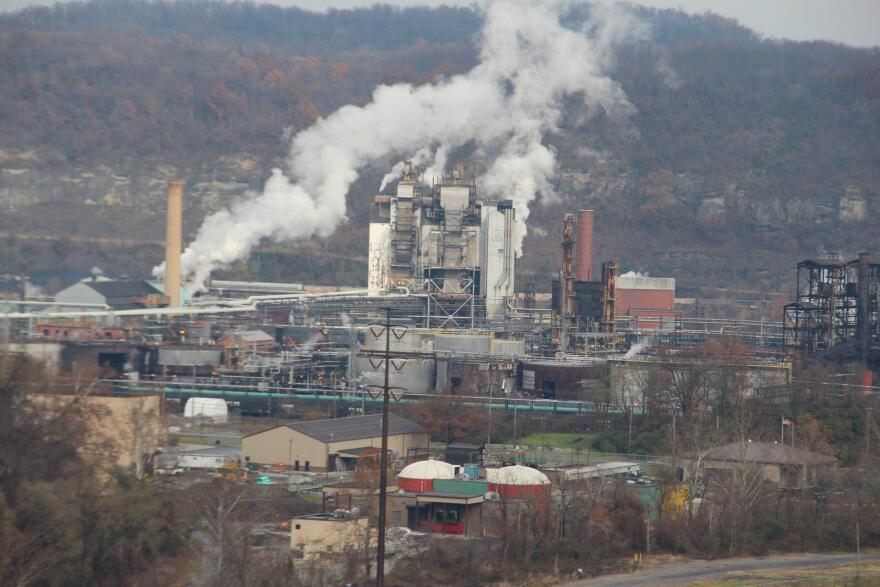
In October 1948, a thick haze rolled into Donora, Pennsylvania, a steel town in the Monongahela Valley, south of Pittsburgh. For five days, toxic fumes from a zinc smelter – a plant that turns zinc ore into pure zinc metal – poured out of the factory’s stacks, became trapped in the valley and thus blanketed Donora. The air was filled with sulfur oxides, heavy metal dust and airborne particulates.
Firefighters carried 60-pound oxygen tanks door to door to relieve elderly and asthmatic victims. Nurses attended to mill workers in the infirmary, laying patients on the floor as hospital beds filled to capacity. Funeral homes ran out of space. The disaster eventually claimed 20 lives and caused chronic lung disease in many more.

This was one of the first clear demonstrations in the U.S. that air pollution could kill. Today, new global health research quantifying the risks of pollution exposure helps explain why disasters like Donora were so deadly, and why similar health threats persist.
As a public health researcher and a public health physician, we recently published a study in the journal Annals of Global Health on the health impacts of air pollution in southwestern Pennsylvania that shows the Pittsburgh area as a hot spot for pollution.
A turning point
Research triggered by the Donora disaster uncovered that air pollution causes serious health issues, including chronic heart disease, stroke, chronic obstructive pulmonary disease, lung cancer and diabetes in adults, and can lead to premature birth, low birth weight, stillbirth, asthma and impaired lung development in children.
Emerging evidence indicates that air pollution is also associated with dementia in adults and with IQ loss, attention-deficit/hyperactivity disorder and autism spectrum disorder in children.
Before the Donora disaster, the federal government did not regulate air quality. Pollution was legally viewed as a local nuisance – the unavoidable price of progress.
But the tragedy in Donora forced policymakers, scientists and the public to recognize that air pollution is a serious threat to health. Donora thus laid the groundwork for the Clean Air Act, the federal air pollution law initially enacted in 1963, then strengthened in 1970 and again in 1990. It also catalyzed the nation’s first air pollution research programs.
Pollution persists
Despite this progress, air pollution is still responsible for an estimated 200,000 deaths across the U.S. each year. These deaths are not evenly distributed. Instead, they are concentrated in pollution hot spots.

Our research shows southwestern Pennsylvania, the region around Donora and including Pittsburgh, is one of these hot spots.
Because of its steel mills, coke ovens – which burn coal to produce fuel for steel production – steep valleys that trap pollution and a history of inadequate local enforcement of the Clean Air Act, the Pittsburgh metropolitan area continues to rank among the nation’s most polluted regions.
Breaking down the new data
Fine particle air pollution, known as PM2.5, doesn’t just dirty the air in Pittsburgh and surrounding communities. It can kill people and harm children before they are even born.
To understand the full toll, we conducted an epidemiological study. Using NASA satellite images to measure pollution levels in each census tract, we linked that data to death and birth records from the Pennsylvania Department of Health.
The findings were stark. In 2019, between 3,085 and 3,467 deaths in southwestern Pennsylvania – roughly 11% to 12.5% of all adult deaths that year – were likely attributable to PM2.5 pollution. The damage extended to newborns as well: We estimated pollution caused 229 premature births, 177 infants with low birth weight and 12 stillbirths.
Using existing scientific data showing that every small increase in air pollution is linked to a measurable drop in children’s IQ, we applied that formula to Pittsburgh’s pollution levels across all 24,604 children born there in 2019. That calculation produced an estimated collective loss of more than 60,000 IQ points across the group. That’s an average of approximately 2.5 IQ points per child.

Importantly, many of the harms we saw in Pittsburgh occurred at PM2.5 levels below EPA’s air quality standard of 9 micrograms per cubic meter. This indicates that even low-level PM2.5 exposures carry significant risks to health.
Our findings arrive at a pivotal moment for U.S. air policy. EPA Administrator Lee Zeldin has announced his intention to raise the allowable limit for PM2.5, relax enforcement of the Clean Air Act and repeal the greenhouse gas endangerment finding, which allows the EPA to regulate the emissions that drive climate change.
The EPA has also eliminated its long-standing practice of counting the economic benefits of pollution control. According to new calculations, the EPA will count only the costs of pollution control while stripping out the economic value of lives saved – a metric known as the “value of a statistical life” that agencies have long used to justify health regulations.
What happens next?
During the first Trump administration, environmental rollbacks and a lack of pollution prevention efforts led to an estimated 20,000 deaths per year, according to the Environmental Protection Network, a nonprofit organization consisting of EPA alumni who volunteer their expertise to protect environmental integrity and public health. The deaths were clustered mostly in Southern and Midwestern states with heavy industry and lax pollution rules. States that had already put strong pollution controls in place were able to cushion the blow of the federal cutbacks.
Public health researchers point to local enforcement of the Clean Air Act as a way to limit health impacts of federal agency rollbacks. Allegheny County has legal authority under the Clean Air Act to set and enforce pollution standards stricter than federal minimums, but has not consistently used that authority.
Community and advocacy groups, including the Clean Air Council and PennEnvironment, have pushed the county health department to adopt stricter standards and increase permit enforcement. The Allegheny County Health Department holds regular public meetings where air quality rules and enforcement priorities are subject to review.
As the regulatory landscape shifts, the data from communities like southwestern Pennsylvania will be critical to understanding and documenting what is lost due to air pollution.
First published in The Conversation. Included in Vox Populi with permission.
Philip Landrigan is Professor of Biology at Boston College.
Ella Whitman is Medical Student, University of Vermont.
Discover more from Vox Populi
Subscribe to get the latest posts sent to your email.

It is up to us, as citizens, to work together to save and improve our nation, that is, if we want to. Unfortunately, powers that be find ways to keep some of us doubting scientific research to keep us separated.
LikeLike
I find it strange that our national leadership is in such a crisis that something as important as the right to breathe is being ignored. Trump is literally taking all the oxygen from the room.
LikeLike
And yet still so many people, especially in Congress, support his agenda. I guess their immediate benefits throw the rest of us “under the bus.”
LikeLike
Exactly. Trump was elected on a platform of lies and manipulations, and his only strategy as a leader is to distract, distract, distract.
LikeLike
Withdrawal from the Paris Agreement; UNFCCC Exit; Major EPA and Regulatory Rollbacks; Repeal of the Endangerment Finding; Methane Regulation Delay; Power Plant Emissions; “Climate Change” Censorship; Energy and Land Use; Expansion of Offshore Drilling; Arctic National Wildlife Refuge (ANWR): The administration reopened 1.56 million acres of the Alaska Coastal Plain to drilling. The “God Squad” Exemption: In March 2026, the Endangered Species Committee (the “God Squad”) voted to exempt Gulf of Mexico oil and gas activities from Endangered Species Act restrictions, citing national security interests. Coal and Mineral Incentives: Executive orders directed the Department of Defense to purchase electricity from coal-fired plants and reopened over 13 million acres of federal land for coal leasing. Infrastructure and Economic Policy; One Big Beautiful Bill Act (OBBBA): This legislative and regulatory push has been used to streamline permitting for pipelines and fossil fuel projects while ending “preferential treatment” for wind and solar energy. Renewable Energy Tax Credits: The Treasury Department issued guidance limiting the eligibility of wind and solar projects for federal tax credits, specifically targeting projects not completed by July 2026; FEMA and Disaster Readiness: Plans were introduced to reduce FEMA’s staff capacity by 2026, alongside a report from the Department of Energy claiming that CO2-induced warming is less economically damaging than previously estimated.
LikeLiked by 1 person
All true. The fascists have taken over and will m-rder us all, given the chance.
LikeLike
France 24 reports the administration pressuring the World Bank and IMF to back away from climate-finance goals and return to the warm, familiar embrace of oil, gas, and coal. After helping trigger another war-driven energy shock, they want to use the fallout as an excuse to deepen fossil-fuel dependence. Create chaos, weaponize the consequences, and then call the destruction “core mission.” It is the same sick joke every time.
LikeLiked by 1 person
About 200,000 people die of air pollution in the US every year; most of those deaths are concentrated in “hot spots” such as Pittsburgh. Imagine if terrorists were killing 200,000 people a year in this country, wouldn’t people be alarmed? We’ve gotten used to the ways that the corporate state preys on us, so negligent homocide seems normal.
LikeLiked by 3 people