
Vox Populi
A curated webspace for Poetry, Politics, and Nature with over 6,000,000 visitors since 2014 and over 9,000 archived posts.
David Lauterstein: Puzzle Box
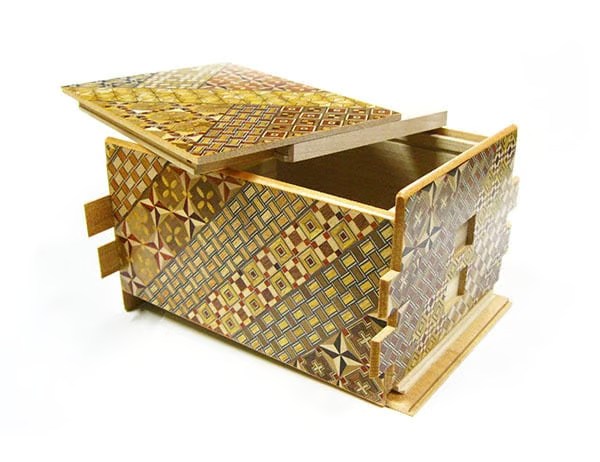
A puzzle box from Japan —
a few pieces of wood that slide around until
you find a little box inside.
But the puzzle box I am thinking of
has many more compartments and pieces to move.
The first side slides up,
the piece underneath moves easily and
here is a large compartment.
In it there is a little plastic figure of a brown person.
Then the opposite side slides up
and a quote from Kafka on a little slip of paper —
“War is the result of a monstrous lack of imagination.”
There is a false floor in this compartment.
Here, there are little legs, arms and heads
representing 75,000 people killed in Palestine and Israel.
Then you start crying,
and the top slides away.
You may want to find the reason
why people kill each other
though greed seems to play a big role.
When that top slides there is a little drawer underneath
that has burnt into the wood itself —
“Peace is a need” – Herbert Brün
Then a side piece slides and reveals a drawer that has
tiny pieces of black licorice
as if death could be sweet
but now you are crying
with however a tiny piece of licorice in your mouth.
How could this happen?
The intrigue of the box mixes with
the vast regret for human unkindness.
In the last drawer you find,
an unexpected aroma
from incense in a temple so small
you almost can’t see it
and that is where hope begins.
~~~
Copyright 2026 David Lauterstein
David Lauterstein is a writer, therapist and educator in Austin, Texas. He has been writing for 60 years and is an MFA candidate in Poetry through Pacific University. His latest book is The Memory Palace of Bones co-authored with Dr. Jeff Rockwell (Handspring Publishing).
Discover more from Vox Populi
Subscribe to get the latest posts sent to your email.

Sometimes the word clever in reference to a poem is derogatory, but this poem is clever in a positive, beautiful, maybe even dangerous sense. I will read it throughout the day so I can make new discoveries. Thank you for sharing it.
LikeLike
Stunning. Shared.
LikeLiked by 1 person
This poem has power in its intricacy, and its telling of the monstrous, contained among 1) the sense of touch of the puzzle manipulator, 2) the sight of suffering, and the ending where 3) taste and 4) smell arise. My question is will we 5) hear its cry? There is, besides the five senses, the four classic elements of air, earth, fire, and water (tears). They lead me to ponder the entire puzzle, that is the sixth sense: the element of the human, with its pangs and atrocities, and the great puzzlemaker hovering over it all, waiting to see if we find a solution.
LikeLiked by 1 person
The puzzle is not only a riddle, but also a prison.
LikeLiked by 1 person
Yes, “boxed-in”
LikeLiked by 1 person
We keep looking for that small temple, even when all we find is a wisp of its fragrance.
LikeLiked by 2 people
yes, I know what you mean, Luray. Political leaders oppress us, but also the world of politics.
LikeLiked by 1 person
Such an interesting way to write about this subject. The puzzle box works so well to reveal things that others try to hide or ignore, and the licorice is a strange surprise that I loved. I’m thankful for the poem’s ending — we need that hope.
LikeLiked by 2 people
Such a stunning poem. The puzzle box feels palpable. The poem, vital. Thank you, David Lauterstein.
LikeLiked by 4 people