
Vox Populi
A curated webspace for Poetry, Politics, and Nature with over 6,000,000 visitors since 2014 and over 9,000 archived posts.
Elizabeth Bishop: A Cold Spring
‘Nothing is so beautiful as spring.’ – Hopkins
A cold spring:
the violet was flawed on the lawn.
For two weeks or more the trees hesitated;
the little leaves waited,
carefully indicating their characteristics.
Finally a grave green dust
settled over your big and aimless hills.
One day, in a chill white blast of sunshine,
on the side of one a calf was born.
The mother stopped lowing
and took a long time eating the after-birth,
a wretched flag,
but the calf got up promptly
and seemed inclined to feel gay.
The next day
was much warmer.
Greenish-white dogwood infiltrated the wood,
each petal burned, apparently, by a cigarette-butt;
and the blurred redbud stood
beside it, motionless, but almost more
like movement than any placeable color.
Four deer practiced leaping over your fences.
The infant oak-leaves swung through the sober oak.
Song-sparrows were wound up for the summer,
and in the maple the complementary cardinal
cracked a whip, and the sleeper awoke,
stretching miles of green limbs from the south.
In his cap the lilacs whitened,
then one day they fell like snow.
Now, in the evening,
a new moon comes.
The hills grow softer. Tufts of long grass show
where each cow-flop lies.
The bull-frogs are sounding,
slack strings plucked by heavy thumbs.
Beneath the light, against your white front door,
the smallest moths, like Chinese fans,
flatten themselves, silver and silver-gilt
over pale yellow, orange, or gray.
Now, from the thick grass, the fireflies
begin to rise:
up, then down, then up again:
lit on the ascending flight,
drifting simultaneously to the same height,
—exactly like the bubbles in champagne.
—Later on they rise much higher.
And your shadowy pastures will be able to offer
these particular glowing tributes
every evening now throughout the summer.
From Poems: North & South: A Cold Spring, (Houghton Mifflin, 1955). Winner of the 1956 Pulitzer Prize.
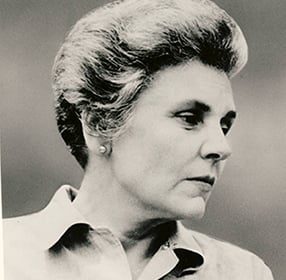
Elizabeth Bishop (1911 – 1979) was an American poet and short-story writer. She was Consultant in Poetry to the Library of Congress from 1949 to 1950, the Pulitzer Prize winner for Poetry in 1956, the National Book Award winner in 1970, and the recipient of the Neustadt International Prize for Literature in 1976. Her poems are widely admired for their careful attention to craft.
Discover more from Vox Populi
Subscribe to get the latest posts sent to your email.

It’s wonderful how Bishop’s poem takes its time as if there is all the time in the world. Isn’t she good with color!
LikeLike
John Edward Simms writes: I really like this poem The characterization of the hesitancy of the plants to make the bet and take the leap of faith into spring growth is something I can feel in my bones every year. There is a deep, calm joy in the process that makes me feel closer to God.
LikeLiked by 1 person
I love Elizabeth Bishop’s poems but don’t recall ever reading this one. It’s hard to think of new ways to describe nature, and she does it so well. It’s such a visual, sensual poem. I like the way you said that it has a “sustained elegiac tone.”
Here in Atlanta, the dogwood blooms are just giving way to their leaves, so the trees are now more green than white, and that makes me sad every year — it’s hard to see soft spring end and harsh hot summer begin. (Maybe that’s a prompt for my next poem)
LikeLiked by 1 person
Oh, yes. You have the beginning of a poem…
LikeLike
she is such an amazing poet. thanks for posting this!
LikeLiked by 1 person
Thank you! Bishop is one of my favorite poets…
LikeLike
Elizabeth Bishop’s spring world has an innocence – so comforting to read her now that so much spring is charged with sirens, explosions and the basest sides of mankind.
Now, from the thick grass, the fireflies
begin to rise:
up, then down, then up again:
lit on the ascending flight,
drifting simultaneously to the same height,
—exactly like the bubbles in champagne.
LikeLiked by 2 people
Love that passage, Noelle. Thank you for quoting it. And I agree that in this fraught time of war and corruption, we need her voice more than ever.
LikeLiked by 1 person
I think of this poem often. Her voice is so charged with poignance and she sees the world with such aching clarity. Thank you for posting this today.
LikeLiked by 2 people
Thank you, Kathryn. I admire the sustained elegiac tone and the precise craft of this poem.
LikeLiked by 1 person