
Vox Populi
A curated webspace for Poetry, Politics, and Nature with over 6,000,000 visitors since 2014 and over 9,000 archived posts.
Philip Levine: Blue
Dawn. I was just walking
back across the tracks
toward the loading docks
when I saw a kid climb
out of a boxcar, his blue
jacket trailing like a skirt,
and make for the fence. He’d
hoisted a wet wooden flat
of fresh fish on his right
shoulder, and he tottered
back and forth like someone
with one leg shorter than
the other. I took my glasses
off and wiped them on the tails
of my dirty shirt, and all
I could see were the smudges
of the men wakening one
at a time and reaching for
both the sky and the earth.
My brother-in-law Joseph,
the railroad cop, who talked
all day and all night of beer
and pussy, Joseph in his suit
shouting out my name, Pheeel!
Pheeel! waving a blue bandana
and pointing behind me to
where the kid cleared the fence
and the weak March sun
had topped the car barns,
to a pale, watery sky, wisps
of dirty smoke, and the day.
~~~~
Copyright 2014 Philip Levine. From The Simple Truth (Alfred A Knopf, 2014). Included in Vox Populi for noncommercial educational purposes only.
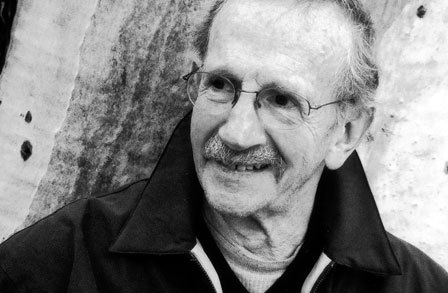
Philip Levine (1928 – 2015) was best known for his poems about working-class Detroit. He taught for more than thirty years in the English department of California State University, Fresno and held teaching positions at other universities as well. He served on the Board of Chancellors of the Academy of American Poets from 2000 to 2006 and was appointed Poet Laureate of the United States for 2011–2012.
Discover more from Vox Populi
Subscribe to get the latest posts sent to your email.

I love this poem ❤️
LikeLike
Thank you for this poem by Levine, which I’d not read before. All the amazing images, as others here have noticed. The single word opening: Dawn. And then at the end circling back to the weak March sun and the day. Thank you for this gift.
LikeLiked by 1 person
Thanks, Bonnie. The poem was a surprise for me too.
LikeLiked by 1 person
Here is another poem by Philip Levine –
The Horse byPhilip Levine
To Ichiro Kawamoto,
lover of humanity and survivor of Hiroshima
They spoke of the horse alive
without skin, naked, hairless,
without eyes and ears searching
for the stableboy’s caress.
Shoot it, someone said, but they
let it go on colliding with
tattered walls, butting his long
skull to pulp, finding no path
where iron fences corkscrewed in
the street and bicycles turned
like question marks.
Some fled and
some sat down. The river burned
all that day and into the
night, the stones sighed a moment
and were still, and the shadow
of a man’s hand entered
a leaf.
The white horse never
returned, and later they found
the stableboy, his back crushed
by a hoof, his mouth opened
around a cry that no one heard.
They spoke of the horse again
and again; their mouths opened
like the gills of a fish caught
above water.
Mountain flowers
burst from the red clay walls, and
they said a new life was here.
Raw grass sprouted from the cobbles
like hair from a deafened ear.
The horse would never return.
There had been no horse. I could
tell from the way they walked
testing the ground for some cold
that the rage had gone out of
their bones in one mad dance.
LikeLike
immortal poet
LikeLiked by 2 people
All the meanings of blue rise up – the literal color, on the child thief’s clothing and the brother-in-law’s bandanna, the blueness of the bro-in-law’s talk, the blues of the child’s probable circumstances and maybe the narrator’s mood. This makes me want to go pull all the Levine off my bookshelves and reread it.
LikeLiked by 3 people
Yes, Levine is consistently great.
LikeLiked by 1 person
Love the way his “dirty shirt” and “smudges” align him with the fish thief and everyone else rising to meet the day, and not his creepy brother-in-law cop.
LikeLiked by 2 people
There is a moral undertone to the poem, isn’t there?
LikeLiked by 1 person
A clear picture although I took off my glasses to clean them and laughed at myself peering out the window at the morning fog.
LikeLiked by 1 person
Me too, Barbara. Trying to see through the fog and laughing at myself are both important.
LikeLiked by 1 person
There is magic in this simple moment, like a short video in words. I can see them all. And a short character description that would make a novelist dedicate some paras in the intro: “My brother-in-law Joseph, the railroad cop, who talked all day and all night of beer and pussy…” Wow!
LikeLiked by 3 people
Yes, Levine is great.
>
LikeLiked by 1 person
all I could see were the smudges
of the men wakening one
at a time and reaching for
both the sky and the earth.
I so love his capacity for homing in on a setting, we can see these men…almost feel their breath…
LikeLiked by 3 people
The poet makes an ordinary moment transcendent.
>
LikeLiked by 3 people
Oh yes!
LikeLiked by 2 people
There is a purity in observation in the poem, unclouded by judgement or further discourse. The poem is witness of a moment passing.
LikeLiked by 4 people
Yes
>
LikeLiked by 1 person
If you want a poem of precise and humane observation, you can’t do much better than this one: that blue jacket trailing like a skirt, that tottering walk. Up there with “The Poem of Chalk.” Levine challenges us to open our eyes and our hearts without careless sentimentality.
LikeLiked by 5 people
Exactly, Luray. Thank you. You’ve described perfectly Levine’s gift for profound description.
LikeLiked by 1 person