
Vox Populi
A curated webspace for Poetry, Politics, and Nature with over 6,000,000 visitors since 2014 and over 9,000 archived posts.
William Palmer | The Glow Fills Something Inside: Lucille Clifton and Alma
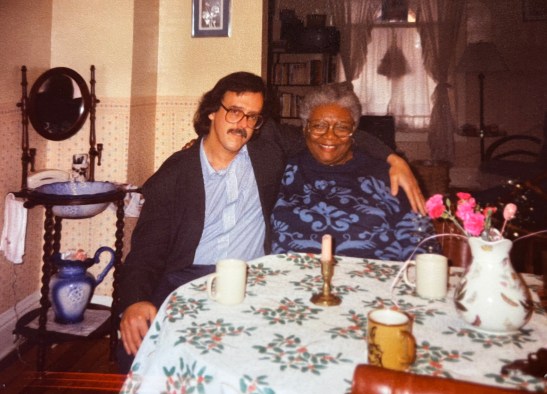
I first met Lucille at the airport in Lansing, Michigan on March 15, 1992. As I drove us north to Alma College, my anxiety soon faded. She seemed like a close relative I had never known.
That week she began her first residency at Alma, a small liberal arts school. The English department had received a grant from the Lila Wallace Reader’s Digest Foundation for a writer of color to spend three separate weeks with us. The aim: to promote diversity and exceptional literature. We received Lucille Clifton. I made arrangements for her to visit Alma classes as well as gatherings in the wider community.
***
On our drive, I told Lucille about a teaching activity I did that had generated national news—taking my first-year writing students to our human anatomy lab. Students learned about the science of dissecting human bodies, observed three cadavers, and wrote an essay about the experience.
I also told Lucille I had invited Dr. Richard Selzer to Alma to do a talk in an auditorium with a cadaver at the front of the room—it lay covered in a tray. He called his talk “A Scientific and Literary Tour of the Human Body.” Wearing a white lab coat, he read selections from his books (such as Mortal Lessons: Notes on the Art of Surgery). For assistance, he asked a science student, also in a lab coat, to lift up and show the cadaver’s heart and right arm.
When I met Lucille the next morning to take her to her first class, she showed me a poem she wrote based on what I had told her:
from the cadaver
for bill palmer
the arm you hold up
held a son he became
taller than his father
if he is watching there
in my dim lit past
let him see
what a man comes to
doctor or patient
criminal or king
pieces of baggage
cold in a stranger’s hand
That Lucille wrote this poem stunned me—right away I experienced her kindness. Note: this is a revision of the draft she gave me. The poem appears in her books The Terrible Stories (1996) and The Collected Poems (2012).
***
At Alma, Lucille visited a variety of classes, including racism in America, women’s studies, and creative writing. She liked each class to form a large circle that she joined. It never took long for students to feel at home with her. Lucille knew how to talk genuinely with anybody.
Some of my colleagues and I assigned her book quilting: poems 1987-1990 in our courses. Students explored and discussed Lucille’s poems before she arrived. This poem surprised students with its candor and form:
at the cemetery,
walnut grove plantation, south carolina, 1989
among the rocks
at walnut grove
your silence drumming
in my bones,
tell me your names.
nobody mentioned slaves
and yet the curious tools
shine with your fingerprints.
nobody mentioned slaves
but somebody did this work
who had no guide, no stone,
who moulders under rock.
tell me your names,
tell me your bashful names
and i will testify.
the inventory lists ten slaves
but only men were recognized.
among the rocks
at walnut grove
some of these honored dead
were dark
some of these dark
were slaves
some of these slaves
were women
some of them did this
honored work.
tell me your names
foremothers, brothers,
tell me your dishonored names.
here lies
here lies
here lies
here lies
hear
Students raised questions: Why did nobody mention slaves? Why were only men recognized? Why does the poem end with “hear”? The poem stirred emotion—students felt injustice.
With her unique style, Lucille promoted critical thinking. In quilting, her poems present a diversity of viewpoints. Consider this one, now a classic:
wishes for sons
i wish them cramps.
i wish them a strange town
and the last tampon.
i wish them no 7-11.
i wish them one week early
and wearing a white skirt.
i wish them one week late.
later i wish them hot flashes
and clots like you
wouldn’t believe. let the
flashes come when they
meet someone special.
let the clots come
when they want to.
let them think they have accepted
arrogance in the universe,
then bring them to gynecologists
not unlike themselves.
One of Lucille’s goals as a writer was to “comfort the afflicted and afflict the comfortable.” In her poem she wants men to imagine how it feels to menstruate and to experience the associated stress. She wants men to empathize with women. But her poem bothered some men who thought she wanted all men to menstruate. This poem always stirred dynamic discussions.
I asked Lucille what kinds of gatherings she would like to do at Alma. She said a brown bag lunch with secretaries, housekeepers, and custodial workers—women who weren’t usually invited to a lunch with a visiting writer. During each of her residencies she had a brown bag lunch.
Lucille also met with Alma faculty at a wine and cheese gathering. I remember her sitting at a table and colleagues sitting down with her for brief private conversations. One colleague, who had two doctorates, wept with Lucille. Later, Lucille told me it was common for some people to weep in her presence. She didn’t know why it happened.
When I drove Lucille to visit public elementary schools, she would sometimes take out a thick paperback from her large black purse and hold it: The Tao of Physics. It was her husband Fred’s, the margins dense with his handwritten notes. She liked to keep the book near. Fred was a philosophy professor—he and Lucille had six children in six years.
Lucille wanted all children to see themselves in a book. In Mt. Pleasant, she attended a fourth grade class that included native American students from the local reservation and Black students. She read and turned pages showing illustrations from her book about a Black boy in Some of the Days of Everett Anderson (1970):
Saturday Night Late
The siren seems so far away
when people live in 14A,
they can pretend that all the noise
is just some other girls and boys
running and
laughing and
having fun
instead of whatever it is
whispers
Everett Anderson.
Lucille helped students discuss what Everett might have whispered and how living in a big city high-rise might be different from living in a small town in Michigan, including a poem about Everett’s mother having a baby with his new step-father:
Something is growing in 14A.
Something resting inside a place
warm and soft. His mama’s face
is gentle. Everett likes to say
that if he were a baby again, he’d start
again just like that; near his mama’s heart.
After that class, Lucille spoke with a reporter from the local paper, The Morning Sun: “Someone asked me today why I always write about hard times. Well, I don’t always. But people have hard times. What I never write about is people who stay in hard times. They always get over it.”
“I try to be affirming for children. I write about being poor, but one thing I try to say is that you can be poor in things, but not poor in spirit.”
***
Lucille cultivated the air with spirit. Students were excited to meet with her in classes, and word got out that she was fun and wise. Lucille liked to say that her name meant light: she helped spread the light of truth, hope, and joy.
The highlight of each residency was Lucille’s evening poetry reading in the chapel. While students, faculty, and townsfolk started filling the pews and talking eagerly, our media tech played a tape of jazz guitarist Kenny Burrell, whom Lucille loved.
During her first residency, Lucille wore a bright red dress and read this poem:
homage to my hips
these hips are big hips
they need space to
move around in.
they don’t fit into little
petty places. these hips
are free hips.
they don’t like to be held back.
these hips have never been enslaved,
they go where they want to go
they do what they want to do.
these hips are mighty hips.
these hips are magic hips.
i have known them
to put a spell on a man and
spin him like a top!
(from Good Woman, 1987)
Lucille read this in a fun, sassy voice. The chapel erupted in joy and applause.
Toward the end of her reading, Lucille read her “shapeshifter poems”—four short poems about sexual abuse. She read them to acknowledge what happens in too many homes and what her father had done to her. Here is the first poem:
the legend is whispered
in the women’s tent
how the moon when she rises
full
follows some men into themselves
and changes them there
the season is short
but dreadful shapeshifters
they wear strange hands
they walk through the houses
at night their daughters
do not know them
(from Next, 1987)
After the “shapeshifter poems,” Lucille encouraged women in the audience to discuss their abuse with other women to lessen its weight. She also said something unexpected: despite what her father had done, she did not stop loving him. He was more than his actions those terrible nights.
Following the reading, we had a reception and book sale where Lucille signed copies of quilting and her other books—usually signing with “Joy!” and her name. Lucille’s readings were major cultural events that few attendees would forget.
***
I arranged for Lucille to give a poetry reading at a large community college in Saginaw with a diverse student body. The event took place in a lively gymnasium. Lucille had no problem giving another wonderful reading.
But a few days later this happened. I describe it in this poem:
When Lucille Clifton Rode the Elevator with Me
I checked my mail
and found an envelope
addressed to her.
Oh, I like surprises
she said.
She opened it and unfolded
a page of her poems I had sent
to a college in Saginaw
to be copied for students
before her visit.
It was smeared with excrement.
She handed it to me.
Don’t give it any power
she said.
I still see light drain from her face.
(First published in Cold Mountain Review,
Summer 2020)
Lucille and I never discussed this again.
***
Lucille visited a senior center one day after the seniors had lunch. Two Alma students who had been leading a poetry workshop with the seniors were there, as well as some high school students who had been reading Lucille’s work.
During her reading Lucille invited seniors to read poems along with her. Three seniors did. Lucille introduced each one and led in applause, honoring them.
Two of the seniors had read poems about their husbands dying, inspiring Lucille to do the same.
the death of fred clifton
11/10/84
age 49
i seemed to be drawn
to the center of myself
leaving the edges of me
in the hands of my wife
and i saw with the most amazing
clarity
so that i had not eyes but
sight,
and, rising and turning
through my skin,
there was all around not the
shapes of things
but oh, at last, the things
themselves.
(from Next, 1987)
After answering questions about this poem, such as why she wrote it in her husband’s voice, Lucille read Everett Anderson’s Goodbye (1983), her children’s book about when Everett’s father dies. When Lucille read the story, and turned pages showing wonderful drawings, we all became children again. Everett says,
“I promise to learn my
nine times nine
and never sleep late or
gobble my bread
if I can see Daddy
walking, and talking, and
waving his hand, and
turning his head.”
“I will do everything you say
if Daddy can be alive today.”
Reading her book out loud, Lucille stirred sorrow—and more:
Everett Anderson says, “I knew
my daddy loved me through and through,
and whatever happens when people die,
love doesn’t stop, and
neither will I.”
In the cafeteria with seniors and young people, eyes welled up, the room full of light.
***
I asked Lucille if she’d like to see the house my wife and I had moved into, a Victorian built in 1884, a block from campus. In this poem I describe what happened:
Her Hands
I show Lucille the old parlor
with pocket doors that still glide.
Hands out beside her,
she reads the air.
In the alcove, light rises
through colored windows—
rays of blue, red, and gold move
along the wall across the room.
She pauses, placing her hands
as if on shoulders.
Someone used to love
to play piano here, she smiles.
Yes, I say: Elma,
who sold us the house—
she kept a baby grand right there.
Lucille and I smiled at each other. I had never witnessed a mystical moment like this.
Lucille believed her hands were like antennas. She was born with extra little fingers that were removed. Her mother and one of her daughters were born with twelve fingers as well.
***
After Lucille gave me a Xeroxed copy of her mystical poems “the message from The Ones,” I asked if she would like to do a reading of mystical poems in our planetarium. She had never done that, she said, smiling. She agreed, but asked me to invite a small group of people “of a similar mind.” I invited twenty but forty showed up.
As we sat under the dome dialed twilight blue with stars appearing, Lucille sat behind a control booth out of view. Her voice calm and beautiful, she read poems, many she had heard from her mother’s spirit, which she transcribed.
the death of thelma sayles
2/13/59
age 44
i leave no tracks so my live loves
can’t follow. at the river
most turn back, their souls shivering,
but my little girl stands alone on the bank
and watches. i pull my heart out of my pocket
and throw it. i smile as she catches all
she’ll ever catch and heads for home
and her children. mothering
has made it strong, i whisper in her ear
along the leaves.
(from Next, 1987)
Lucille also read from “the message from The Ones”:
why should we wander boneyards
draped in linen
flesh is the coat we unfasten
and throw off
what need to linger among stones
and monuments
we have risen away from all that
wrapped in understanding
(This long poem appears in Mercy, 2004)
For us sitting in the planetarium, Lucille’s voice came from the twilight—clear and reassuring.
Afterward, when we all walked outside into the May evening, the sky was the same twilight blue as in the planetarium. We looked up in silence. Then Lucille asked if she could have a beer. Several of us went to the 300 Bowl north of town.
***
As our Lila Wallace Readers Digest Writing Fellow, Lucille Clifton made such a profound difference at Alma that the college awarded her an honorary degree the following year. I was on stage when she received it.
Also, during that ceremony, I received a Charles A. Dana Professorship for innovations in teaching writing—mainly for taking students to our human anatomy lab to experience the liberal arts in a novel way. When Alma’s president announced my name, I turned to Lucille. Her face was radiant.
***
I still don’t understand my close kinship with Lucille. But I hear her say that’s all right. Countless others feel a close kinship with her as well.
She was and remains a bringer of light. She was and remains a model of diversity—always seeking to humanize those who read her words.
The Christian Science Monitor published a poem I wrote to honor Lucille (April 13, 2006). It is a pantoum with lines repeated for emphasis. I revised it for this essay, using her lowercase style, which felt liberating.
light enters a blue vase
—for lucille clifton
look for light the poet tells us.
try to see a star.
within the dark there’s grace.
look in the eyes of people you don’t know.
try to see a star,
the way light enters a blue vase.
look in the eyes of people you don’t know.
there is always a spark somewhere.
light enters a blue vase
and the glow fills something inside you.
there is always a spark somewhere—
it takes faith to see.
the glow fills something inside.
within the dark there’s grace.
it takes faith to see—
look for light the poet tells us.
~~~~~
Essay copyright 2026 William Palmer
Lucille Clifton’s poems copyright 2026 by the estate of Lucille Clifton. Some of the poems here are from The Collected Poems of Lucille Clifton 1965-2010 (BOA, 2012)
William Palmer is a retired professor of English at Alma College in central Michigan. His poetry has appeared in Cold Mountain Review, J Journal, Poetry East, and Salamander. He has published two chapbooks: A String of Blue Lights and Humble.
Discover more from Vox Populi
Subscribe to get the latest posts sent to your email.

What a moving and wonderful world you conjured, William Palmer. I did read a few Lucille Clifton poems before, and every single one left something shiny in me. But this essay reflects the full light given out by an extraordinary human being and poet. I would have loved to sit and talk with her. Shared it.
LikeLike
What a beautiful gift to read this after my morning meditation. My mind bounced with joy, even as I learned her husband was also a Fred and she, also, had moments of unexplainable knowledge. I have read and reread many of her poems and will again today. Vox Populi brings me so much happiness in these times.
LikeLike
Thank you, Barbara. Yes, “bounced with joy” and “moments of unexplainable knowledge.”
LikeLike
I am not embarrassed to say I wept my way through this beautiful essay. Thank you William for writing it, thank you Michael for publishing it. Thank you for bringing the light.
LikeLiked by 2 people
Oh, thank you, Donna
LikeLiked by 1 person
Thank you so much for posting this piece. Anyone who had the privilege of being in Lucille’s presence could not help but be given the gift of her light. I remember a moment during a panel at one of the early Dodge poetry festivals when a high school student asked her how poetry began, or perhaps the question was, how old is poetry? She answered that she thought the first poem happened when the earliest ancestor of humans looked up into the sky on a clear night and exclaimed, “Ahhh.” That, she said, was the first poem.
LikeLiked by 3 people
I loved reading this — I only met Lucille Clifton once, at one of her readings, and she kindly signed her book Blessing the Boats for me, but just that brief, very brief moment was so filled with kindness, attention and generosity that I remember her gaze and smile as if it happened an hour ago. And how I love her poems!
LikeLiked by 1 person
Thank you, Laure-Anne. Lucille, I’m sure, would have loved sharing poems with you.
LikeLike
…and I forgot to mention that lovely photo of you and Lucille Clifton. One can see her warmth and radiance so clearly there– and you look so shyly happy.
LikeLiked by 1 person
I had the pleasure of being at Alma during one of Lucille’s visits. Bill really captures the spirit she brought to the community there.
LikeLiked by 2 people
Thanks, Jim
LikeLiked by 1 person
I spent a week with Lucille in Maryland at the University. Then again, two days in Los Angeles when I brought her in to read at the Skirball Cultural Center. During those times she was my mother, my aunt, my best friend from high school, she was pure joy to be in the presence of and I loved her.
LikeLiked by 4 people
I wish I had met her. She was a joyful force for good.
LikeLiked by 1 person
Riches!
LikeLiked by 3 people
yes!
LikeLiked by 1 person
Reading Lucille Clifton’s poetry here has spun me like a top. And I am still spinning. William Palmer’s essay is filled with deep affection for Lucille and for poetry, and it shines light into my life as well. So much to gather, as I enjoy their words, and their time together.
LikeLiked by 3 people
Lucille Clifton’s poems do so much with so few words. She is a poet of passionate restraint.
LikeLiked by 1 person
Thank you, Jim
LikeLiked by 1 person
Thank you so much for this. Lucille Clifton is one of those poets nested in my heart. It doesn’t matter how often I read her work, it is always alive, breathing and new.
LikeLiked by 5 people
yes, ‘always alive, breathing and new.’ Thank you, Noelle.
LikeLiked by 1 person