
Vox Populi
A curated webspace for Poetry, Politics, and Nature with over 6,000,000 visitors since 2014 and over 9,000 archived posts.
Cesare Pavese: Landscape II
Translated by William Arrowsmith
Starlight on the hill: the fields shine white and clear.
Up there, you couldn’t miss the thieves. Down here, in these ravines,
the vineyard is all darkness. Up there, the grapes are lush, really lush,
easy pickings and no sweat, but the thieves won’t make the long climb up.
Down here, where it’s wet, they pretend to be hunting for truffles,
then they sneak off into the vines and strip the vineyards bare.
The old man found a pair of grape-hooks thrown away somewhere
among the vines. Tonight he’s grumbling. The pickings are poor enough as it is,
what with this wetness day and night, and everything running to leaves.
Come dawn, he peers through the leaves, and those fields up there on the hill
are stealing his sun, soaking it up. There the vines get sunlight
all day long, and the land’s all lime: a man can see in the dark.
Things don’t go to leaves up there, all the strength goes into the grape.
The old man stands in the soaking grass, holding his stick,
his hands waving wildly. If those damned thieves try it tonight,
he’ll jump them! By God, he’ll drub their backs with his stick,
treat ’em like animals. That’s all they deserve—lazy,
good-for-nothing bastards! Now and then he lifts his head,
sniffing the air: he can smell it now, he thinks, drifting
out of the darkness—yes—a smell of earth and fresh-dug truffles!
There, higher up the hill, the slopes lie open to the sky—
it’s not all leaves and shadow. The vines are so loaded up there,
the grapes trail on the ground. No room for thieves to hide, not there:
up at the top of the hill there’s nothing but a few scattered trees—
you can see the splotches. Now, if my old man had his vineyard there,
he could stay at home and watch his vines, lie in bed with his rifle
loaded and already aimed. But down here, even the gun’s no good
down here, what with these damned leaves and the darkness.
~~~~
From Hard Labor by Cesare Pavese. Translation copyright 1976 by the estate of William Arrowsmith. Published by New York Review Books. Included in Vox Populi with permission.
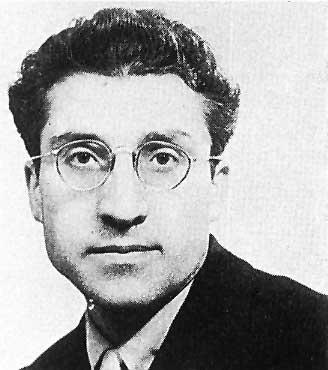
In the spring of 1935, the young Cesare Pavese was sentenced, for “antifascist activities,” to three years of detention in a small seaside village in Calabria. Far away from his familiar life in the city of Turin and forced to rely on his own resources, he began to write poems of tremendous power, in terse lines and unsentimental language, giving voice to country people and hard country lives untainted by the propaganda of Fascism. Pavese is widely regarded as one of the foremost writers in twentieth-century Italian cultural history, and in particular as an emblematic figure: an earnest writer maimed by fascism and struggling with the modern existentialist dilemma of alienated meaning. Pavese’s first book, a collection of poems titled Lavorare stanca or “Hard Labor,” appeared in 1936, shortened by four poems deleted by fascist censors. Seven years later, Pavese published an expanded version nearly double the size of the original. Pavese is widely regarded as a modern “mythic” poet, who bridged the gap between the general and the particular, the past and the present, and external and internal experience, by means of a personal mythology. He called his poetry “an attempt to express a cluster of fantastic associations, of which one’s own perception of reality consists, with a sufficient wholeness.” (adapted from The Poetry Foundation and other sources)
Discover more from Vox Populi
Subscribe to get the latest posts sent to your email.

Just back from a long day away to find this poem — what a beauty, what a poem. Such imagery. Thank you, Michael — I hadn’t read Pavese for years, will return to his Hard Labor that I have, all tattered but there, on my shelves…
LikeLiked by 1 person
Thank you, Laure-Anne. His poems are important to me and to many other readers.
>
LikeLiked by 1 person
I know those old men and their vineyards, the hard life, and the frustrations. Brilliantly drawn.
LikeLiked by 1 person
Thanks, Rose Mary!
>
LikeLiked by 1 person
Such a fabulous and subtle poet! Thanks, Mike– as so often!
Syd
LikeLiked by 2 people
Thanks, Syd. You may remember the late 1970’s when Hard Labor was THE book to read. Somehow, it’s fallen off the radar. We need to bring it back.
LikeLiked by 1 person
I too will seek out Hard Labor. The book, Hard Labor, that is.
The poem is a masterpiece. A miniature description that haunts. Thanks for showing us Pavese, Mike. Keeping him in your rotation of poetry, will do us all good.
LikeLiked by 2 people
Thank YOU, Jim.
LikeLiked by 1 person
The landscape description is beautiful, but the battle between the farmers and the invisible thieves creates dramatic tension that holds the poem together and gives it emotional texture.
LikeLiked by 3 people
The Haves and the Have Nots?
LikeLiked by 2 people
Yes, but the thieves are not glamorized. They are stealing the hard work and livelihood of the farmers. We admire the thieves’ skillful initiative, but not their ethics. These thieves are no Robin Hoods.
LikeLiked by 3 people
Yes, that was my perception of the poem; the thief is the Have.
LikeLiked by 2 people
Right, got it. I guess I felt an urge to defend farmers as the heroes of the story. HA!
>
LikeLiked by 1 person
Thank you, Michael, for featuring this poem. I will seek out the book, Hard Labor.
LikeLiked by 2 people
One of my favorite books of all time, Christine. I’d love to find out what you think about it.
>
LikeLiked by 4 people
Me, too. I have missed so much.
LikeLiked by 1 person
Yes, the older we get the larger the world becomes.
>
LikeLiked by 2 people
Interesting poem. The most vivid description of vineyards I’ve ever read.
LikeLiked by 2 people
Yes, he describes the landscape beautifully.
>
LikeLiked by 1 person
I love this, as I do all of that great book Hard Labor. He understood so much about our often sad and confused human condition.
LikeLiked by 2 people
I love Hard Labor as well. I first read the book when I was 22 years old and it changed my life.
>
LikeLiked by 4 people