
Vox Populi
A curated webspace for Poetry, Politics, and Nature with over 6,000,000 visitors since 2014 and over 9,000 archived posts.
Fred Everett Maus: Growing Up
Until I left for college, I lived in the same home with my mom and dad. The house was built in 1924. My grandfather was the first owner.
Mockingbird Lane, though it sounds bucolic, was a four-lane street, one of the main east-west routes in North Dallas. Always, during the day, and often at night, from inside the house we heard the steady purr of tires on asphalt.
On the other side of Mockingbird was a large expanse of grass, about the size of a city block, always neatly mowed, which Southern Methodist University sometimes used for sports practice. More often it was unoccupied. Most streets in the neighborhood held steady rows of houses; the field was a welcome exception, shadowless, open, airy. When I was in middle school and high school, I walked home from school across the field, with its subtle breezes, its openness, its quiet.
Several times a week, the neighborhood would fill with the yeasty scent of freshly baked bread from Mrs. Baird’s Bakery. Everyone who grew up there remembers that scent. A visit to the bakery was a common field trip for elementary schools. At the end of the tour, each of us received a big slab of newly baked white bread, warm, with butter melting into it. It was the most delicious treat that anyone could imagine.
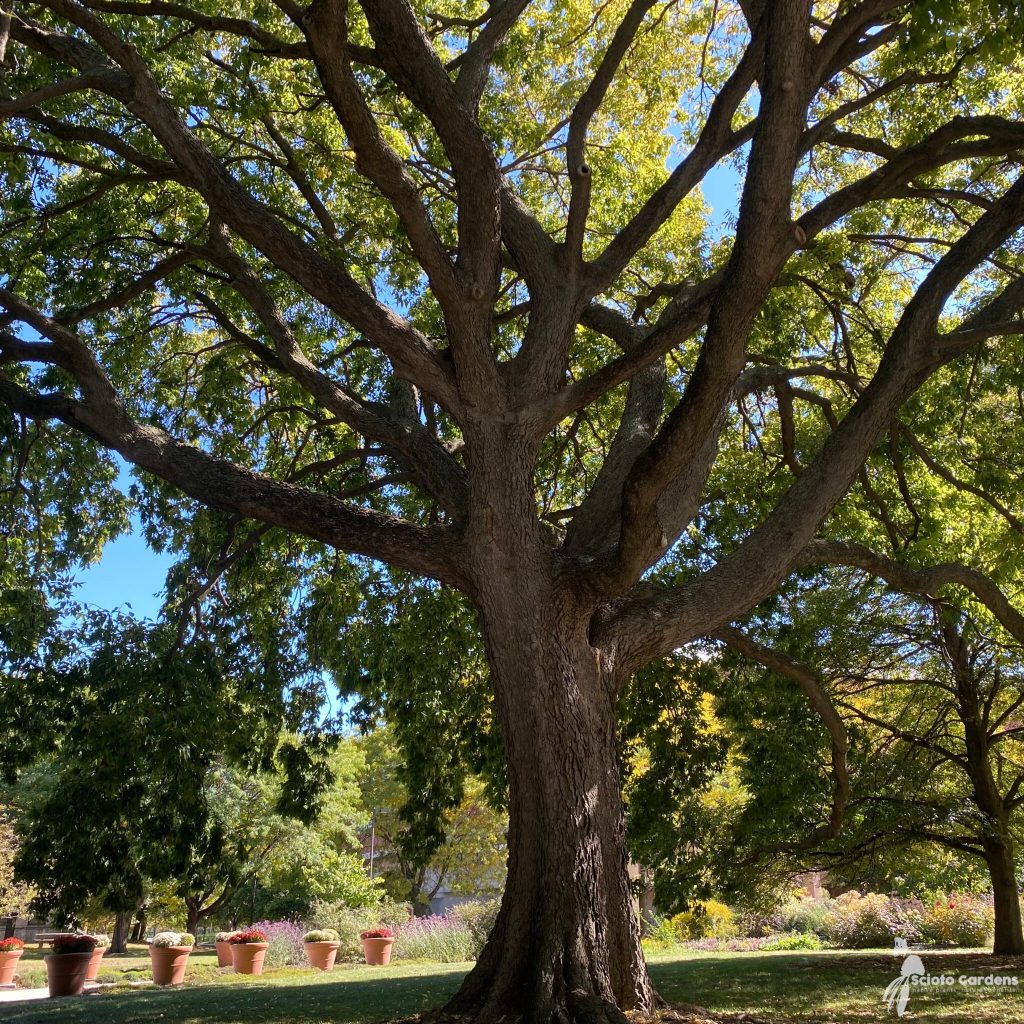
On our side of the street, Mockingbird was lined with hackberry trees. The leaves were far above us. The bark was fascinating—medium gray, with deep furrows between ridges or sometimes a flatter area covered with warts. I loved to look at the bark and touch it. One day I saw something unfamiliar and enchanting, a small blob covered with beautiful fuzzy hair the color of lemon peel, moving slowly along the bark. I coaxed it onto a stick and took it inside to show my mother. “Don’t touch it, it’s poisonous,” she said. “It’s an asp.” My mother was calm, but I was suddenly terrified, and I threw the stick and the asp across the room. Then my mother and I captured the asp and took it back outside.
The red brick two storey house was elegant, in a neighborhood of elegant houses. Most strikingly, a part of the roof in the front of the house swooped down at a 45-degree angle from the tip of the attic to the top of the first floor. I knew it was dramatic and expressive; I always felt something when I looked at it, but I wasn’t sure what it expressed. My parents, as professional musicians, did not have much money, but my grandfather was a successful builder; he had had the resources to buy the house and the good taste to choose it.
My parents taught private music lessons in our home. We had a front room and a back room, separated our living room. My parents would close all the doors and teach simultaneously. Violin or viola sounds coming from the front, clarinet, flute, trumpet, or recorder from the back. I could sit in the living room and enjoy the chaos of sounds. Some of the students were better than others, of course, We had a fluffy gray and white schnauzer mix who liked to sit with my mother while she taught. But Rags did not like the students equally. Some students regularly brought squeaks and squawks, howls and scrunches into the home. When Rags’s musical taste was offended, she would rise haughtily and leave the room.
When I arrived, there were seven people in the house: my parents, my brother, my two sisters, the new baby, and my mother’s Aunt Lucille, who had moved in to help take care of me. My siblings were much older—11, 13, and 15 years. For part of my childhood and part of my adolescence, my siblings were gone, two of them to college, one having eloped to begin a long-lasting but troubled marriage. Then, I lived like an only child.
Later my brother, unable to support himself, moved back into the house. Thus began several years of his sexual abuse of me. Sex felt good, physically, but everything else about it felt wrong; not just wrong but devastating and cruelly isolating. Over time, he molested me in almost every room of our home. For years, during and after, my thoughts and emotions swirled like a malignant kaleidoscope. For a long time, I remembered my youth mostly as painful. It’s been a sustained and ongoing project to regain and fully believe the joyful parts
I was a serious piano student, and when I was 13 my parents bought me a small grand piano. Chickering was a major U.S. piano company for many years. Unlike other companies, they did not follow all the technical changes that gave modern pianos their thick, loud, brawny sound. Our 1923 Chickering was delicate and gentle, its notes thin and precise, like needles, never like mallets. Our living room was spacious. Sometimes my parents’ musician friends would visit to play chamber music, sometimes preparing a concert, sometimes just to enjoy the intensity of mingling their vibrations. My parents and I also played chamber music together. Our verbal communications were spare and unspontaneous, but our musical communication was warm and loving.
Once, years later, I was driving on Interstate 95. Tired from dodging erratic drivers and giant trucks, I paused at a truck stop for a meal. Eating my green beans, close to flavorless, cooked into pale, soggy memories of their earlier crisp selves, I suddenly noticed that they were delicious. I was bewildered—I could also tell that they were awful. Then I understood: they were exactly like the canned beans my mom used to serve us, which I never judged while I was growing up. I was remembering home, and that was delicious. My mother, a fine violinist, had little interest in cooking.
My father, though, had a specialty–his salads. Almost every night, something different and wonderful would fill our large, pale, worn wooden salad bowl. Crisp chunks of iceberg with deep red ripe tomatoes, tangy green or black olives not from a can, celery slices crisper than the lettuce. And surprises, always changing: perhaps slippery bean sprouts tonight, or water chestnuts somehow both crisp and watery, sunflower seeds, stinky chunks of gorgonzola … He frequented a collection of small ethnic groceries around Dallas where he sought high quality, distinctive, attention-grabbing ingredients. “Every bite is different,” my mother would murmur happily.
Copyright 2025 Fred Everett Maus
Fred Everett Maus is a professor of music at the University of Virginia. Their many publications include The Oxford Handbook of Music and Queerness (2022) which he co-edited with the late Sheila Whiteley. The Handbook received the 2023 Philip Brett Award for “exceptional musicological work in the field of gay, lesbian, bisexual, transgender/transsexual studies.”
Discover more from Vox Populi
Subscribe to get the latest posts sent to your email.

Thank you for this. I was fortunate enough to meet Fred Maus at a UVA writers’s conference. So here’s the scoop. Not only is he a musician and a professor, he is also a fine poet and a dedicated activist, in sum, a fully rendered human being.
LikeLiked by 1 person
You are absolutely right, Edison. I’ve known Fred since 1973. Even as a teenager, he was brilliant. as well as a decent human being, and a large part of what I’ve become professionally began in our long conversations about poetry.
LikeLiked by 2 people
I made that tour of Mrs. Baird’s Bakery, only mine was their factory in Houston. I hated butter, so it was disappointing, though I first saw an assembly line of loafs there. When I was aged 3-5 we lived in Irving, Texas, and for some reason my Dad drove us way over to Mockingbird Lane for church on Sundays. Forgot both of those connections till this essay.
Just two days ago, our little discussion group here in St. Paul discussed an article that led us to talk about nostalgia. One member had looked up the etymology of the word, and it turns out its ancient Greek origins meant homesickness, the pain of wanting to or going back home, most noted in the Odyssey of Homer. I feel like Maus has taken us on his odyssey to a place that can open our own pathways to what once was, for each of us better and/or worse.
LikeLiked by 2 people
Thank you, Jim, for this personal response to a very personal essay.
LikeLiked by 2 people