
Vox Populi
A curated webspace for Poetry, Politics, and Nature with over 6,000,000 visitors since 2014 and over 9,000 archived posts.
Cesare Pavese: Notes on Certain Unwritten Poems
Postscript II of Hard Labor.
Translated by William Arrowsmith
It is worth noting that, after a period of silence, a poet proposes to write, not a poem, but poems. The unwritten page is viewed as a risky exploration of something which, in the future, he will have the knack of doing. As of tomorrow morning, words, form, situation, rhythms all promise him a much wider horizon than the poem he will actually write.
If this widening future were boundless, if it had no horizon and were synonymous with his whole possible future, the poet’s normal urge would be to keep on working, to muddle along and think no more about it. But the future is limited, it has a spiritual size and dimension; and although the limits may not be visible to the poet, they are present in the inward logic of the poem he is about to write. The poem he will write is like a door, it opens out to his ability to create; and he will go through that door—he will write other poems, he will exploit the ground and leave it exhausted. This is the essential point—the limitation, i.e., the extent, of this new territory. The poem he will write tomorrow will take him through several doors, not through all possible doors. The day will come when he will write tired poems, poems without promise, the kind of poem that tells him that that particular adventure is over. But if the adventure has a beginning and an end, that means that the poems written during that period form a single group and make up a lyric whole—i.e., the dreaded canzoniere.
It is hard to know when such an adventure is over. The tired or “terminal” poems may, after all, be the loveliest of the group, and the feeling of depression or boredom connected with writing them is not markedly different from that which reveals a fresh horizon. For instance, I wrote “Simplicity” and “Morning Star” (winter 1935-1936) in a state of indescribable boredom; it was perhaps precisely to escape my own boredom that I handled them so boldly and allusively that, rereading them now, they seem full of promise. Which means that the test of boredom is inadequate proof of a transition to a new phase, though boredom and dissatisfaction are admittedly the chief stimulus of any poetic discovery, great or small.
A sounder criterion is that of intent. A poet’s poems are described as “tired” or “terminal”, or as “fresh” and “promising” because he himself chooses to consider them that way. This criterion is clearly not arbitrary, since it would never occur to a poet to make a capricious decision about a poem’s import. He will choose to write not simply those poems which struck him as promising when he wrote them (something which, because of the boredom already mentioned, rarely happens), but those which, upon later reflection, offer him the promise of future poems. It must also be noted that the unity of a group of poems (the poem) is not an abstract idea already present in the draft, but an organic flow of meanings and approaches which very gradually define themselves in concrete form. Besides, even after the poet has finished a group of poems, he sometimes cannot discern their unity and has to discover it by carefully analyzing every poem, changing their arrangement, and understanding them better. But the effective unity of a narrative is as it were self-created, and it is the very machinery of narration that makes it realistic. The new group, my future poems, could of course be structured along autobiographical lines, which would mean narrative in the realistic sense of the word. For the time being, I have excluded this possibility.
I must now decide whether a number of homeless poems (not included in the 1936 edition of Hard Labor) are the end of an old group or the beginning of a new one. By the very act of writing them, I obviously meant to move beyond Hard Labor, since at the time (winter 1935) the book was already at the printer’s. The winter of 1935- 1936 was for me an acutely critical time. A long period of optimism and self-confidence was beginning to break down, and I was trying to rethink my attitude toward my profession from scratch. My reflections were committed to my diary and gradually turned into a lengthy examination of my entire life which, combined with subsequent anxieties (1937-1939), finally convinced me to try my hand at short stories and novels. Now and then I wrote a poem; in the winter of 1937-1938, during an effective return to the conditions of 1934, the year of Hard Labor, I wrote several. But I became more and more convinced that my real field was prose and that these poems were in fact an “afterglow.” Then, in 1939, I wrote no poetry at all. In early 1940, when I once again returned to poetry, it was to ask whether these unassigned poems belonged to Hard Labor or indicated a new departure.
The fact is that, when I picked up the book and adjusted the order so as to include several poems deleted by the censors in 1935, the later poems fell naturally into place and seemed to form a whole. Practically speaking, then, I had the answer to my question, but the fact remains that the direction of these unassigned later poems gave me clear hopes of writing a whole new group.
Let us see. These later poems fall into two natural groupings, which are also chronological. Winter of 1935-1936, the winding up of my political detention in Calabria: “Myth,” “Simplicity,” and “Morning Star”; winter of 1937-1938, sexual passion: “The Old Drunk,” “The Voice,” “The Country Whore,” and “The Boatman’s Wife.” Clearly, these two thematic groupings were already present in the 1936 edition of Hard Labor. The first group is linked to “Sultry Lands” and “Prison: Poggio Reale”; the second group is connected to “Motherhood” and “Sad Supper.” The crucial question is whether anything in their tone justifies my intention of assigning them to a new book of poems—which is obviously what I hoped when I wrote them.
It seems doubtful. The novelty of “Morning Star” was an illusion. The sea, the mountain, the star, the solitary man—these elements or themes are already present in “Ulysses,” “Displaced People,” and “Passion for Solitude.” And the rhythm of imaginative movement is not different from, or even significantly richer than, earlier poetry. The reader is left with nothing but the human figure seen in his essential gestures and narrated by means of those gestures. The same thing could be said of the women’s portraits in the second group (“The Old Drunk” and “The Boatman’s Wife”) which, apart from the outward novelty of the dream, repeat the figurative pattern of “Ulysses” and “Women in Love”; both make use of the internal image (a detail of the picture, used as a term of comparison) and both fail to achieve even the hazy ideal of the “image-story” I advanced in 1934. As for the austerity and economy of “The Boatman’s Wife,” it takes us right back to “Deola Thinking.”
The truth of the matter is that during those years of personal crisis (1937-1939), my artistic purpose expressed itself, not so much in these new poems as in the reflections I was making in my diary at the same time—reflections which finally suffocated the poetry. Since periods of poetic activity usually end with critical awareness, and since my diary constantly stressed the problem of my poetry, a crisis—a crisis of renewal—was clearly in the offing. Put it this way. In the actual work of writing Hard Labor I had succeeded in defining what I was doing, and when I recently went back to the book and rearranged it, I discovered that it had a formal structure (an idea which in 1934 struck me as ludicrous). And this very discovery shows that I intended to go beyond Hard Labor, to strike out in a new direction. By the very act of examining the poetics involved in the poems I had written after 1936, by my discovery that they were compatible with the rest of Hard Labor, I indicated my desire to work out a new poetics and suggested the direction it might take. Why, then, these constant, fragmentary critical inquiries which occupied me for three long years?
Hard Labor can be defined as the adventure of the adolescent boy who is proud of the countryside where he lives and who imagines that the city will be like the country. But in the city he discovers loneliness and tries to cure it with sex and passion; but they only uproot him and alienate him from city and country alike, leaving him in a more tragic loneliness which marks the end of adolescence. In this canzoniere I discovered a formal coherence—the evocation of completely solitary figures who are imaginatively alive insofar as they are bound to their brief time and place by means of the internal image. (Example: in “Landscape VI” the foggy air intoxicates, the beggar breathes the air as if it were grappa, the boy drinks in the morning. The entire imaginative life of Hard Labor is based upon this kind of imagery.)
For four years I lived that adventure, and now it is over, along with the techniques created to evoke it. The adventure itself ended with my practical acceptance and understanding of male loneliness; I finished with the techniques by demonstrating a need for new rhythms and new forms (and a few meager efforts to achieve them). My criticism has fallen, as it should, with special severity on my idea of the image. My ambitious definition of 1934—that the image was identical with the plot of the story—was shown to be false or at least inadequate. More recently, I have created real figures by rooting them in their background by means of internal metaphors, but this metaphor itself has never been the subject of the story for the simple reason that the subject was a character or a real landscape. It is no accident, after all, that I saw that the only possible unity of Hard Labor was a real human adventure. As is the canzoniere as a whole, so is the individual poem.
Let me say it clearly: tomorrow’s adventure, my future poetry, must have different reasons, different motives. This future collection, this new canzoniere, will clarify itself only when it has been written —by which time I will be obliged to repudiate it. In what has been said there are two premises which concern this future work:
1. Its general structure will be analogous to the structure of each poem in it.
2. It will be incapable of prose paraphrase.
The second premise—my requirement of a poetry that cannot be reduced to narrative—is optional; nothing requires it. Yet it is the yeast of tomorrow’s poetry. It is the arbitrary, the precritical factor; only insofar as it is, can it stimulate poetry. It is an intention, an irrational premise, which only the work itself will justify. Four long years of self-questioning and aspiration impose this need on me now—just as in 1931 and 1932 a voice required me to tell my poetry.
Obviously the need to write a different kind of poetry brings with it the need to know what this new poetry will say. But only the new poetry will say what it is, and once it has said it, it will be a thing of the past, as Hard Labor is now.
And this time too, no doubt about it, the question of the image will be crucial. But this time it will not be a matter of narrating images—an empty formula, as we have seen, since nothing whatever distinguishes the words which evoke an image from those which invoke an object. It will be a question of describing—whether directly or by means of images is irrelevant—a reality which is not realistic but symbolic. In these future poems events will take place—if they take place —not because reality wishes it, but because intelligence so decides. Individual poems and the canzoniere as a whole will not be autobiography, but judgment. Which is what happens, after all, in The Divine Comedy (we had to get around to Dante sooner or later)—always bearing in mind that my symbol will correspond not to Dante’s allegory but to his imagery.
There is no point in thinking about the book of poems as a whole. As we saw in the case of Hard Labor, all one can do is immerse himself in the individual poem and overcome the past within the limits set by the poem. If the first of my two premises is correct, all that is needed is to write a single new poem—it may already be written—and the whole canzoniere, the entire poem, will be assured. Not only that: once a single verse exists, everything will be implicit in it. A day will come when one calm, peaceful glance will bring order and unity to the laborious chaos which begins tomorrow.
Note: The poems deleted by the Fascist censor were: “The Goat God,” “Ballet,” and “Fatherhood.” Characteristically, the censor’s displeasure was visited, not on the political poems, but those which offended the almost puritan propriety of Fascist “morality.” —William Arrowsmith
~~~~
From Hard Labor by Cesare Pavese. Translation copyright 1976 by the estate of William Arrowsmith. Published by New York Review Books. Included in Vox Populi with permission.
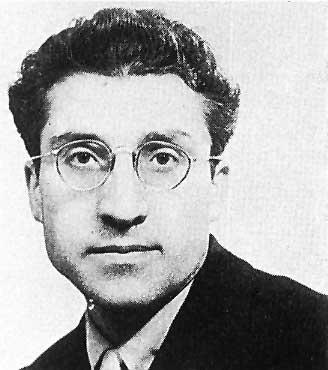
In the spring of 1935, the young Cesare Pavese was sentenced, for “antifascist activities,” to three years of detention in a small seaside village in Calabria. Far away from his familiar life in the city of Turin and forced to rely on his own resources, he began to write poems of tremendous power, in terse lines and unsentimental language, giving voice to country people and hard country lives untainted by the propaganda of Fascism. Pavese is widely regarded as one of the foremost writers in twentieth-century Italian cultural history, and in particular as an emblematic figure: an earnest writer maimed by fascism and struggling with the modern existentialist dilemma of alienated meaning. Pavese’s first book, a collection of poems titled Lavorare stanca or “Hard Labor,” appeared in 1936, shortened by four poems deleted by fascist censors. Seven years later, Pavese published an expanded version nearly double the size of the original. Pavese is widely regarded as a modern “mythic” poet, who bridged the gap between the general and the particular, the past and the present, and external and internal experience, by means of a personal mythology. He called his poetry “an attempt to express a cluster of fantastic associations, of which one’s own perception of reality consists, with a sufficient wholeness.” (adapted from The Poetry Foundation and other sources)
Discover more from Vox Populi
Subscribe to get the latest posts sent to your email.

I feel like I just met this guy. A few days ago I finished reading two books by Natalia Ginzburg, Family Lexicon and The Little Virtues. Pavese was Ginsburg’s friend and comrade; she wrote fondly about their lives together. It’s great to see his writing here on Vox Populi.
LikeLiked by 3 people
Thanks, Stephanie. Pavese has influenced many American poets.
>
LikeLiked by 2 people
Pavese was an important poet for me when I was in grad school and was in danger of being swallowed by surrealism, popular at the time. His authenticity and clarity have been guide stars for me ever since.
LikeLiked by 3 people
Danger of being swallowed by surrealism. Bet you would have been a tough morsel to digest in that tract.
LikeLike