
Vox Populi
A curated webspace for Poetry, Politics, and Nature with over 6,000,000 visitors since 2014 and over 9,000 archived posts.
David Kirby: In Praise of Chaos
Adolphe Sax came up with the instrument
that bears his name to this day, but he also
worked out other inventions that were
never actually built—the Saxotonnerre,
for example, an organ so massive it could be
heard across all of Paris, and the Saxocannon,
a giant artillery piece powerful enough
to destroy an entire city—and all this in
a workshop thick with the scent of hot brass
and leather where workers scurried past
scarred work benches like alchemists’
assistants. It was a capernaum, as the French
call it, after the bustling Biblical town
where Jesus preached, cast demons out
of the synagogue, healed a paralytic
who had to be lowered through a hole
in the roof because the crowd outside
was so great. If you had a workshop
like Sax’s, poems would swarm around you,
tugging your ear, tweaking your nose,
each saying, Write me, I am beautiful.
Capernaum was a prosperous town on
the Sea of Galilee that saw more of Jesus’s
miracles than any other place, but he
condemned it in the end, saying,
And you, Capernaum, will you be exalted
to heaven? No, you will be brought down
to Hades! because the town remained
unchanged, unmoved, unaware of the grace
it had rejected, the squandered opportunity.
Picasso says, Inspiration exists but it
has to find us working. The more you work,
the more mistakes you make. If you make
enough of them, it’s considered your style.
~~~~~
Copyright 2025 David Kirby
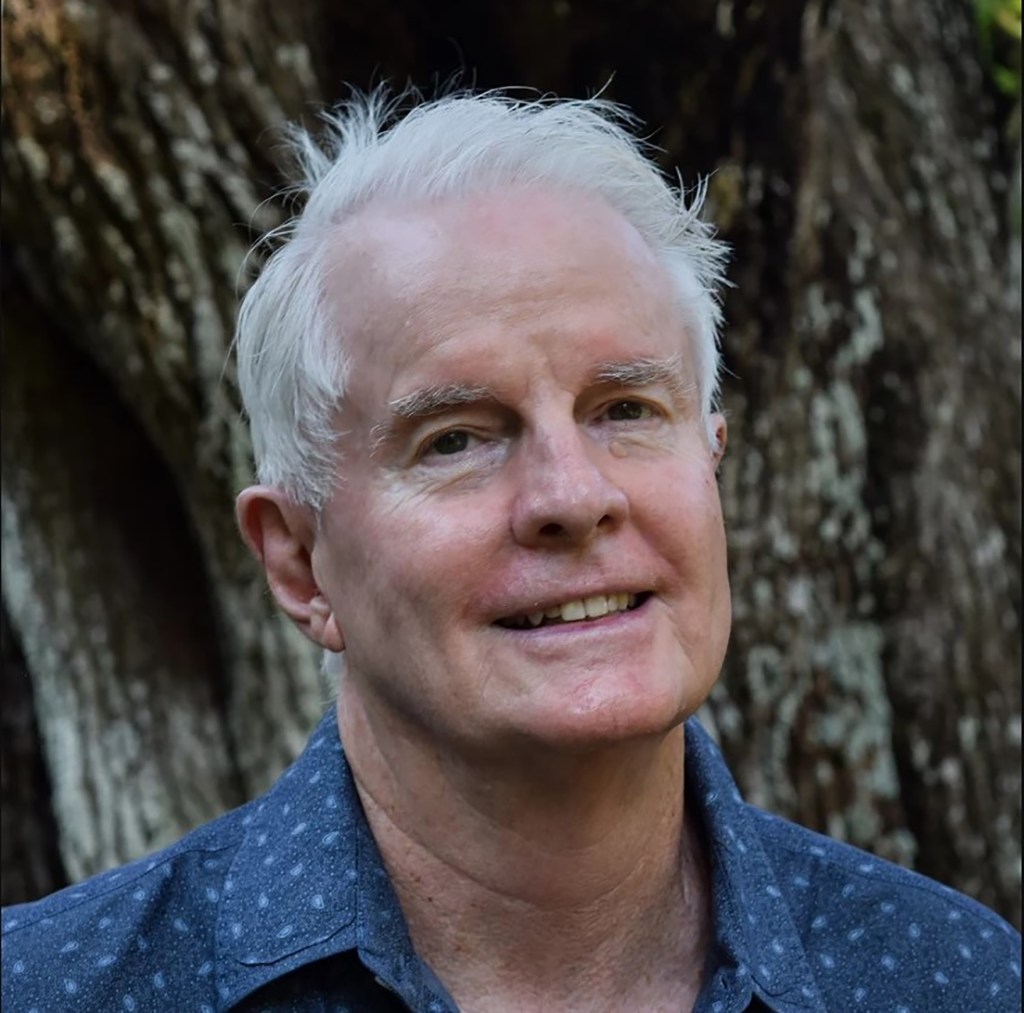
David Kirby is the Robert O. Lawton Distinguished Professor of English at Florida State University. He has received many honors for his work, including fellowships from the Guggenheim Foundation and the National Endowment for the Arts. His many books include The Winter Dance Party: Poems, 1983–2023 (LSU, 2024).
Discover more from Vox Populi
Subscribe to get the latest posts sent to your email.

How does this man and his poetry take place so seemingly effortlessly? There must be a laboratory in his back yard, set among the fig trees and azaleas, a chamber of effects he need only to enter, hang his fedora on its peg—shoo the kitty out to search for salamanders in the morning that glistens—and commence to write. That must be this man.
LikeLiked by 1 person
Sean, how did you know about David’s necromancy lab? You’ve described it perfectly.
>
LikeLike
Down to the cat!
LikeLike
I went there once, in a poem
LikeLike
I’m always surprised how David can take a few random facts — in this case, facts about the workshop of the inventor of the saxophone — and turn them into a great poem. His talent awes me.
LikeLiked by 4 people
What a swell, fine, resonant, loud, fun, wise poem. And, as you know, Adolf Sax was Belgian — so let this old Belgian hug you for your perfect poem!
LikeLiked by 3 people
Dick Westheimer writes: “David writes like a man weaving through traffic late to his own wedding, arrives at the chapel, dashes up to the alter with his shirttails flying, and then catches the bouquet.”
LikeLiked by 1 person
David writes like a man weaving through traffic late to his own wedding, arrives at the chapel, dashes up to the alter with his shirttails flying, and then catches the bouquet.
LikeLiked by 4 people
That.
LikeLike
And marries himself.
LikeLiked by 1 person
HA!
LikeLike
I love Kirby’s work. There doesn’t seem to be anything he can’t get into a poem. And this one, the way it ends, I think I’d like those last 4 lines posted above my desk:
Picasso says, Inspiration exists but it
has to find us working. The more you work,
the more mistakes you make. If you make
enough of them, it’s considered your style.
LikeLiked by 4 people
His poem also gently reminds me of something William Stafford said, “My style is my plight as a human being.”
LikeLiked by 3 people
Yes, or as someone else said, “The style is the man.”
>
LikeLiked by 2 people
Yes.
>
LikeLiked by 1 person
Grinning from the last lines. Onward to more mistakes!
LikeLiked by 3 people
Such a stylish poet, David himself, unmistakably! The scent of hot brass and leather. xox
LikeLiked by 4 people
Yes, the scent. No other poet would have gone there.
>
LikeLiked by 2 people
“Write me. I am beautiful.” So much to love here. Thank you.
LikeLiked by 3 people
Thanks, Hayden.
>
LikeLiked by 2 people
The Picasso wisdom will keep me smiling all day. So true. LOL
LikeLiked by 2 people
David’s great, isn’t he?
>
LikeLiked by 2 people
What a wonderful poem! I’ll be holding on, at my desk, to those last two sentences.
LikeLiked by 4 people
David’s poem serves as both inspiration and admonition. Both are useful. Many thanks.
LikeLiked by 4 people