
Vox Populi
A curated webspace for Poetry, Politics, and Nature with over 20,000 daily subscribers and over 8,000 archived posts.
Edna St. Vincent Millay: What lips my lips have kissed, and where, and why
What lips my lips have kissed, and where, and why,
I have forgotten, and what arms have lain
Under my head till morning; but the rain
Is full of ghosts tonight, that tap and sigh
Upon the glass and listen for reply,
And in my heart there stirs a quiet pain
For unremembered lads that not again
Will turn to me at midnight with a cry.
Thus in the winter stands the lonely tree,
Nor knows what birds have vanished one by one,
Yet knows its boughs more silent than before:
I cannot say what loves have come and gone,
I only know that summer sang in me
A little while, that in me sings no more.
~~~~
Public Domain. Source: Vanity Fair (November, 1920)
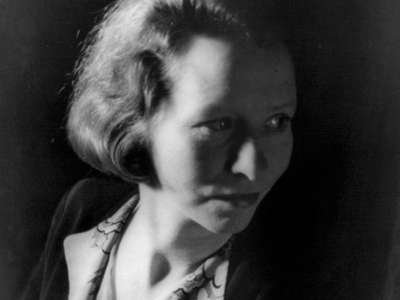
Edna St. Vincent Millay (1892 – 1950) was a renowned social figure and noted feminist in New York City during the Roaring Twenties and beyond. Millay won the 1923 Pulitzer Prize for Poetry for her poem “Ballad of the Harp-Weaver”; she was the first woman and second person to win the award. In 1943, Millay was the sixth person and the second woman to be awarded the Frost Medal for her lifetime contribution to American poetry. Millay was highly regarded during much of her lifetime, with the prominent literary critic Edmund Wilson calling her “one of the only poets writing in English in our time who have attained to anything like the stature of great literary figures.” By the 1930s, her critical reputation began to decline, as modernist critics dismissed her work for its use of traditional poetic forms and subject matter, in contrast to modernism’s exhortation to “make it new.” However, the rise of feminist literary criticism in the 1960s and 1970s revived an interest in Millay’s works. She is now regarded as one of the most important American writers of the 20th century.
Discover more from Vox Populi
Subscribe to get the latest posts sent to your email.

Ah, such magnificent writing from a passionate young woman who made the language sing.
LikeLike
Yes, she did!
>
LikeLike
Michael Thanks for keeping the light on. for what you do and are and the timelessness of what you do. Happy New Year to you, Eva and the world. Rosaly
My Faulkner wish–May we endure…..not just prevail
LikeLike
Thank you, Rosaly, for all you do and have done for poets and poetry.
>
LikeLike
Her elegiac poems are so beautiful. Sigh.
LikeLike
They really are. I always feel that the sonnet form rises naturally from her voice. Never forced.
>
LikeLiked by 1 person
the lost, grief memory and hidden/dead longing… all…in perfect pitch. I discovered Millay first in a one act play of hers, ARIA DA CAPO…a jewel of greed and nastiness and cruelty… style. loved it, but when her poetry found me or me… it..i wondered if i’d ever dare to make such lines. Thank you for this reminding. .
LikeLike
Thanks, Margo!
>
LikeLike
For me, Millay was a DISCOVERY when my English began to work. I had never read her in English before, only in translation. A master indeed. The courage, the vulnerability, the beauty, the craft – this poem ‘sings’ indeed, Michael.
LikeLike
Thanks, Rosemerry.
>
LikeLike
I first read her poetry in the 1960s when my high school English teacher suggested I try “something different.” I loved her poetry right away and haven’t looked back. This poem is one of my favorites.
“…And in my heart there stirs a quiet pain
For unremembered lads that not again
Will turn to me at midnight with a cry.”
Oh my goodness….
LikeLike
Thanks, Marc. Me too.
>
LikeLike
How I adore her! That heart that beats inside those lines!
LikeLiked by 3 people
Ditto, Sean, ditto!
LikeLiked by 1 person
Yes, the poem sings.
>
LikeLiked by 2 people