
Vox Populi
A curated webspace for Poetry, Politics, and Nature with over 6,000,000 visitors since 2014 and over 9,000 archived posts.
Baron Wormser: Distressed
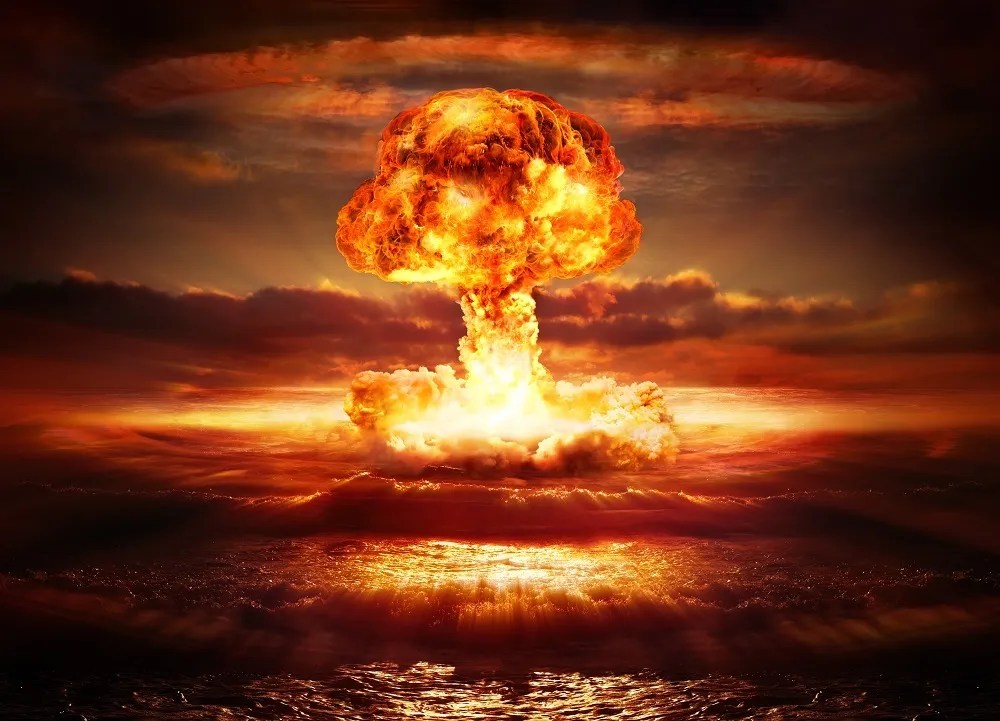
Since grade school when I was hunched under my desk during an air-raid drill, I have been distressed by the specter of the atomic bomb. In 1960 I remember watching the presidential debates and wondering if war could occur over two islands near “Red China.” I remember reading in The Nation (to which I subscribed at the age of thirteen) about the decision to drop the atomic bomb on Hiroshima and Nagasaki. I remember starting to learn the nuclear lingo: overkill, throw weight, fission, deterrence, mutually assured destruction, radiation sickness. I remember the Cuban Missile Crisis and wondering whether I would wake up in the morning. I remember the Doomsday Clock created by the Bulletin of the Atomic Scientists organization (and still very much in effect). I remember in 1964 sitting in a crowded movie theater and watching Doctor Strangelove, or: How I Learned to Stop Worrying and Love the Bomb. I remember laughing at Peter Sellers (a brilliant actor if there ever was one) and feeling somehow relieved that what deeply disconcerted me could be lampooned. And I remember leaving the movie theater and feeling the desolation overtake me that has stayed with me for a lifetime, a feeling of dread and powerlessness but also disgust that humankind invented such a weapon and did not dismiss it as a hopeless abomination, a crime against all living creatures, a crime against Earth.
It’s hard, however, not to be glib. I’m still here aren’t I? I’ve written about the bomb in various poems. They are poems—very small fists knocking on a very thick door. I’ve voted. I’ve watched the arsenals expand and become more “advanced.” And I’ve looked at my powerlessness in the mirror. That gaze has taken me to parenthood, to Buddhism, to gardening, to having a dog, to teaching, to various acts that affirm Life. None of those endeavors has taken away the queasiness I feel, though a rational observer would point out that humankind, during the decades I have been on Earth, has been busy murdering one another on more fronts than I can count. What is a speculative threat beside those bloody actualities? The spectacle of mass death starts to bring a shrug. It’s what the human race does. The contemporary weapons are more able but the motives haven’t changed a whit. Why would they?
As a writer, I’ve looked to those who were honest, an Orwell, a Solzhenitsyn, the great Polish poets of the twentieth century. There are plenty of others but, again, so much counsels us against honesty. We want to please, to get along, to garner acclaim, to push aside suffering, to equate powerlessness with pointlessness, to put on an “I’m okay” face when we are not okay at all, to accept the seeming wisdom of accommodation that too often amounts to nothing more than indifference and self-interest. For writers, there are their careers to brood about. All these behaviors and attitudes speak to a death-in-life that I know too well. Blood and breath carry me along the way they carry anyone along. The miracle of being is swallowed by the mind’s purposes and the body’s appetites. To insist on the sleepwalking state of affairs is to be labeled a party pooper, a Cassandra. Unfortunately, Cassandra was correct.
In 1963, the American poet Hayden Carruth wondered aloud in the pages of The Nation why in looking over a year’s worth of poems in Poetry (“335 poems by 139 poets”), virtually nothing was written about the bomb. His words bear repeating: “In the whole year I found two explicit references to the bomb, one a passing seriocomic remark, and ten poems on the general theme of suffering in war, two of which were translations from foreign poets of an earlier time. There were a great many poems on sex in its various aspects, religion, growing old, being young, thought and feeling, the uses of knowledge, themes unintelligible to me, and painting, music, and poetry.” He went on to write in the following paragraph: “That’s it of course—Poetry. The only topic poets will admit. Time after time they say so. Robert Creeley, one of the best alive, asserts his allegiance to ‘the poem supreme, addressed to / emptiness….’” Carruth’s conclusion, after taking a fair look at the retorts to his indictment, is that though “one can think of a hundred reasons….none of them can explain two poems out of 335. Only blindness can explain that.” His closing sentence could not have been more straightforward: “I think of American poetry, to speak only of that element of our civilization, is stupefied by massive neurosis—terror, repression, spasmodic hysteria—I cannot conceive of a therapy ingenious enough to cure it.”
In trying to face up to any “solution” to the situation, Carruth, as befitted his time and place, looked to psychology with a Freudian slant. I can feel some readers out there puffing their chests and affirming that poetry has (like the missiles) advanced since that date and is aware of the bomb. Certainly, even amid the endless attention paid to the anecdotal self, war is on many poets’ minds. The atomic threat, however, remains shadowy because our keepers, those who believe in the value of Armageddon as a test of ultimate virtue, keep it in the shadows. Why disturb the populace about something that hasn’t happened yet? And no elected representative wants to appear “soft” on whatever issue is looming. The mantra repeated ad nauseam is that a strong defense equals strong security, whatever “security” means. Since the nation endured the agony of 9/11 and there was no investigation of why the attacks happened nor of the failures of those in power who ignored warnings about the attacks, we can assume any reckoning with catastrophe can be postponed indefinitely. Hiroshima and Nagasaki happened a long time ago.
No doubt Carruth (whom I knew) placed a heavy burden on the slim back of poetry. That was his wont and one, to my mind, to be cherished. Blake and Shelley were real presences to him. The hard questions that poetry could pose were very important, as in: What are we doing here? Why do we believe what we believe? What lies are circulating among us? How much are we the captives of circumstance? How do we locate ourselves in history? This was not say, perish the thought, that poetry need be humorless, moralistic, and didactic in the sense of punishing the auditor with an immovable lesson. Dramatic occasions to ask those questions remain with us and show no sign of leaving soon. Poetry, however, as Carruth would have been the first to acknowledge, was (and is) a marginal matter in the national scheme of things.
What particularly rankles me is that the so-called spiritual domain in the society, the world of organized religion, shows so little concern for what I called earlier an “abomination.” Apparently, this word no longer has any currency and my distress is purely imaginary. Indeed, if religion is represented by the Christian God who is in His heaven and guarantees salvation to those who follow His teachings (and His son’s), then the Creation, has no spiritual component. Mother Earth’s banishment is a matter of long-standing record. Since what motivates people is passion of one sort or another—for money, for sex, for gain—passion for Earth, by which I mean an intense, abiding love, has very little room to express itself. Reason, dogma, authority, and invention subdued such passion in the course of what we like to call “civilization” or as the textbook I used in high school called it, “The March of Civilization.” To speak against the accumulated force of religion is a waste of time and puts the speaker in the ranks of futile scoffers, objects of easy derision. Rather, and I think Carruth felt this because we talked about it more than once, the spirit shown in poems that connected with Earth and which shone in many of Carruth’s poems was crucial to sustaining life on Earth. Such poems represented vision that modern people, who were the vassals of their machines, sorely needed. The repository of value, first and last, was Earth.
It seems strange to call what I just wrote a radical thought because it seems so evident. Plainly, it has not been evident under the reign of millennia of aggrandizing patriarchy. As the present moment in the United States sadly shows, the endless political hot air, to say nothing of malice, has zero respect for Earth and is glad to banish such feeling to the realm of impracticality, as if the continuing build-up of nuclear arms was somehow practical. Those poems I wrote about the bomb were, whatever their artistic merit, gestures of meaning. Earth, with its seasons, its tides, its day and night, its multitude of creatures, its green genius, nurtures our sense of meaning. Men—for it is largely men who have been behind the bomb—like to propose some expediency that excuses their unholy ardor along with their mendacity and thoughtlessness. “Business as usual” is the standard phrase, as if some meaning resided there. Perhaps the bomb has become “usual” to those who sit in the councils of power. Perhaps, as my soul has been telling me for a lifetime, they are terribly wrong.
Copyright 2025 Baron Wormser
In 2000 Baron Wormser was appointed Poet Laureate of Maine. He has received the Frederick Bock Prize from Poetry and the Kathryn A. Morton Prize along with fellowships from Bread Loaf, the National Endowment for the Arts and the John Simon Guggenheim Memorial Foundation. Wormser founded the Frost Place Conference on Poetry and Teaching and also the Frost Place Seminar.
Discover more from Vox Populi
Subscribe to get the latest posts sent to your email.

Three or four years ago I wrote a poem called Fire which opened much like this essay with a remembrance of the Duck and Cover drills we did in first grade; probably in 1953. I wrote of my nightly fears as a child of the bomb falling or my eternal damnation in the lake of fire and brimstone our preacher promised me if I could not accept the Gods Truth which he screamed at me. I, like most people, am not an academic, published poet or a Christian, so I can not speak as to why the Bomb is mostly avoided in these realms, but, it seems to me, people realize that once man has invented something that it can not, will not, ever be destroyed or abolished; it will never happen. We know ourselves too well, so we accept this fact and try to ignore it. Oh, at the end of my short poem I announce that I have just been to a funeral home where I purchased a cremation plan for my wife and myself; age does makes a difference in our perceptions.
LikeLike
Thank you for this, Leo.
>
LikeLike
Indeed. And it’s not just the bomb (my daughter, 10 years old, after a similar stint at school, used to come into our bed at night because she had a nightmare about the atomic bomb and didn’t want to die), we are killing this beautiful earth inch by inch, and it seems as though only very few people get upset bout it. Poets included. Once there are only ‘winner’s and ‘losers’, and that is measured in money, we are sunk. The bomb is just the ultimate expression of the danger we pose to everything that lives. But then, some of those who are in the know, are planning to go to Mars. And it’s just not ‘fashionable’ to write about it.
LikeLiked by 1 person
Thanks, Rose Mary.
>
LikeLike
Lest we forget or ignore.
Baron Wormser reminds us of our dilemmas with great forcefulness; here, of the obliteration some humans thoughtlessly plan. There are those in power who seem to have a death wish for the earth and for us… if not for themselves.
Thanks for the memories of Hayden Carruth, by the way.
LikeLike
I’ll join Michael to thank you for
remembering Hayden….
LikeLike
Yes, Hayden was great!
>
LikeLike
I throughly enjoyed this crucial essay! I used to teach a course on film and literature in the wake of the atom bomb so am deeply interested in your powerful response to the strange absence (or near absence) of this topic in our literature (and in the culture at large). I would say, however, that Christianity is, for many people, like Buddhism, a way of life, meaningful to many, that expresses itself not only through its institutions. Many thanks for this!
LikeLiked by 1 person
This is so acute and “right on” that it is painful to read, especially in light of all that is going on at the moment. I am even reading about those in power babbling about using “tactical nuclear weapons” as of they were nothing, as if they were no more harmful that a small hand grenade. I despair of educating those who don’t want to learn and like things the way they are. But we must keep putting articles like this in front of the general public, and perhaps we need to have similar articles produced using “low literacy language” so those who believe it’s okay to use these nuclear bombs “might” understand what they leave behind.
LikeLiked by 3 people
I couldn’t agree more, Mandy. Thank you.
>
LikeLiked by 3 people