
Vox Populi
A curated webspace for Poetry, Politics, and Nature with over 6,000,000 visitors since 2014 and over 9,000 archived posts.
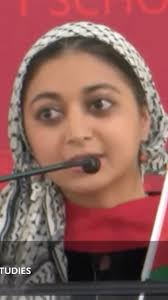
Video: The commencement address that Harvard suppressed for mentioning genocide
Here is the full text of Zehra Imam’s address:
BISMILLAH IR RAHMAN ir raheem — in the name of God the most beneficent the most merciful
Who are the people who accompany you when you find yourself in the wilderness? Who are the people who hold you accountable when you have wronged someone? Who are the people who remind you of your worth and give you the courage to try again? And who are the people who sit with you as we witness the moral injuries of our time? From Somerville and Cambridge to Palestine, Congo, Kashmir, Arakan, Armenia, Sudan and beyond.
For me, it is my students. For me, it is my grandmother.
When I was a child, during the holy month of Muharram, my grandmother would lead me by the hand to gatherings that would become a gift for me in moments of moral chaos, teaching me what it means to grieve extreme loss and how to stand with those who long for justice, even if you find yourself standing alone on the sand dunes of a final destination called Karbala.
On 10 October, 680 CE, in that place called Karbala, there was a family that refused to be ruled by a tyrant. Imam Hussain, grandson of Prophet Muhammad, and his family did not submit to a political power because his conduct was unjust and unethical. For this, 72 members of the Prophet Muhammad’s (pbuh) family were martyred in battle by an army of thousands.
And yet, even in facing these odds, Imam Hussain gave water to his enemies.
Moved by this act of humanity, Hurr, the commander of the army on the opposing side, sought out Imam Hussein that night.
Imam Hussein rose to greet him, saying, “I had been waiting for you to arrive.”
And Hurr, whose name means freedom, switched sides.
A full accounting of the Battle of Karbala is this: Seventy-two lives lost. But one soul gained.
Who are the people we are giving water to? Who are the people we are withholding water from?
Last year, I had the privilege and honor of offering a class called “Poetry of the Camps” to students in besieged Gaza. We came together to write poetry as fires raged across the north of Gaza, ignited by an onslaught of Israeli airstrikes. In the wilderness of their genocide, working with these students was the only thing that got me out of bed because it was one small way I could grieve their extreme loss and stand with each of them as we continue to fight for their freedom and justice.
One of them, Hend, is a medical student at Al-Azhar University in Gaza. Like us, Hend loves learning. “I was raised to love books,” she wrote, “I never thought I would have to feed them to a fire so I could have a meagre meal. Genocide has pushed us to do things we never imagined in our darkest nightmares.”
Israel has bombed every university in Gaza.
This week, I witnessed a 6-year-old Palestinian girl named Ward — a flower amongst the flames — run to save herself after Israel bombed every family member she knew at a school serving as a shelter.
Earlier this month, as Pakistan faced airstrikes from Israeli-made drones, it was Esraa from Gaza who checked in with me about my family’s safety. When I thanked her, she said, “Living through hardships and suffering doesn’t mean that we can underestimate other people’s suffering. I wish you safety.”
There are no safe zones left in Gaza after 600 days and 77 years of genocide.
I center these students with urgent desperation because time is running out — no meaningful aid has entered Gaza since March 2, and this is on our account. I center Palestine today not just because of its scale of atrocity but because of our complicity in it.
Class of 2025, Palestine is waiting for you to arrive. And you must be courageous enough to rise to the call because Palestine will keep showing up in your living rooms until you are ready to meet its gaze.
Here, I must acknowledge that, together in the wilderness, we have witnessed the risks that have come with speaking up for this very genocide to be far-reaching. Yet no matter how charged with punishments the scroll, again and again, we witness too the enormous hearts, unwavering courage, and profound wisdom of students like Rumeysa Ozturk, Mahmoud Khalil, Mohsen Mahdawi, and countless others who are in this very audience with us today, such as Elom Tettey-Tamaklo, our friend and classmate who continues to show up not just for Palestine but for each of us by extending to us the water we need in our most vulnerable moments.
Together, we must refuse to be ruled by the tyrants of our time because our liberations are intertwined.
We gather now to take our second census.
The three of us stand before you not because it was easy to do this together but because it was absolutely vital in a world that has given us chasms so wide no bridge seems to want to meet us along the path. We chose to do this anyway and carve our own path by not lying to one another on the journey. These moments when we dream together in the wilderness are when we absolutely need each other. An honest reckoning is what can prepare us for those dreams of humanity that will endure.
My final poetry session with students in Gaza was on freedom. I asked them: What would the first day of freedom look like? How would it feel on a sensory level? What colors would the day bear; who would they embrace; what scents would come alive on this day of liberation; what tastes would be fulfilled? I leave us with a response from my student and Palestinian writer Duha Hasan’s dream of freedom:
I had a dream
I went back home
Slept on my bed
Felt warmth again
I had a dream
I went to college
Nagged all day
How hectic it was
I had a dream
I wanted to live
I had a dream
I had my favourite meal
I had a dream
My ears forgot the war’s sounds
shouting, bombardment, mother’s sobs, and losses
I had a dream
My eyes forgot the blood, the loss, the patience
Obligatory patience
My nose forgot the smoke smell, the deaths, the corpse rotten
My hands stopped shivering
My body skipped what I had lived
I had a dream
Not panicking
Not imagining death everywhere
I had a dream
First published by The Intercept and included in Vox Populi for noncommercial educational purposes only. For the full account of Harvard’s attempt to suppress this commencement address, please click here.
Discover more from Vox Populi
Subscribe to get the latest posts sent to your email.

Harvard Divinity should be proud of Zehra Imam. The school has had a reputation for being caring and open to a variety of beliefs. To suppress her is a terrible sign of their lack of willingness to continue their openness. Bless her for speaking of genocide.
LikeLike
Yes!!!!!
>
LikeLike
Such bravery and eloquence this young woman has shown. I am touched by the story of offering water to an enemy – would that modern tyrants could find it in themselves to do the same in these times. Thank you for this Michael.
LikeLiked by 1 person
This may be the best and most important public address I’ve ever heard. Brave and eloquent.
>
LikeLike
Of course it would be suppressed. I have even argued with a friend who maintains that it’s only Hamas who are killing their own. No idea where they get their insane conviction from. But a whole machine is working in favour of Israel, a country I visited twice and admired tremendouly once upon a time.
LikeLiked by 1 person
Of course, it would be suppressed. Harvard is making a show of standing up to Trump while quietly suppressing anyone who protests his policies.
>
LikeLiked by 1 person
She was brave
Professor of English, Director of the Environmental Studies Minor
University of Mississippi
Please check out my website: annfisherwirth.com
LikeLiked by 1 person
Yes, bravery is a rare virtue. We should treasure it when it shows up.
>
LikeLiked by 2 people
This should be shouted from the rooftops not surpressed. We should each ask ourselves to whom are we offering water, to whom are we denying it then go out and live accordingly.
LikeLiked by 1 person
Yes!
>
LikeLiked by 1 person
Thank you for publishing this. Beautiful, sincere, thoughtful. Let’s see if I can get it under a comment in Facebook.
LikeLiked by 1 person
Thanks, Barb! This video and essay need to be out there in public.
>
LikeLiked by 2 people
I will continue to post subjects like this under pictures of Monarch butterflies on my Facebook page. (the only good orange Monarch)
LikeLike
Thank you Zehra, this is stirring. Thanks, Michael, for publishing it.
LikeLiked by 2 people
Thanks, Richard!
>
LikeLiked by 1 person
What a very courageous, full-hearted young woman!
LikeLiked by 2 people
Yes, she is!
>
LikeLiked by 3 people