
Vox Populi
A curated webspace for Poetry, Politics, and Nature with over 6,000,000 visitors since 2014 and over 9,000 archived posts.
Sharon F. McDermott: How to Love a Transcendentalist
~
- Meet Him Where You Are and With an Open Mind
Our meeting seemed fated. I was almost through my first year at Glassboro State College located in a South Jersey town known for its apple and peach orchards. There in quiet Glassboro, I took classes in Marketing and Public Relations with a couple of psychology classes tossed in for good measure. By the middle of my first semester, I realized that I did not want to be a Communications major; I had only selected this major to please my father who worked in Public Relations. Before I was accepted at Glassboro, most of my conversations about college with Dad ended with my father’s advice: “You need a major that will land you a good job when you graduate. No one hires English majors.” I loved literature and reading, and I loved expressing myself through writing, but I took my father’s advice–at least initially. But, when it came time to sign up for new courses for the second semester, I signed up for my first English class– an American Literature course taught by Dr. Donahue. And I decided it would be wiser for me not to mention this to Dad.
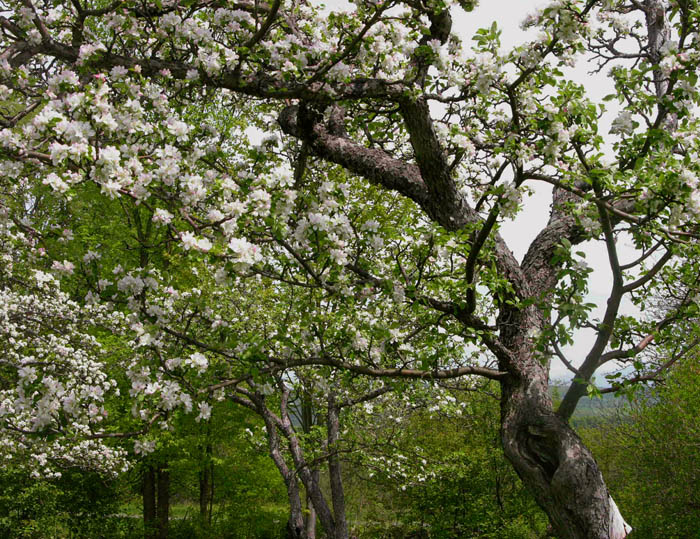
There, in that classroom overlooking Bunce Quad and its apple trees, I was introduced to Ralph Waldo Emerson, an iconic American writer and the leading voice of the Transcendentalist movement. Walking across the quad, on my way to my first class, my senses swooned at the sight and scent of blossoms capping the apple trees with billowing clouds. Pink and white petals perfumed the air and spiraled down on breezy days. Bees hummed in the canopies; birds nested there. Springtime transformed Glassboro’s campus into a picturesque diorama that rivaled the cherry blossoms of Washington, D.C. What a romantic setting for my introduction to Emerson’s words! Eighteen years old and living apart from my parents and eleven siblings for the first time, I was ripe for new ideas, new ways of being. While I already felt connected to the natural world, Emerson’s profound words, especially in his essays “Nature” and “Self-Reliance” soon ignited a fire in me. Before too long, I was smitten by the philosophies of this Bostonian author and orator. In fact, more than smitten: never in my life–either before or after my college years–had a work of writing so affected me. I was transformed by Emerson’s words.
From the start, reading “Nature” and “Self-Reliance,” I felt a kind of thrilling frisson one feels when they’ve met someone who is going to matter in her life. Sure, I could have chosen more amiable and accessible early American writers to love–for example, Mark Twain with his wry sense of humor, Nathaniel Hawthorne with his noble moralizing, or Jack London with his bravado and epic adventures in the wild. But Emerson offered both grounded and revolutionary ideas. His voice was confident, unapologetic, and passionate. His vision? Challenging, idealistic and liberating. How could I resist the force of such words? They were handwritten notes to a young woman who had just begun her first forays into her own independent life. After late afternoon classes, I couldn’t wait to get back to my dorm room, curl up on my bed, and walk again with Emerson through his amazing labyrinth of words.
Emerson’s first challenge to me was this charge: “Trust thyself: Every heart vibrates to that iron string.” I had never been encouraged to “trust myself” before. I was encouraged to obey God, listen to my elders, obey all adult authority, to keep my questions to myself (especially around priests and nuns). Growing up in such a large family, Mom and Dad encouraged us to think first of others–at all times, to prioritize what’s best for the whole community rather than the individual.
Trust myself? Yes, Sharon, young as you are–you must begin to listen to your own good intuition. Allow yourself to make mistakes, to fail. (Emerson underscored the importance of this: “To be great is to be misunderstood!”) Cast off the nuns’ narrow judgement of you! Stop worrying that your family or peers are going to criticize your every choice. And if they do? So be it. This is your one life; live it with purpose and meaning! Embrace what you truly value: your relationship to the natural world, spirituality, your love of family and friends, education, and the essential significance of the arts in your life.
How could I not love a man whose vibrant prose began to–little by little– liberate me from the oppressive “shoulds” of my life?
As we continued reading the Transcendentalists that semester, Dr. Donahue encouraged us to go outdoors to study these authors: “Find a quiet spot in nature and contemplate Thoreau and Emerson’s words in the nature they celebrated.” Sitting beneath a peach tree, I’d read a passage from “Nature” and then lay back on the grass and watch a ladybug traverse my finger or listen to the petaled canopies ring with birdsong. Emerson and I were deep in conversation:
“The lover of nature is he whose inward and outward senses are still truly adjusted to each other; who has retained the spirit of infancy even into the era of manhood. His intercourse with heaven and earth becomes part of his daily food. In the presence of nature, a wild delight runs through the man, in spite of real sorrows. Nature says, — he is my creature…he shall be glad with me…”
What a sweet talker! I smiled down at his words, as their sense washed over me in the silence of those afternoons. Emerson’s voice was a balm to my spirit, a call to pay more attention to the world around me, and a compass pointing in new directions. Cocooned in that beautiful spring with Emerson’s words playing orchestrally in my head, I was a girl in love–with nature’s abundance, with Emerson’s ideas, and with my newly blossoming self.
- Slow Down. Listen. Let the Words Inspire You.
Emerson’s essay “Self-Reliance” stirred my ardor and my action. Though, I initially found his diction challenging–both for his circuitous and often contradictory writing style and for the fact that he, like most male writers of his time (the 1800’s), always used the pronouns he/him. Though it seemed he directed his ideas exclusively to white, educated males, that wasn’t the whole story. As one of the founders of the Transcendentalist Movement, Emerson welcomed many dynamic, creative, and educated women as partners in the movement.
There, in and around Concord, Massachusetts, the New England Transcendentalists included accomplished women such as Margaret Fuller (a prodigy in German Literature and philosophy), Louisa May Alcott (writer of Little Women), Sophia Peabody Hawthorne (an accomplished painter and writer, married to the author Nathaniel Hawthorne) and her sister Elizabeth Palmer Peabody (an educator who opened the first kindergarten in America) among others. In fact, it was the women in the Transcendentalist Movement who influenced the men to consider the rights of the enslaved people of color and the rights of women.
So, from my first introduction to Emerson all those years ago, I simply included myself into his writing, changing the he/him to she/her. When I read Emerson’s rousing cry “Whoso must be a man, must be a noncomformist,” for instance, my mind rewrote it as “Whoso must be a woman must be a nonconformist.” I wore out the pages of “Self-Reliance” with my constant re-reading, trying to integrate Emerson’s own philosophies and spirituality with my own, shaped by twelve years of Catholic school education. Though there were some aspects of my Catholicism that I held dearly, Emerson’s version of spirituality struck a deeper chord within me. “Nature always wears the colors of the spirit,” he said to me, and I understood this in my marrow. “The sky is the daily bread of the eyes,” and I recognized in his words exactly the sustenance and nourishment I derived from all of my interactions with Nature.
Emerson coaxed me to embrace and nurture my individuality and creativity. He advised me to stop fearing the “hobgoblins of little minds” and their judgements. After years of hearing that I was too emotional, too sensitive, too analytical, and too opinionated, I was exhausted from trying to tone myself down. Emerson’s essay was a love letter to the self and a wild awakening to my larger soul. Emerson took me by the hand, looked me straight in the eyes, and said, “Nothing is at last sacred but the integrity of your own mind.”
After internalizing Emerson’s philosophy, I leapt into action: joyfully singing in bands for the four years at Glassboro. I joined our college literary magazine, Avant, as an editor, reader and writer. I faced my father after my first semester of sophomore year and told him that I had to change my major to English. I began quieting the negative voices in my head when I embarked on new projects. Emerson’s words coached me: “Be brave. Don’t dim your light. Fill your life with meaning and purpose and pursue it with fervor.” How could I not love a Transcendentalist? For the creative, analytical, passionate woman I aspired to be, Emerson offered me one final gem:
“The poet, the painter, the sculptor, the musician, the architect, seek each to concentrate this radiance of the world on one point, and each in his several work to satisfy the love of beauty which stimulates him to produce.”
- Let Him Teach You Wonder about the Natural World
One of the central tenets that Emerson and I agreed upon was that–as the Romantic poets of England (Wordsworth, Coleridge, Blake, and Keats) wrote before him–for the individual to remain wholly human, we must nurture a caring, respectful relationship with the natural world. Waxing poetic in his essay “Nature,” Emerson echoed these sentiments, “Crossing a bare common, in snow puddles, at twilight, under a clouded sky, without having in my thoughts any occurrence of special good fortune, I have enjoyed a perfect exhilaration. I am glad to the brink of fear.” Surely you have felt that sense of exhilaration–even overwhelm– as you watch thunderheads roll in over an ocean, lightning bolts crackling on the sea? I have felt this exhilaration even in life’s smallest moments, watching late afternoon sunlight gilding the pale green curve of a ripening tomato, for instance.
After college, I married and moved with my then-husband to Pittsburgh, PA. As a mother of a newborn infant, Brian, I, like so many other first-time parents, felt as if I knew nothing about parenting a child. But there were three convictions I held to: 1.) give a child lots of love and affection 2.) provide clear boundaries for them, and 3.) to pass on my love of nature to my child. As I navigated my new life as a other, I began to intentionally introduce Brian to the joy and power of the natural world.
I discovered nearby Frick Park, a whopping 664 acres of woodlands, creeks, and trails in the heart of gritty Pittsburgh. From the time Brian was old enough to walk, we celebrated each new season on the Frick Park trails. Emerson was preaching to the choir when he reminded me, “The happiest man is he who learns from nature the lesson of worship…” Brian and I found joy in each seasonal iteration of the woodlands. Autumn rained gold and red leaves everywhere, which Brian piled high and jumped into, gleefully tossing leaves in the air. Boots on and bundled up, the winter trails glinted to us in waning light, everything snow-dusted–and the white sycamore trunks rising from the hillsides like apparitions. In the spring, after an early April of impassable muddy paths, we trundled downhill through the new green of the woods, to the Hot Dog Dam. There, we watched dogs leap and cavort in the deeper water of the creek.
During our summer walks, we often picnicked on Brian’s favorite huge boulder at the side of our most-trodden trail. I would lift Brian onto its heft, climb up next to him, and spread out a small tablecloth. Standing on the boulder, high above the dirt path and the hillsides spilling down across from us, Brian opened his arms in a wide sweep, saying, “Look, Mom–the whole world!” I loved that the woodlands had become the “whole world” to him. Brian sipped from his juice box, and nibbled on crackers and apple slices or we’d share a peanut butter and jelly sandwich between us. Every so often, an exciting creature would appear on the path below. Once a mother opossum with three babies clinging to her back. Another time, a long rat snake slithered like a bending river into the downhill shadows across the trail. We were at home in the woods and alert to its inhabitants. At times, Emerson’s beautiful words came to me as we sat there: “In the woods, we return to reason and faith. There I feel that nothing can befall me in life—no disgrace, no calamity,…which nature cannot repair.”
What a mantra those lines became after my marriage ended. In the aftermath, my walks with Brian were healing and restorative. We plugged into wonder, silence, and surprise in the dappled light between trees. We came upon other families–herds of deer, fledgling robins with their mother–which gave us a way to talk gently about how our own family had changed. During those early struggles, Emerson’s words, along with our walks, offered comfort: ““In the woods too, a man casts off his years, as the snake his slough, and at what period soever of life, is always a child. In the woods, is perpetual youth.” With Brian–my easily awed, curious, and funny companion– along on these walks between towering familiars, I found hope and a way forward.
- Postscript: Make Him a Part of Your Family
In a remarkable twist of fate, my love for and spiritual connection to Ralph Waldo Emerson came home to roost, quite literally. After my son, Brian, graduated from college, he earned his MFA in photojournalism. Eventually, he moved to New York City and worked for several major newspapers simultaneously. There he met and fell in love with Zoe, a wonderful, dynamic, artistic young woman, who was finishing up her graduate studies in graphic design. Fifteen years ago, in a beautiful outdoor wedding in New England, they married.
When Brian first talked to me about this special woman, he revealed a surprise detail about her that floored me. We were on the phone, and Brian wanted me to drive to New York the following weekend to meet Zoe. As we ironed out the details, Brian said, casually, “Did I mention that Zoe is directly related to Ralph Waldo Emerson?” For years, Brian had heard me talk about how much this writer had impacted my life. At first, I laughed, assuming Brian was teasing me. Brian was quiet. And as it sunk in, I yelled, “For real?? As it turns out, Zoe IS a direct descendent of Ralph Waldo Emerson. Emerson is her great, great, great grandfather, on her father John’s side. I almost dropped my phone. Of course, this means that my two fabulous grandchildren, Leo and May, are also direct descendants of Ralph Waldo Emerson. So, this great American writer, orator, and mentor who was instrumental in shaping American literature (and my own life) is now, incredibly, an actual part of my extended family.
I welcome him warmly, with open arms, as I did all those years ago. I delight in living a life that offers such joyful coincidences and startlingly rich surprises (my fabulous, kind and creative daughter-in-law and two amazing grandchildren!) And I imagine Emerson joining all of us around a large family table, passing green beans and mashed potatoes amidst our stories and laughter. As dinner draws to a close, I turn to him, with gratitude and love in my heart, and ask him to have the final word. And he replies:
“Nothing can bring you peace but yourself. Nothing can bring you peace but the triumph of principles.”
Copyright 2025 Sharon Fagan McDermott
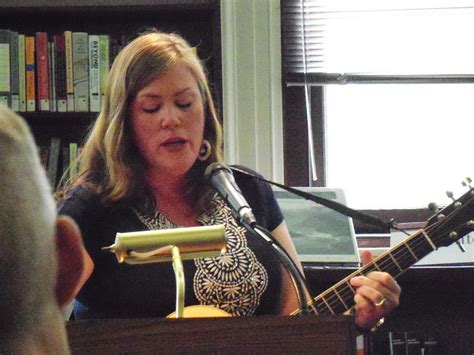
Sharon Fagan McDermott is the co-author of Millions of Suns: On Writing and Life with M.C. Benner Dixon, and the author of Life without Furniture (poems). She lives and teaches in Pittsburgh.
Discover more from Vox Populi
Subscribe to get the latest posts sent to your email.

A rich, beautiful essay. So much life, wisdom, and joy packed in. Thanks, Sharon, for so eloquently and passionately sharing these experiences.
LikeLike
What a delightful essay. It made my day AND reminded me of my little guy and I, hand-in-hand, in London’s parks. I am now overlooking the southern Pacific instead of walking on a soft forest floor. It awes me in a different way, but I take from it. Daily.
LikeLike
Thanks, Rose Mary!
>
LikeLike
Ralph Ellison’s middle name was Waldo. So his parents must also have read themselves into Emerson’s works.
LikeLike
This is lovely.
LikeLike
Isn’t it though? We can see the lyrical impulse of Emerson in this essay.
>
LikeLike
My philosophy professor friend wrote after reading this essay: the Transcendentalists are a persistent touchstone for me… I agree, though I might have waited impatiently to meet Emily nearby awhile later.
Several things happened while reading her lovely essay: memories of my mother’s attempts to slow down my imagination, and Sharon’s wonderful mention here of Hot Dog Dam. I had also just read from a new book of fulfilling poems by Mike Schneider, called Friday’s Dance. So voila, this combo meal of fine writing inspired me to write my own poem called Square Dancing by Hot Dog Dam, where I break free of old bounds, thanks to Mike, Sharon, and an anonymous dance partner. Cheers, everyone. May the water of Hot Dog Dam flow for you.
LikeLike
Hahahaha. Thanks, Jim.
>
LikeLike
Thank you.
LikeLike
Reading this morning and savoring the mantras. I think I will take a walk now in my park (before the heat’s too much) and hear your words again, seeking peace.
LikeLiked by 2 people
Thanks, Ruth!
>
LikeLiked by 2 people