
Vox Populi
A curated webspace for Poetry, Politics, and Nature with over 6,000,000 visitors since 2014 and over 9,000 archived posts.
Michael W. Smith: The Sacrifices Made By The Signers of the Declaration
Happy July 4 to everyone in America. Just a reminder of the price that was paid for our freedom.
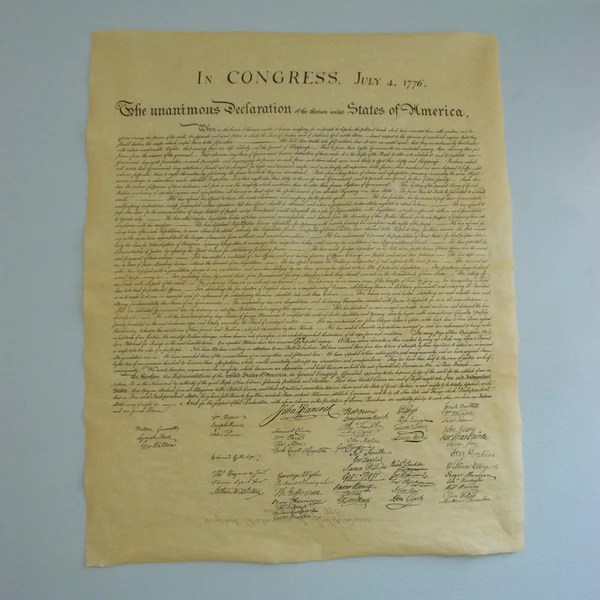
Have you ever wondered what happened to the 56 men who signed the Declaration of Independence?
Five signers were captured by the British as traitors and tortured. Twelve had their homes ransacked and burned. Two lost their sons in the revolutionary army, another had two sons captured. Nine of the 56 fought and died from wounds or hardships of the revolutionary war.
They signed and they pledged their lives, their fortunes, and their sacred honor.
What kind of men were they? Twenty-four were lawyers and jurists. Eleven were merchants, nine were farmers and large plantation owners, men of means, well educated. But they signed the Declaration of Independence knowing full well that the penalty would be death if they were captured.
Carter Braxton of Virginia, a wealthy planter and trader, saw his ships swept from the seas by the British Navy. He sold his home and properties to pay his debts, and died in rags.
Thomas McKeam was so hounded by the British that he was forced to move his family almost constantly. He served in the Congress without pay, and his family was kept in hiding. His possessions were taken from him, and poverty was his reward.
Vandals or soldiers or both, looted the properties of Ellery, Clymer, Hall, Walton, Gwinnett, Heyward, Ruttledge, and Middleton.
At the battle of Yorktown, Thomas Nelson Jr., noted that the British General Cornwallis had taken over the Nelson home for his headquarters. The owner quietly urged General George Washington to open fire. The home was destroyed, and Nelson died bankrupt.
Francis Lewis had his home and properties destroyed. The enemy jailed his wife, and she died within a few months.
John Hart was driven from his wife’s bedside as she was dying. Their 13 children fled for their lives. His fields and his gristmill were laid to waste. For more than a year he lived in forests and caves, returning home to find his wife dead and his children vanished. A few weeks later he died from exhaustion and a broken heart. Norris and Livingston suffered similar fates.
Such were the stories and sacrifices of the American Revolution. These were not wild eyed, rabble-rousing ruffians. They were soft-spoken men of means and education. They had security, but they valued liberty more. Standing tall, straight, and unwavering, they pledged: “For the support of this declaration, with firm reliance on the protection of the divine providence, we mutually pledge to each other, our lives, our fortunes, and our sacred honor.”
Michael W. Smith (born October 7, 1957) is a Christian musician from Kenover, West Virginia who has won three Grammy Awards.
This essay was fact-checked and corrected by Michael Simms.
Discover more from Vox Populi
Subscribe to get the latest posts sent to your email.

Shared.
LikeLiked by 1 person
Thanks. I never learned this in school.( I wonder why not? )
LikeLiked by 1 person
It is important to remember that many people sacrificed their safety and comfort to give us what we have.
>
LikeLike
Thank you, Michael. I shared this on Facebook.
I would ask folks to continue to be aware of the sacrifices made by civil servants and elected politicians who believe in the democratic republic. I just had lunch with a councilwoman who mentioned how, in her council chamber, they installed bulletproof glass. She is endangered because she is a Catholic dedicated to a Franciscan vision of environmental activism.
LikeLiked by 1 person
Yes, we should thank our Stars and Stripes for the many hardworking honest politicians out there like you, Councilman Tieman.
>
LikeLiked by 1 person
Thanks for this. Too many are unaware of our history and/or too quick to judge, on both sides, and this is especially true of Jefferson’s use of the word “unalienable.” The genius of the founders, however, was what came next; the codification of the D of I into the Constitution and its subsequent Bill of Rights, with special thanks to Madison and (again) Jefferson on the latter.
LikeLiked by 1 person
Jefferson was so inspiringly right on some issues, so infuriatingly wrong on others.
LikeLiked by 1 person
Let’s see if FB allows me to share. I will place it under a picture of the only good orange monarch, a butterfly.
LikeLiked by 4 people
thank you!
LikeLiked by 2 people
Through my years of teaching American History, I encountered many people who thought the founders were rich, selfish men. Once made aware of the real dangers of rebellion and the consequences of the signers’ actions, people were at first incredulous, then appalled, then had a renewed sense of gratitude. I attended a swearing-in ceremony for new citizens at Monticello in 2004. Remembering the expressions of joy and pride on the faces of the newest citizens (from all over the world) still brings tears to my eyes.
LikeLiked by 3 people
The reality is that many people, white, black, brown, men, women, gay, straight have sacrificed a great deal for this country.
>
LikeLiked by 2 people
Amen to that.
LikeLiked by 1 person
I knew nothing of this — thank you, Michael.
LikeLiked by 2 people
Amazing. Just shared this–more people need to know that we once had leaders who led with honor and bravery.
LikeLiked by 2 people
Yes, we did, but at present we are led by fascists and their bootlickers.
>
LikeLiked by 2 people
Thanks for this powerful essay. Lessons for us.
LikeLiked by 2 people
Thanks for this.
LikeLiked by 2 people
Important reading! I’ll be sharing this essay today.
LikeLiked by 2 people
Thanks, Christine!
M
>
LikeLiked by 2 people
Wow! I had no idea . . . thanks for this.
LikeLiked by 2 people
Thanks, Mandy!
>
LikeLiked by 2 people