
Vox Populi
A curated webspace for Poetry, Politics, and Nature with over 6,000,000 visitors since 2014 and over 9,000 archived posts.
Cesare Pavese: Ancestors
Translated by William Arrowsmith
Bewildered by the world, I reached that age
when I beat the air with my fists and cried to myself.
Just listening to men and women talking,
not knowing what to say, isn’t much fun.
But I got over that. I’m not alone any more.
If I don’t know what to say, I make out anyway.
When I found myself, I found friends.
I found out I had lived, before I was born,
in hard, sturdy, independent men, their own masters.
None of them knew what to say, so they just kept quiet.
Two brothers-in-law opened a store—the first luck
my family ever had. The outsider was stuffy,
tightfisted, cruel, and mean: a woman.
The other man, our man, used to read novels in the store—
people talked about that—and when customers came in,
they’d hear him answer gruffly, no,
there wasn’t any sugar, he was out of Epsom salts,
he was all out of everything. Well, later on
our man helped his partner, who went broke.
Just thinking of folks like that makes me feel stronger
than looking in the mirror and rippling my muscles
or trying to twist my mouth into a tough smile.
One of my grandfathers—he lived a long time ago—
found he was being cheated by one of his farmers,
so he went to work in his own vineyards, right in the middle of summer,
just to see the work was done right. That’s how
I’ve always lived. I always had an honest face,
a face you could trust, and I always pay cash down.
In our family women don’t count.
What I mean is, our women stay home
and have children, like me, and keep their mouths shut.
They just don’t matter, and we don’t remember them.
Every woman adds something new to our blood,
but they kill themselves off with work. We
just get stronger and stronger, so it’s the men who last.
Oh, we’ve got our faults, and whims, and skeletons—
we, the men, the fathers—and one of us killed himself.
But there’s one disgrace we’ve never known:
we’ve never been women, we’ve never been nobodies.
When I found my friends, I found my real home —
land so worthless a man’s got a perfect right
to do absolutely nothing, just dream about the future.
Work isn’t good enough for my friends and me.
Oh, we can break our backs all right, but the dream
my fathers always had was being good at doing nothing.
We were born to wander and ramble around these hills,
with no women, our hands folded behind our backs.
~~~~
From Hard Labor by Cesare Pavese. Translation copyright 1976 by the estate of William Arrowsmith. Published by New York Review Books. Included in Vox Populi with permission.
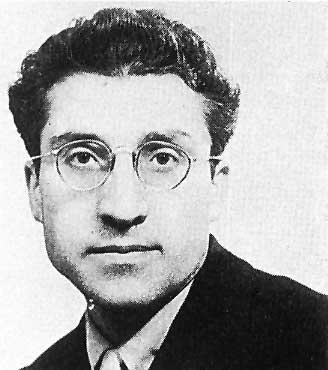
In the spring of 1935, the young Cesare Pavese was sentenced, for “antifascist activities,” to three years of detention in a small seaside village in Calabria. Far away from his familiar life in the city of Turin and forced to rely on his own resources, he began to write poems of tremendous power, in terse lines and unsentimental language, giving voice to country people and hard country lives untainted by the propaganda of Fascism. Pavese is widely regarded as one of the foremost writers in twentieth-century Italian cultural history, and in particular as an emblematic figure: an earnest writer maimed by fascism and struggling with the modern existentialist dilemma of alienated meaning. Pavese’s first book, a collection of poems titled Lavorare stanca or “Hard Labor,” appeared in 1936, shortened by four poems deleted by fascist censors. Seven years later, Pavese published an expanded version nearly double the size of the original. Pavese is widely regarded as a modern “mythic” poet, who bridged the gap between the general and the particular, the past and the present, and external and internal experience, by means of a personal mythology. He called his poetry “an attempt to express a cluster of fantastic associations, of which one’s own perception of reality consists, with a sufficient wholeness.” (adapted from The Poetry Foundation and other sources)
Discover more from Vox Populi
Subscribe to get the latest posts sent to your email.

I love Pavese’s poetry, particularly Hard Labor. In these terrible times in America it’s good to remember the background of the book.
LikeLiked by 1 person
Thanks, Kathryn. I love Hard labor as well. A great book. Are you settled in France now?
>
LikeLike
♥️
LikeLiked by 1 person
Such deep, moving psychological insights in Pavese’s work. Such deep explorations of solitude and isolation.
These lines:
“But there’s one disgrace we’ve never known:
we’ve never been women, we’ve never been nobodies”
made me shiver.
LikeLiked by 3 people
Pavese has been criticized for the blatant sexism of those lines, but I interpret them as an accurate summary of the misogyny of his culture, and it is clear in his other poems in the collection that he does not share that prejudice. I love the poems, especially in Arrorwsmith’s translation.
>
LikeLiked by 2 people
Another wowser!
LikeLiked by 2 people
Thanks, Rosemary. Pavese’s poems were very important to me when I was young and just learning what poetry could do.
>
LikeLiked by 1 person