
Vox Populi
A curated webspace for Poetry, Politics, and Nature with over 6,000,000 visitors since 2014 and over 9,000 archived posts.
Barbara Crooker: Credo
It’s early summer, everything running to green,
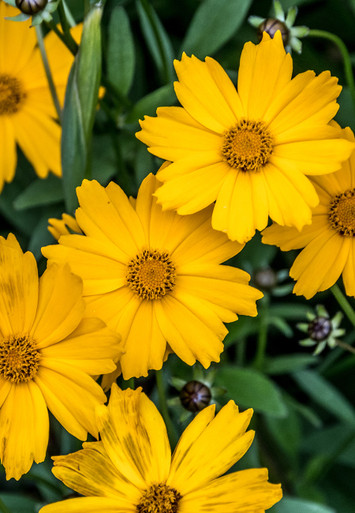
and the sun has dipped its brush in gilt: coreopsis,
black-eyed Susans, Stella d’Oro lilies. At night,
the cool moon throws a silver net over
the darkened yard. You can till the earth,
hoe the rows, but each seed is an act of belief
that somehow in the dark something
is happening: seeds splitting their husks,
softened by rain and spray from the hose,
then sending up pale shoots, periscopes
searching for light. Two leaves, four leaves,
and suddenly: a vine. Which has a mind
of its own, trellising up the tomatoes,
smothering the beans. Remove the coils
used for a foothold, place it in the space
between rows, so it can grow longer, greener
every day. Nobody ever sees this happen;
we take it on faith. Next come little lemon stars,
then small green globes, which swell, fill,
fueled by the sun. The calendar turns to August,
days ripen, each one more golden than the next.
Nothing the gardener does can make this happen.
One morning, when the leaves are slick with dew,
you go out to check and realize every rib
is yellow, the netting is even, webbed with gold,
and that which has held fast throughout this long
season is ready to slip, fill your hands with its heft,
fill your bowl with roundness, and soon, nestled
in the boat of your spoon, the sun’s longing
exploding on your tongue.
~
~~~~
Copyright 2024 Barbara Crooker. From Slow Wreckage (Grayson Books, 2024)
Barbara Crooker is author of ten full-length books of poetry, including Some Glad Morning, Pitt Poetry Series, longlisted for the Julie Suk award from Jacar Press, The Book of Kells, which won the Best Poetry Book of 2019 Award from Poetry by the Sea, and Slow Wreckage (Grayson Books, 2024). Her other awards include: Grammy Spoken Word Finalist, the WB Yeats Society of New York Award, the Thomas Merton Poetry of the Sacred Award, others.
Discover more from Vox Populi
Subscribe to get the latest posts sent to your email.

The imagery in this gorgeous garden poem! Love!
LikeLike
Some days, a flower bloom or a taste of spinach or collards from my garden or the only things that can elicit a smile and glimmer of hope from me.
Thanks
LikeLike
Thank you, Leo.
>
LikeLike
Thanks for this sunlight. Difficult as it is to see the hope at the moment, this tangible beauty blooms with possibility.
LikeLike
Thank you, Clayton.
>
LikeLike
This is such a beauty! And “the sun’s longing
exploding on your tongue” is an exquisite ending.
LikeLiked by 1 person
Yes, I love Barbara’s poems. She makes writing great poems look easy.
>
LikeLike
Thanks, Meg! I love your work, too–
LikeLike
What an ode to patience, hope, strangeness, nature, the sun and the million miracles a small garden offers, right there, to you, to us experienced gardeners or not (like me!), e-v-e-r-y single spring! What a golden poem!
LikeLiked by 1 person
Thanks, Laure-Anne. Now I’m in an apartment, so this poem is an artifact of my former life. . . .
LikeLike
Yes, this poem both makes the garden strange with wonders, the plants growing “periscopes” to find the light, the vine’s “coils used for a foothold,” and so much more. And it grows beyond us, we work but can’t make it happen, and suddenly, there is gold everywhere. What a wonderful poem of hope.
LikeLiked by 2 people
I love Barbara’s clarity of language as she creates emotional conflicts.
>
LikeLiked by 1 person
Thanks, Mary. It’s hard to be hopeful right now, so we have to look for it where we can. . . .
LikeLike
It looks like only some squash family plants and a couple reseeded carrots have arrived and flourished under the netting. I love the rabbits and squirrels so how can I get angry at them? I suspect the crows harvest also. Once watched one fly away with a soy bean plant. Yet I check every morning and wonder at those unidentified vines and the large apricot tree growing in a raised bed from my carelessness with the compost.
LikeLiked by 2 people
Every year we get a couple of thick vines of squash coming from our compost. They produce lovely fruit.
>
LikeLiked by 2 people
Thanks so much, Mary. I think gardening itself is an act of hope–
LikeLiked by 1 person
Or sometimes it reverts back to being a gourd or some sort. But they’re cool, too–
LikeLiked by 1 person
Last year we had butternut squash in the compost pile; this year it is zucchini!
LikeLike
It seems that varieties of squash are the most common volunteers to grow from compost. I wonder if they have particularly hardy seeds.
>
LikeLike
I love this celebration of plant intelligence, and the gifts it bestows on us, if we are patient.
LikeLiked by 2 people
Yes, patience.
>
LikeLiked by 1 person
Which is a virtue. . . .
LikeLiked by 1 person