
Vox Populi
A curated webspace for Poetry, Politics, and Nature with over 6,000,000 visitors since 2014 and over 9,000 archived posts.
Michael T. Young: The Need to Believe | The Poetry of Lisel Mueller
With the return of Trump to the White House and the unleashing again of a post-truth world, I found myself thinking about those poets I need to read to keep me steady through the tempest of daily outrage to decency and order and the possibility of a creeping autocracy. I thought of my usuals such as Mandelstam and Akhmatova, Milosz and Rich. But one that might not seem obvious, at first, is Lisel Mueller, an American poet who won both the Pulitzer and National Book Award. Born in Hamburg, Germany in 1924, at fifteen she fled Nazi Germany with her family to settle in the United States. But her connection to what happened then, the separation from the elements of the family left behind, and the consequences of World War II, thread her poetry in profound ways.
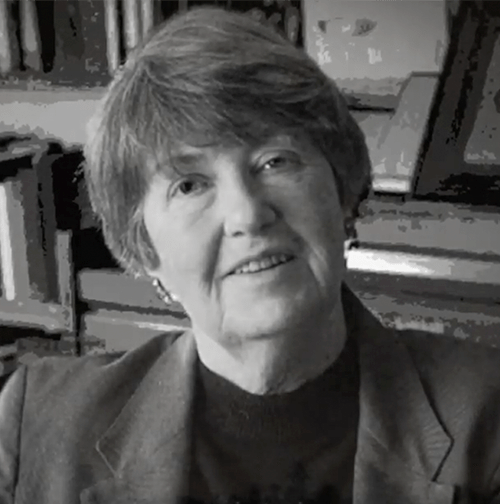
Adorno famously said that to write poetry after Auschwitz is barbaric. I would suggest that the poetry of Mueller, while not a direct response to this, is a testament to the absolute need for poetry after Auschwitz. While rooted in our penchant for story, her poetry embodies our even deeper need to believe, specifically to believe in the possibility of a good world, of alternatives to the given world. Here is her poem “The Exhibit.”
My uncle in East Germany
points to the unicorn in the painting
and explains it is now extinct.
We correct him, say such a creature
never existed. He does not argue,
but we know he does not believe us.
He is certain power and gentleness
must have gone hand in hand
once. A prisoner of war
even after the war was over,
my uncle needs to believe in something
that could not be captured except by love,
whose single luminous horn
redeemed the murderous forest
and, dipped into foul water,
would turn it pure. This world,
this terrible world we live in,
is not the only possible one,
his eighty-year-old eyes insist,
dry wells that fill so easily now.
It seems unnecessary to point out the significance of this taking place in East Germany. But, of course, someone who not only lived on the east side of the Berlin Wall after World War II but someone who clearly lived through the Holocaust inside Germany insisting that “This world, this terrible world we live in, is not the only possible one” carries far more weight than it being insisted by someone in their 20s or 30s and living, well, nearly anywhere else. This uncle saw the systematic extermination of a portion of the population. His need to believe in a world different from this one, in a world that we could make, is a survival strategy, not merely escapist fantasy. As Mueller frames the issue, it is a need to believe in the possibility of goodness, or, as the poem puts it, that power and gentleness can and, at some point, did go hand in hand. Contrasted with the power that did nothing but violence during World War II and the Holocaust, this belief is how this “prisoner of war/even after the war was over” continued to live. This need to believe in order to survive is something Mueller carried with her to the United States. It is the shape hope takes in her poetry.
Similar to this poem, which very clearly anchors the need to believe against the background of Nazi Germany, we have a poem like “Reading the Brothers Grimm to Jenny.” In it, Mueller says, “we make just dreams/out of our unjust lives.” Again, this is not escapism, but a lesson in a possible world we can build. The closing stanza tells us:
Still, when your truthful eyes,
your keen, attentive stare,
endow the vacuous slut
with royalty, when you match
her soul to her shimmering hair,
what can she do but rise
to your imagined throne?
And what can I, but see
beyond the world that is,
when, faithful, you insist
I have the golden key–
and learn from you once more
the terror and the bliss,
the world as it might be?
Our imaginations set the standard for what is possible. It’s this vision of a possible world we lose sight of as we grow into adulthood and just take the world for what it is. It’s the moment of disillusionment that overtakes us all. Our artists are those who keep trying to remember the world behind this world that only imagination can see. As Mark Twain famously said, “You can’t depend on your eyes when your imagination is out of focus.” The adult in Mueller’s poem is reminded by Jenny’s imaginative embracing of the story in Brothers Grimm to refocus, so she can “see/beyond the world that is” and to the possible one, the one in which we rise to live up to our ideals, “the world as it might be.”
Mueller in several poems also gives us the opposite of this sustaining vision and its consequences. In “The Fall of the Muse” the divine figure is brought down not by some mythological adversary but by the relentless introduction of realism, the jaded view of adults who no longer believe in anything. It starts, “Her wings are sold for scraps/her tiara goes to the museum.” Right off we have the Muse in the common world, one piece of her sold as a left over for some other use, while another is enshrined in the “house of the muse” itself where one piece of her devolves into an objet d’art, something of a bygone age when we believed in inspiration, a curiosity that no longer touches our heart. But inspiration is not something for the realists we are and she, joining our ranks, is eventually made “one of us,” “ordinary,” “democratic,” even going as far as to wear false lashes until finally “she throws herself off the bridge.” The relentless insistence first on realism and then on our own brand of falsification in those false lashes, eventually drives our source of inspiration to suicide. It is the death of magic or the belief in magic. It’s the moment in “The Exhibit” when everyone tells the uncle that unicorns never existed. It’s the death of a reason to live.
Another version of this diminishment of the world of magic and belief is in “A Farewell, a Welcome,” written in response to the moon landing. The majority of the poem consists of saying goodbye to the mythologies that surround the moon starting with the idea of it as an embodiment of the inconstant, and that “crooked little man.” Once considered a source of epilepsy and madness, people were called “lunatic,” a word which derives from the Latin word for “moon.” But even here, Mueller says, “lunatics wave goodbye / accepting despair by another name.” What was once “untouchable” is now welcomed. And finally, it is called “home,” a place where “our footprints mark you mortal.” Just as in “The Fall of the Muse,” a divine image, something once helping us to tell the story of ourselves, becomes nothing but a rock in our conquest to bring everything down to our level.
But in doing this it is we who suffer loss, we who are the poorer for planting flags of mere fact on the ever-shrinking landscape of imaginative possibility and story. If Eliot’s objective correlative is found by imbuing the sensory world with imaginative reality so that it becomes about our internal reality, the conquest of the physical world that sometimes inspires those symbols and mythologies is diminishing the reality of our psyches. Which isn’t to say Mueller’s poetry asserts an anti-exploration or anti-discovery philosophy. On the contrary, like many poets such as Blake and Rilke, her poetry asserts that how our imaginations inhabit the world is primary and a precursor to all discovery. What we believe about the world is just as important or more important than the world as a mere objective fact, a thing to be conquered and owned. Knowing Mueller’s history, fleeing the rise of Nazi Germany as a teenager, it’s difficult not to think that these polarities didn’t arise from that. That is, the Nazi’s too saw the world as a mere object of conquest and ownership. Her uncle in “The Exhibit” was able to survive that conquest by the imaginative belief in a better world, embodied in the unicorn. Or, as Mueller says in her poem “For the Strangers,” “The fiction of metaphor saved us.” As some mythologies tell us, knowing the name of a demon gives us power over them. Just so, in Mueller’s poetry the power of naming still endures.
There comes a day when the trees
refuse to let you pass
until you name them.
(“Your Tired, Your Poor; 3. Crossing Over”)
This is the power we need in a post-truth world, where political forces claim the right to manipulate our perceptions through distortions of language. Such manipulations are an effort to cut us off from imagination, to push us to that state of disillusioned acquiescence. But if we hold to our right to pin the tail on the authoritarian, hold to our right to name our reality and then claim the right to change it, to imagine a better, different world than the one they assert, we can then outlive their outrages, indeed, we can outlive them and the hateful world they try to make. Like the uncle in Mueller’s poem, we need to believe in the unicorn’s existence, in the possibility of a world where power and gentleness go hand in hand. Mueller’s poetry is a constant encouragement to claim that right and power.
~~~~
Michael T. Young’s third full-length collection, The Infinite Doctrine of Water, was published by Terrapin Books. He lives with his wife and children in Jersey City, New Jersey.
Copyright 2025 Michael T. Young
Discover more from Vox Populi
Subscribe to get the latest posts sent to your email.

Thank you for writing this. I’m Lisel Mueller’s daughter (also a poet). My mother’s poetry is still read and discovered by readers all over the world, some of whom fall in love with her writing and then get in touch with me. I heartily agree that she deserves wider rediscovery, though, especially in the age of Trump. I think the reason she is not better known in 2025 has to do with the fact that her work was never really celebrated by academia, and she was in addition a poet of the Midwest — making it easier, perhaps, for regionally prejudiced readers to miss the way almost all of her work deals with history and the experience of displacement, even as it celebrates her survivor’s hope, love, and luck in semi-rural Illinois.
LikeLiked by 2 people
Well-said. Thank you, Jenny. Your mother’s poetry is profound and beautiful.
>
LikeLike
Oh, my. What a distinct pleasure to have you read my essay on your mother’s poetry. Thank you. Sorry I didn’t see it until today.
Yeah, I can see that some might foolishly call her a “regional poet.” It’s a problem, I feel, a number of our great poets face and it’s really foolish and dismissive. I wrote an entire essay about Richard Hugo defending his work against just that charge. But I feel, as you, that your mother’s work deserves wide recognition and deep consideration. It is an important part of American literature and an important voice now. Thank you, again, for reading and posting your comment. I’m very grateful.
LikeLiked by 1 person
When I was a high school senior, I won a national award for poetry, the prize for which was being flown to a literary festival where your mother was the honored speaker. I am also a German-American, and when I met your mother, we spoke German. She gave me a copy of her book, The Need to Hold Still, which I still have along with memories of her kindness and encouragement.
LikeLike
the terror and the bliss,
the world as it might be?
LikeLiked by 2 people
Mueller is an important poet to me, and this is a wonderful celebration of her work, showing us what she offers us to get through this present debacle. Thank you for it!
LikeLiked by 1 person
Thank you for reading.
LikeLike
My family didn’t emigrate. They stayed put. And my father had to find his unicorn ‘after it was all over’. He also needed to believe that a better world could exist. And, yes, this is what ultimately saved his life, a life he wanted to take when he thought that unicorns never existed. And now we have to name the trees.
“This is the power we need in a post-truth world, where political forces claim the right to manipulate our perceptions through distortions of language. Such manipulations are an effort to cut us off from imagination, to push us to that state of disillusioned acquiescence. But if we hold to our right to pin the tail on the authoritarian, hold to our right to name our reality and then claim the right to change it, to imagine a better, different world than the one they assert, we can then outlive their outrages, indeed, we can outlive them and the hateful world they try to make.”
LikeLiked by 1 person
Glad your father found that unicorn.
LikeLike
Oh Excellent … just what I needed to read today … I love her poems, and I love this discussion of them, too … so necessary
LikeLiked by 1 person
Thank you, Rosemerry. Glad it was suitable to the need of the day.
LikeLike
Thank you very much for writing this essay. Lisel Mueller was an incredible poet and a wonderful human being. I am very grateful for her poetry and for the friendship I was lucky to form with her. Thank you again for writing about Lisel Mueller’s important, beautiful, and lasting work.
LikeLiked by 2 people
So glad you like it. And what a treasure to have had a friendship with her. Glad you find the essay worthy of her amazing poetry.
LikeLike
I believe many of those in labor camps, like those places attached to Auschwitz where Primo Levi was an inmate, composed poetry silently to keep their sanity as long as possible, keeping imagination going and if they survived, later to bear witness. Not barbaric at all.
One of my favorite poems is Mueller’s Missing the Dead….
As a thought experiment, I found the AI Poetry Generator and asked it to write an imagination sonnet, so no copyright, an AI poem. Here is where AI is with fake poetic imagination: It misses something of Mueller. But raises a bevy of concerns. What would Mueller think?
Imagination Sonnet [an AI sonnet]
In realms where whispering winds weave dreams anew,
Beyond the bounds of all we think we know,
Where starlit skies with cosmic palettes strew,
The heart takes flight, and wildest wonders grow.
Each thought a seed in fertile, boundless ground,
Where visions twirl like leaves in autumn’s dance,
In swirling hues of joy and sorrows found,
A canvas vast, a universe of chance.
Oh, let imagination’s fires ignite,
To break the chains of dull and colorless days,
With every spark, there blooms a spark of light,
Awakening the spirit in timeless ways.
So dream, dear soul, for in your mind’s embrace,
The world transforms—a wondrous, sacred space.
LikeLiked by 1 person
Fascinating! Thank you all for this discussion about a poet I have always deeply respected…
LikeLiked by 1 person
Thank you, Laure-Anne, for taking the time to read it.
LikeLike
Yeah, that poem definitely lacks the Je ne sais quoi that makes verse into a poem. But on the brighter note, you mention Levi who is, to my mind, one of the gems that came out of that time. His writing is a pole star of clarity. Thank you for reading and commenting.
LikeLike
Yikes. This is how many people think of poetry: pretty thoughts in cliched language that rhymes.
>
LikeLike
Thank you for this hopeful piece. I too believe in unicorns and the possibility of a good world, and it helps to hear from the poets who remind us of the possibilities.
LikeLiked by 2 people
Thank you. So glad you enjoyed it and found it helpful. Yes, we need poets and artists to remind us of the possibilities.
LikeLike
Thanks, Jan. Me too.
>
LikeLike
I’d like to add that Adorno’s statement was made during a time the world was reeling from Nazism and the Holocaust. It was a reasonable statement, and then we began, slowly, to breathe again, and poetry revived.
LikeLiked by 1 person
Or perhaps Adorno was simply wrong. Poetry is exactly what is needed in difficult times.
LikeLiked by 3 people
He was certainly wrong, but I can see how he felt that way.
LikeLiked by 3 people
Well, it’s worth noting that Adorno later retracted his comment. Perhaps because there were a few poets and writers who lived through the Holocaust and wrote quite incredible works wrestling with its radioactive material. Paul Celan and Nelly Sachs are two that immediately come to mind. I understand that poetry, by its nature, creates beauty and to “beautify” something so horrific can seem indecent. But that beauty can also serve as a digestive, helping us to get the necessary albeit disgusting medicine down, and that medicine, or let’s say vaccine, is usually a form of the illness we’re trying to inoculate ourselves against. In this sense, poetry is absolutely necessary, in the right form. This accounts for both Celan and Sachs saying of their poetry that they weren’t even sure their poetry’s language was German. They had to invent new idioms of expression to deal with it. And they succeeded.
LikeLiked by 2 people
Excellent essay, Michael. I think one of the things that poetry does is identify the miraculous in the real; it gives us notice that the world around us is not ordinary, and “real” is often a term used to deaden our perceptions. A unicorn is magical, but so is a horse well seen.
LikeLiked by 3 people
Yes, seeing a horse well can be miraculous. And I agree, poetry helps us do just that. All art does. Van Gogh also did that and in his letters he talked about that ability of art to help us truly. Very much worth reading; they are art in their own way.
LikeLiked by 1 person
Everything about this review is accurate and much needed. When I was an editor in the 80s, I published this woman often and proudly. The eclipse of so fine a writer… well, what to say? Reputation is so fickle. Thanks for reminding us of LM!
/
LikeLiked by 3 people
It is interesting to see how poets come in and out of fashion. One of the most rewarding things about editing VP is finding gifted poets of previous generations who are rarely read anymore. Mueller was a lyric genius, in my opinion, and yet few people under forty have even heard her name.
LikeLiked by 3 people
Thank you. I agree, reputation is fickle. Even Blake was buried in obscurity for a time. Maybe Mueller will have her revival. She most definitely deserves it. I know I’ll keep reading her.
LikeLiked by 1 person