
Vox Populi
A curated webspace for Poetry, Politics, and Nature with over 6,000,000 visitors since 2014 and over 9,000 archived posts.
Barbara Crooker: Late Painters | Matisse
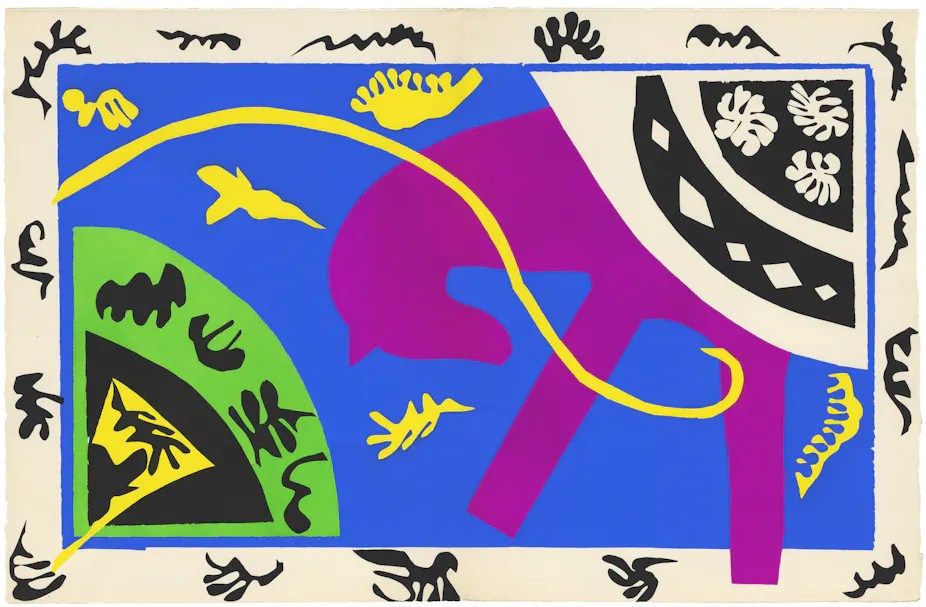
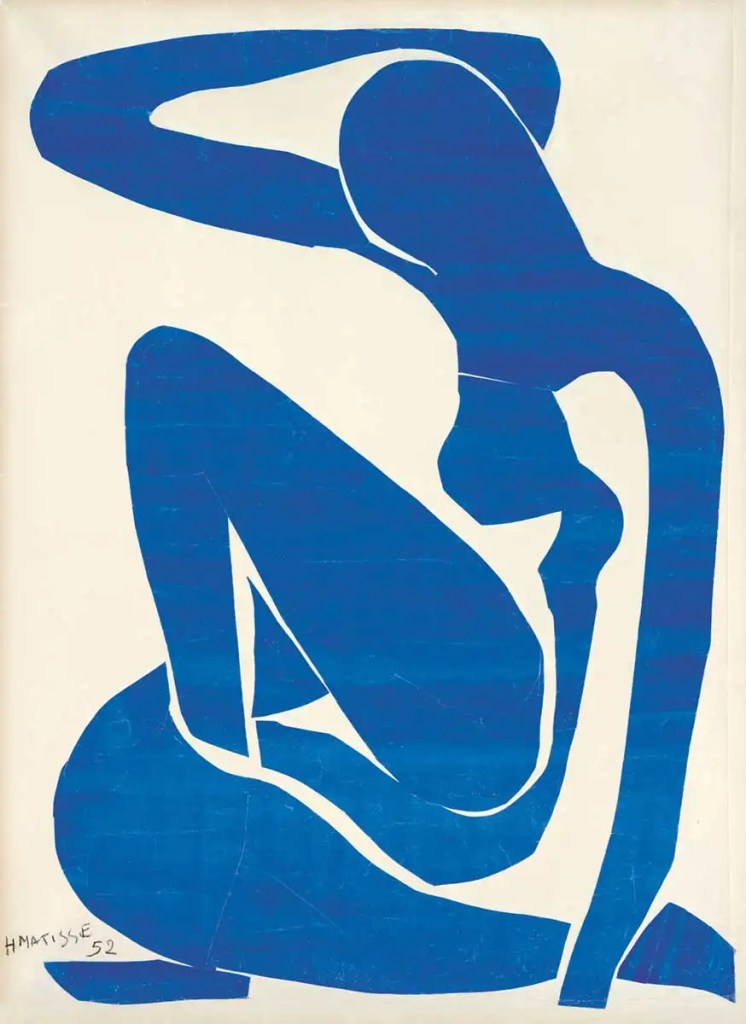
Papier-découpé: form filtered to its essentials
Henri Matisse
.
When his hands could no longer hold a brush,
Matisse turned to paper and scissors, “painting”
with cold metal carving heavy gouache
shearing shallow reliefs. The liberation of shape
from paper. And my left hand, too, betrays me,
mysteriously cramping, twisting like a snail in a shell.
No relief but to pry my fingers back into an ordinary
hand. And so the dance goes on. Confined to chair
or bed, Matisse’s “seconde vie” lasted fourteen years,
as he learned to use white as a negative space,
working paper like a sculptor cutting through stone.
This is where I’d like to be working, reducing
the buzzing complicated world to its pure essence,
ridding myself of arabesques and complexities,
condensing the dance of my life in simple forms.
.
.
.

Poem from Slow Wreckage by Barbara Crooker (Grayson, 2024). Included in Vox Populi by permission of the author.
Barbara Crooker is the author of twelve chapbooks and ten full-length books of poetry. Her many awards include the WB Yeats Society of New York Award, the Thomas Merton Poetry of the Sacred Award, and three Pennsylvania Council fellowships in literature.
Discover more from Vox Populi
Subscribe to get the latest posts sent to your email.

What an inspiring poem! Thanks Barbara. If we can no longer do something, just look for something, perhaps even new, that we can do. Ah, that we could be as talented as Matisse.
LikeLiked by 1 person
Beautiful. I like the way the poem brings us back to our own bodies and our own creative challenges,
LikeLiked by 1 person
Well-said. Thank you.
>
LikeLiked by 1 person
Thank you Micha l and Barbara.
LikeLiked by 1 person
“This is where I’d like to be working, reducing
the buzzing complicated world to its pure essence”
Me too.
LikeLiked by 2 people
Thank you, Lisa!
LikeLiked by 1 person
It’s all been said. I have nothing intelligent to add. I love (and always loved) Matisse’s work in all versions, and I saw a documentary about his work and life and ‘sa deuxième vie’. Your poem says it all – and about us all getting old and dealing with it.
LikeLiked by 2 people
Many thanks!
LikeLiked by 1 person
Thank you for the poem. I have six small Matisse prints (not originals!) very similar to these above my fireplace mantel. I am reminded daily that beauty is the line; the simple line that defines, pulling beauty from chaos.
LikeLiked by 2 people
I love your definition, Leo. Thank you.
>
LikeLiked by 2 people
Perfect comment, Leo; thanks!
LikeLiked by 2 people
Thank you!
LikeLiked by 1 person
I love the poem’s focus which enables it to draw on so many images, especially Matisse’s hand, and the speaker’s, and the wonderful language of “ridding myself of arabesques and complexities.” I also love Vox’s inclusion of those late Matisse works, which are so wonderful. Thank you Barbara and Michael. Signed, Tremor Girl, who if she still painted would use the tremor to make outlines ripple and shimmer.
LikeLiked by 2 people
My hands shake now. In order to type, I have to go much more slowly than I used to. Not a bad thing actually.
LikeLiked by 2 people
We must make use of what we can’t change! I’m sorry you’re dealing with that, though. 💕
LikeLiked by 1 person
Thanks, Mary. I can’t paint or draw at all (you should see me at Pictionary!), so I’m grateful that I can fall back on words. . . .
LikeLiked by 1 person
Wise words, well told. I’m coming to that same philosophy of life and creativity. Thanks. And notice how well it worked for Monsieur Henri.
LikeLiked by 4 people
Rather than complain about our infirmities as we grow old, it is better to find ways to do what we can.
>
LikeLiked by 5 people
Many thanks!
LikeLiked by 1 person