
Vox Populi
A curated webspace for Poetry, Politics, and Nature with over 6,000,000 visitors since 2014 and over 9,000 archived posts.
Thomas McGuire: A Scientist Marvels at Magpie Mob Tactics
… the idea that the success of human evolution, the way our species has come to dominate the earth, had to do fundamentally with our being social, being members of a pack.
—Robert Haas channeling E.O. Wilson on the evolution of human social behaviors
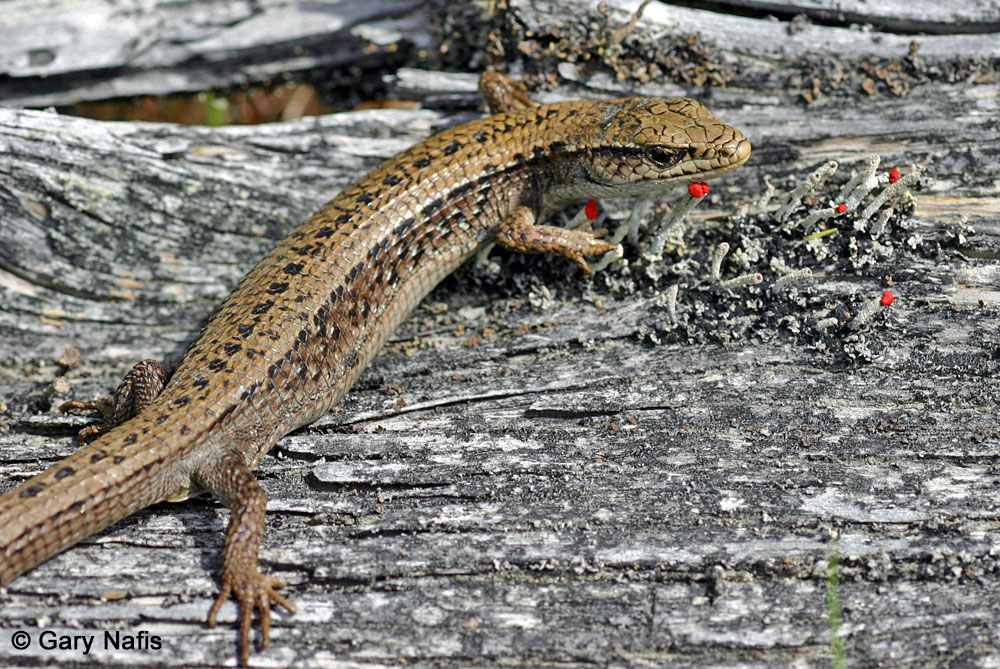
Intent on witnessing interactions between magpies and members of the genus elgaria, a scientist released an alligator lizard into a large enclosure housing three captive magpies. The woman noted the reptile’s defensive stance. High above the floor, the lizard arched its body toward the curious birds. Protecting his neck on the side from which the magpie mob stood ready to attack, the lizard tilted his head sideways, curved slightly downward. His cocked-and-ready jaw was completely ajar. The lizard bent the rest of his taut body just slightly. His tail trailed behind forming a half circle. The largest magpie approached cautiously, then blitzed the lizard. The bird jackhammered the slender, scaly tail. A sudden tightening, then straightening of the lizard’s body ensued before he sprang at his assailant. The magpie leapt rearward. Other members of the mob probed, tested their target. At each assault, the lizard appeared bemused, perhaps even bored. He calmly stood his ground. These operations continued for several minutes before each magpie retreated to a separate corner of the cage. Divided by a span of three meters from each bird, the lizard struggled to track the magpies’ dispersed positions.
Redoubling their attacks. The magpies took rapid turns approaching the target, but the lizard charged straight ahead, bulling forward a foot or more to drive each bird away. Soon, these individual enfilades gave way to paired, then group assaults. Pressing their quarry from opposite directions, all three magpies suddenly grew excited, hopping round the lizard. The birds took turns darting in, delivering precision strikes upon the tail. The limitations of lizard vision prevented him from tracking more than one assailant at a time. Twisting himself into knots, the lizard failed to shift attention from one attacker to another quickly enough. He appeared to be suspended in slow motion, while the birds’ movements shifted into warp speed. Blow upon blow struck the tail which the magpies were now managing to mince and sever. When the tail unhinged from the lizard’s body at last, none of the birds tried touching it. None of the birds showed interest in touching it. Still, the lizard held his ground, showed no interest in escape. Now he launched his own offensive—chasing, gapping, lunging at the birds. But then, suddenly, the lizard shot to the nearest shelter, a dish in the cage. He hid there. The three birds stood mesmerized before the squirming tail. In time, one of the magpies overpowered and ate the tail. The birds made no further search for the reptile. In subsequent experiments, many other lizards were likewise placed in the magpies’ cage. The scientist witnessed, with relish, each member of the elgaria genus displaying similar defense reactions against the force of magpie mob attacks.
Poem copyright 2024 Thomas McGuire. From Dark Devouring by Thomas McGuire (Ragged Sky, 2024). Included in Vox Populi by permission of Ellen Foos, Editor-in-chief, Ragged Sky Press.
Thomas McGuire is a poet, translator, essayist, and literary critic. He was raised in Northern California (yellow-billed magpie country). Now he makes his home in Colorado (black-billed magpie range). Dark Devouring is his first collection.
Discover more from Vox Populi
Subscribe to get the latest posts sent to your email.

Once again wondering if I should read Vox Populi just before meditating. Zoology major , vegetarian, sort of Buddhist, the idea of relishing repeats of the experiment, horrified me as letting go eluded me. Resorting to counting breaths, repeating “may all beings be free of suffering,” envisioning the large, beautiful alligator lizard in my garden, the raucous crows that chase the red shouldered hawks that swoop down on small mammals and birds, I am aware of a difference. In my garden, bird feeder has two meanings, one for the doves and finches and one for the hawks, but no animal is caged with another. Nature is what it is and I can accept that. Caged animal behavior and human behavior have much in common.
LikeLiked by 2 people
Thank you, Barbara. You’ve given me a great deal to think about.
>
LikeLiked by 2 people
I too was uneasy with this account. Including the enjoyment tinge alongside the ‘science’ piece. Somehow making me think about human to-the-death matches (also closely watched) over time.in the past.
At the same time, I am an avid fan of Ed Yong’s fascinating book that (using a science’ lens) looks at how animal senses – “An Immense World’ – show us ‘the hidden details in our world.’ Science is good, but remembering that animals are living being like us is also good.
LikeLiked by 4 people
Thanks, Jackie. I am a devoted pacifist, vegan and animal rights advocate; however, nature is ruthless.
>
LikeLiked by 3 people
Michael, i agree. Yes to your observation that nature is ruthless. I’m absolutely okay with that out in the world (including science based watching). But not in contrived situations in labs to gather info in part for science, in part for just plain curiosity. Fortunately, we now require consent with human subjects. I’m just uneasy using non-human subjects with possible bad outcomes. And academic publishing/status possible impetus.
LikeLiked by 2 people
Right. Me too, Jackie. McGuire’s piece brings up a number of issues…
>
LikeLiked by 2 people
I propose an experiment where a scientist, a woman, is released into a barred enclosure with three alligators to see how she goes about protecting her ass–sorry, tail. The alligator that makes the kill should be rewarded with release into the wild.
LikeLiked by 2 people
Not surprising. Many species of birds are amazing in their own ways. My eaves once held a nest of starlings, and in between feeding their young, the couple would imitate the sound of neighbors’ lawnmowers. I no longer see or hear the starlings, just the lawnmowers. Local birds with strong voices can still be heard: blue jays and crows; their voices carry further. But the large cottonwood tree nearby is now almost always quiet. It used to be a chatterbox of sparrows late in the day.
As we learn more about the amazing creativity of birds, the number of them we can study plummets.
LikeLiked by 3 people