
Vox Populi
A curated webspace for Poetry, Politics, and Nature with over 6,000,000 visitors since 2014 and over 9,000 archived posts.
Jennifer Horney: Health risks are rising in mountain areas flooded by Hurricane Helene and cut off from clean water, power and hospitals
Hurricane Helene’s flooding has subsided, but health risks are growing in hard-hit regions of the North Carolina mountains, where many people lost access to power and clean water.
More than 150 deaths across the Southeast had been attributed to Hurricane Helene within days of the late September 2024 storm, according to The Associated Press, and hundreds of people remained unaccounted for. In many areas hit by flooding, homes were left isolated by damaged roads and bridges. Phone service was down. And electricity was likely to be out for weeks.
As a disaster epidemiologist and a native North Carolinian, I have been hearing stories from the region that are devastating. Contaminated water is one of the leading health risks, but residents also face harm to mental health, stress that exacerbates chronic diseases and several other threats.
Water risks: What you can’t see can hurt you
Access to clean water is one of the most urgent health concerns after a flood. People need water for drinking, preparing food, cleaning, bathing, even flushing toilets. Contact with contaminated water can cause serious illnesses.
Floodwater with sewage or other harmful contaminants in it can lead to infectious diseases, particularly among people who are already ill, immunocompromised or have open wounds. Even after the water recedes, residents may underestimate the potential for contamination by unseen bacteria such as fecal coliform, heavy metals such as lead, and organic and inorganic contaminants such as pesticides.
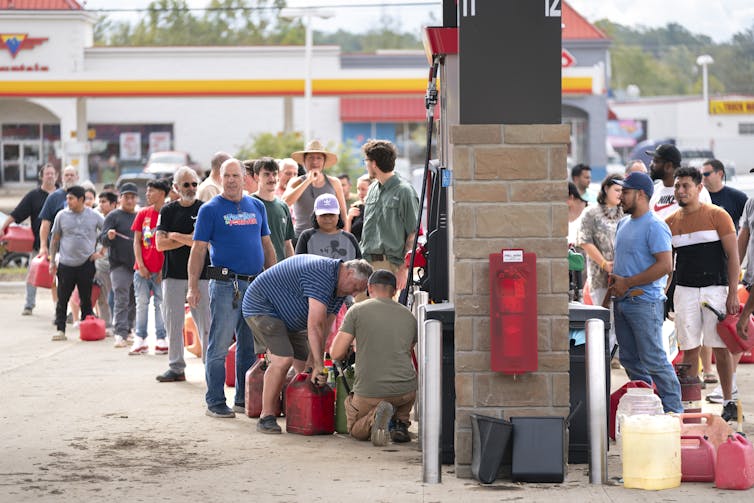
In Asheville, the flooding caused so much damage to water treatment facilities and pipes that officials warned the city could be without running water for potentially weeks. Most private wells also require electricity to pump and filter the water, and many people in surrounding areas could be without power for weeks.
State and federal agencies began delivering extra bottled water to the regionshortly after the storm, but supplies were limited, and it’s likely that a number of people won’t be able to reach the distribution sites soon. Access to fresh food is another concern for many areas with roads and bridges washed out.
Inside homes, floodwater can create more health risks, particularly if mold grows on wet fabrics and wallboard. Standing water outside also increases the risk of exposure to mosquitoes carrying diseases such as West Nile virus. Mosquitoes are still active in much of the region in the fall.
Inundation, isolation and access to health care
Many of the images in the news after the hurricane hit showed roads, hospitals and entire towns inundated by floodwaters. In North Carolina, more than 400 roads were closed, blocking access to the major regional health care hub of Asheville, as well as many smaller communities.
While supplies can be airlifted to clinics, residents needing urgent access to treatments such as dialysis or daily medications for substance use disorders may have been cut off. Health care workers may be unable to access their clinics as well.

Cuts and other injuries are common in the aftermath of storms, as people clean up debris, and even small wounds can become infected. The stress, exertion and exposure to heat can also exacerbate chronic conditions such as cardiovascular and respiratory diseases.
Mental health and long-term effects
Beyond the risks to physical health, the fear, stress and losses can affect mental health.
Research has consistently shown that emergency responders’ mental health can suffer in widespread disasters, particularly when they know disaster victims, deal with severe injuries or feel helpless. All of those conditions were present as Hurricane Helene’s floodwaters swept away dozens of people, with many more still listed as missing.

Stigma, cost and a lack of mental health care providers all add to the ongoing challenges to mental health after disasters. Research shows that a large percentage of people face mental health challenges after disasters.
According to the Substance Abuse and Mental Health Services Administration, two federal grant programs provide mental health services support to individuals and communities after disasters. However, one of those sources of funding ends after 60 days, the other after one year. Given the decades of recovery facing western North Carolina after Hurricane Helene, I believe these programs are woefully inadequate to meet the mental health needs of the populations affected by the storm.
Flooded regions will need long-term help
Western North Carolina is often described as a “climate refuge” because of its cooler summers. And Asheville in particular has become a popular place for retirees and new residents. Recent data shows the city has the second highest migration rate in the nation.
But Helene and other extreme storms that have flooded the region make its vulnerabilities clear.
In the aftermath of the flooding, newcomers unfamiliar with the risks and longtime residents alike will be dealing with ongoing health concerns as they try to clean up and rebuild from the storm. Even as attention shifts to other disasters, the people in this region will still need help to recover for months and years to come.
First published in The Conversation. Included in Vox Populi with permission.
Jennifer Horney is Professor of Epidemiology and Core Faculty of Disaster Research Center, University of Delaware.
Discover more from Vox Populi
Subscribe to get the latest posts sent to your email.

Consistent with this article, a report in “Nature” says that there are
excess deaths after hurricanes for years, and the magnitude apparently
surprised the researchers.
https://www.scientificamerican.com/article/hurricanes-kill-people-for-years-after-the-initial-disaster/
LikeLiked by 2 people
Flooding contaminates the water supplies with sewage and pesticides.
>
LikeLiked by 1 person
This is all so heartbreaking and rage-inducing as it didn’t have to be this way. Meanwhile, I’m told the very first question to the VP candidates the other night was whether or not Israel should bomb Lebanon. Thank you for republishing this.
LikeLiked by 1 person
I’m afraid that disaster is closing in from all sides. Flood, fire, fascism…
>
LikeLiked by 2 people
And still the Climate Crisis is a ‘hoax’ to too many.
LikeLiked by 2 people
My heart goes out to the victims of this cruel, cruel tragedy — and, again, one feels so helpless… My heart goes out to your sister in law and what she went through, Jim — and to see the pictures of Helene’s utter destruction in Asheville, Swannanoa and environs just makes me so deeply sad for the victims. And one feels so helpless. Because we all know that, in a week or so, the news machine will leave the region to focus on the next big thing — but the victims whose houses, cars, business, complete lives were just washed away, or whose relatives were drowned in all that mud will still have to face this tragedy e-v-e-r-y day, and this for months & months…
LikeLiked by 1 person
Two years ago Hurricane Ian hit the Fort Myers Beach area in FL, where my sister in law lived. The storm surge blew in her sliding glass doors, and she was instantly trapped in four feet of water, sewage, and who knows what. She stood in the water for over 3 hours before it started to recede. Fearing it would rise, all that time. No electricity, her car had floated away, undriveable, no public transportation. No cell phone service. Her companion cat drowned. And she was lucky. Nearby poor neighborhoods had flimsier homes. She tells me the story over and over. It has affected her mental health. Little I can do. A microcosm of what the weather is doing. Oh, and the mildew took over the place. It took her months before she could move back in. Bless her heart. Thank goodness, she says, for salvation army donated furniture.
LikeLiked by 1 person
Oh, I’m so sorry for your sister, Jim. This scenario is being repeated again and again as the storm waters surge.
>
LikeLiked by 1 person
I am so sorry for your sister and for everyone affected by this and other disasters.
LikeLike