
Vox Populi
A curated webspace for Poetry, Politics, and Nature with over 6,000,000 visitors since 2014 and over 9,000 archived posts.
Hart Crane: The Air Plant
Grand Cayman
This tuft that thrives on saline nothingness,
Inverted octopus with heavenward arms
Thrust parching from a palm-bole hard by the cove⎯
A bird almost⎯of almost bird alarms,
Is pulmonary to the wind that jars
Its tentacles, horrific in their lurch.
The lizard’s throat, held bloated for a fly,
Balloons but warily from this throbbing perch.
The needles and hack-saws of cactus bleed
A milk of earth when stricken off the stalk;
But this,⎯defenseless, thornless, sheds no blood,
Almost no shadow⎯but the air’s thin talk.
Angelic Dynamo! Ventriloquist of the Blue!
While beachward creeps the shark-swept Spanish Main
By what conjunctions do the winds appoint
Its apotheosis, at last⎯the hurricane!
~~~
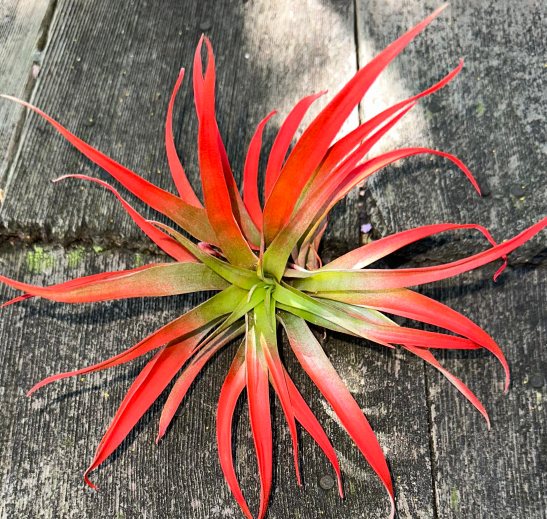
(Photo: Awesome Industries)
Harold Hart Crane (1899 – 1932) was an American poet who wrote highly stylized modernist poetry, often noted for its complexity. His collection White Buildings (1926), featuring “Chaplinesque”, “At Melville’s Tomb”, “Repose of Rivers” and “Voyages”, helped to cement his place in the avant-garde literary scene of the time. The long poem The Bridge (1930) is an epic inspired by the Brooklyn Bridge. On April 27, 1932, Crane jumped overboard from a steamship into the Gulf of Mexico. Although he had been drinking heavily and left no suicide note, witnesses believed his intentions to be suicidal, as several reported that he exclaimed “Goodbye, everybody!” before jumping overboard. His body was never recovered.
‘The Air Plant’ is from The Complete Poems of Hart Crane (Liverwright, 1933). Public Domain.
Discover more from Vox Populi
Subscribe to get the latest posts sent to your email.

I’ve somehow missed Hart Crane. Reading this intricacy of a poem recalls a walk in Florida, staring in amazement at air plants spending their solitary lives unattached to earth or water. They lived enmeshed around power-line wires above a busy road. Could they instead have been telephone lines, with the plants eavesdropping on our talk? Or whispering a weather forecast to the universe? Who knows, not even them, I suppose. Best wishes to the coastlands of Florida., the airplants, but even more so those on the ground buried in sand and salt.
LikeLiked by 1 person
You capture the web of correspondences that Hart Crane creates. Thank you.
>
LikeLiked by 1 person
“But this,⎯defenseless, thornless, sheds no blood,
Almost no shadow⎯but the air’s thin talk.”
“The air’s THIN TALK!” Oh my!
LikeLiked by 2 people
I love Crane for his wild metaphors and great ear for the music of language.
>
LikeLiked by 1 person
Quite a nice little bit of poem-art as Helena runs past to other ports of call, robbing us of our power on her way by. She’s been spinning day and night. But this poem of Ser Crane, first thing in the morning, throws us overboard at a perfect juncture. Oh Michael, how did you know the poem’s last word to come after she ravaged the Florida main—its “unsurvivable surge” they, the authorities cried—would be hurricane?
LikeLiked by 3 people
Oh, Sean, I hope you and yours are surviving the terrible surge of the ocean over your beloved land. How are your animals faring?
>
LikeLiked by 3 people
Michael:
Pray with us we never directly receive such a storm as just passed by. From here its like watching domestic violence wreaked upon a neighbor and feeling helpless to do anything about. We regained our power and we’re terribly waterlogged by weeks of rain, this the storm has added in collaterally, but we and the cattle will be alright, soon as the peninsula gets over it’s severe “sinus infection.” Looks like Barbara and David are miraculously well. I am worried about Rick Campbell’s residence on Alligator Point (He did leave) but haven’t heard anything and I doubt he knows at this moment. Thankyou for your concern! We went roping this morning and have 28 calves safely recorded and tagged to date! Tis the season!
LikeLike
I’m relieved to hear that you and yours have survived, Sean. I grew up on the Texas Gulf coast, so I know how terrifying hurricanes are.
>
LikeLike