
Vox Populi
A curated webspace for Poetry, Politics, and Nature with over 6,000,000 visitors since 2014 and over 9,000 archived posts.
Archibald MacLeish: Ars Poetica
A poem should be palpable and mute
As a globed fruit,
.
Dumb
As old medallions to the thumb,
.
Silent as the sleeve-worn stone
Of casement ledges where the moss has grown—
.
A poem should be wordless
As the flight of birds.
*
A poem should be motionless in time
As the moon climbs,
.
Leaving, as the moon releases
Twig by twig the night-entangled trees,
.
Leaving, as the moon behind the winter leaves,
Memory by memory the mind—
.
A poem should be motionless in time
As the moon climbs.
*
A poem should be equal to:
Not true.
.
For all the history of grief
An empty doorway and a maple leaf.
.
For love
The leaning grasses and two lights above the sea—
.
A poem should not mean
But be.
Archibald MacLeish (1892 – 1982) was an American poet and writer who was associated with the modernist school of poetry. MacLeish studied English at Yale and law at Harvard. He enlisted in and saw action during the First World War and lived in Paris in the 1920s. On returning to the United States, he contributed to Henry Luce’s magazine Fortune from 1929 to 1938. For five years MacLeish was Librarian of Congress, a post he accepted at the urging of President Franklin D. Roosevelt. From 1949 to 1962, he was Boylston Professor of Rhetoric and Oratory at Harvard. He was awarded three Pulitzer Prizes for his work.
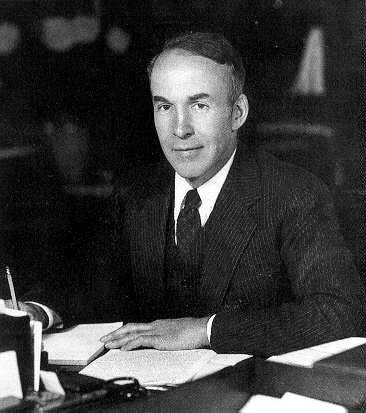
Public Domain. First published in 1926.
Discover more from Vox Populi
Subscribe to get the latest posts sent to your email.

An extraordinary poem followed by wonderfully meaty and poetic comments. What a site! Thanks all.
LikeLiked by 2 people
Thanks, Mandy!
LikeLiked by 1 person
So good to see the whole poem. Thanks for posting it. And, sigh.
LikeLiked by 2 people
Thank you, Lisa, for being such an attentive reader. Your comments mean a great deal to me!
LikeLiked by 1 person
Written in the Roaring Twenties, in Paris with the expats. A favorite poem in my own 20s. But over time, even as the images retain sharpness, I see, as others have noted well, how the poem’s philosophy whittles narrative, protest, storytelling, diary stuff out of poems (except at a remove). We need those things. Yet, as a recent deep griever, the poem’s two lines on grief stun me with their imagery, healing, and overwhelming truth: they mean, not be, as I write this under our old maple tree.
Thanks to all the commenters who engage with the poems on Vox. They are great teachers and explore wonder and justice in many ways.
LikeLiked by 3 people
And my thanks to you for your many deeply perceptive comments, Jim!
LikeLiked by 2 people
…and I’ll quote Charles Simic: “Poetry is the orphan of silence”!
LikeLiked by 2 people
perfect!
LikeLiked by 1 person
This! This is why my first interaction of the day is with Vox Populi.
LikeLiked by 1 person
my first interaction of the day, too. A treat, including the commentary of every sort. In the picture you post, you are leaning against a tree. That summarizes much of what I enjoy here: poets bonding with all of life.
LikeLiked by 3 people
thanks, Barbara. I always look forward to your daily comments.
LikeLiked by 1 person
Archibald MacLeish’s Ars Poetica is familiar to readers as an advertisement for the aestheticist approach to poetry, dear to those who would exclude all social criticism and public speech from literature. A poem should be mute (?) It is often the only poem of MacLeish’s included in anthologies.
However, MacLeish went on to write powerful poems against fascism abroad and McCarthyism in the US. He published “Ars Poetica” in his first book, and appears to have written it when he was 19 or 20 years old.
Here is my response/rejoinder to the poem, from my first collection, Without Paradise:
ARS POETICA
A poem should be impenetrable and mute
About United Fruit,
The bomb,
The news, the noose, the why, the wherefrom,
And silent as the stolen
Stelae the museums own —
Narratives, judgments, records,
Long careers for buzzards.
A poem should be able to kill time
As the Dow climbs,
Leaving, as the moon releases
Spire by spire the debt-entangled cities,
Leaving, as the moon behind the make believe
Reason by reason the mind —
A poem should be able to kill time
As the Dow climbs.
A poem should add up to
Not true.
For all the history of belief
A boozy tear and a gold fig leaf.
For love
A State Department memo and a gunboat on the sea.
A poem should not mean
But flee.
LikeLiked by 5 people
I agree I agree, Richard!
LikeLiked by 2 people
Thanks for sharing your poem, Richard. The MacLeish poem was important to me when I was a teenager, reading modern poetry for the first time, so I included the poem in VP for sentimental reasons. Reading it now, I’m struck by how thin the aesthetic is. The poets who are now my favorites such as Jack Gilbert, don’t reduce their language to imagism, but include ideas and arguments. For example, I was asked to read a favorite poem last night at a gathering, and I chose Gilbert’s “A Brief for the Defense” which argues that we need to accept happiness wherever we find it because otherwise all we have are the horrible things of the world. Gilbert ends the poem with a series of beautiful images of a boat in a harbor, signifying perhaps that joy is a haven from cruelty. So I’d say that MacLeish and the moderns were onto something with their devotion to images, but imagery is not enough by itself…
LikeLiked by 3 people
Two famous poems were almost simultaneous with Ars P.:Stopping by Woods…by Frost, where the images were implicit, and The Red Wheelbarrow by WC Williams, where the trite image was everything that so much depends upon (his words).
I’ve been trying to write protest poems which try to have more power than a chant like “no more war” or as much as a well done essay. A poem to speak the truth to power, but use the unique ways of poetry, whatever they are, to do so. So far, the lyrical ballads still come out better when I try them, than a lament against the state of our politics or greed.
I’ve never read Jack Gilbert. He’s my new assignment. thanks for going deeper with this. It was a great poem to choose. And the grief lines from the Ars P, stunned me to tears of joy this morning. But then I ground my teeth at the last two lines, which for me, ruin the poem.
LikeLiked by 1 person
Bear with me, it is a feature of the current zeitgeist to dismiss talk of clandestine government programs as “conspiracy theories”… But the aestheticist position that poem touts was fostered and funded by the Congress for Cultural Freedom/ American Cultural Committee, a CIA funded anti-communist initiative that steered the course of American and western European arts and letters post WWII, cherry-picking the productions of artists and writers to exclude those with dissenting views or practices. Abstract Expressionism valued over pictorial art with any of that 1930’s flavor of dissent (via funding of galleries and establishment of museums like MOMA and Guggenheim) and High Modernist journals like Paris Review, Horizon, and others. It was definitely anti-communist, but also anti- social commentary of any kind. Frances Stonor Saunders chronicles this in her book The Cultural Cold War: The CIA and the World of Arts and Letters, which, in England was published under the more hard-hitting title Who Paid the Piper? See also Finks: How the CIA Tricked the World’s Best Writers by Joel Whitney. It’s worth pointing out that MacLeish served as the Assistant Secretary of State for Public and Cultural Relations in the immediate aftermath of WWII. Watching his own growth as a writer after he left government, you see a broadening of his aesthetic and a deepening of his political/moral concerns.
LikeLiked by 1 person
I love that Gilbert poem. Along with many of his!
LikeLiked by 1 person
A bitter rejoinder that works. Many readers would no longer know about the United Fruit Company in Central America, and its work with the US government to overthrow governments there to improve its own exploitation.
As an aside, this poem also reminds me of the satirical Christmas news I always wanted to write to the people who each year sent out a form letter with tidings of how perfect their family and their life was. You extend that satire to the culture and the nation.
LikeLiked by 2 people
Arf Poética
Each morning, my dog tosses around
on the bed, flips and flops her alarm
to say it’s time to go outside for our walk.
I climb out of bed and test my knees
and stand to get dressed and pee before
we go ring the elevator, drop downstairs.
In the lobby, I put on her harness and leash,
and we step into the daylight, squinting.
Nose to the cold ground, she starts sniffing.
I start searching, too, looking for an image,
a lesson, a poem glistening in the sunshine,
steaming, ready to be scooped up and bagged.
LikeLiked by 5 people
Thanks, Laurence!
>
LikeLiked by 1 person
“Not mean but be…”
always good to hear this—out of the blue of a new morning—again.
LikeLiked by 5 people