
Vox Populi
A curated webspace for Poetry, Politics, and Nature with over 6,000,000 visitors since 2014 and over 9,000 archived posts.
Susan Yeargin: How to keep yourself safe during expected heat waves this summer
A heat wave can pose risks for anyone who spends time outside, whether they’re runners, people who walk or cycle to work, outdoor workers or kids playing sports.
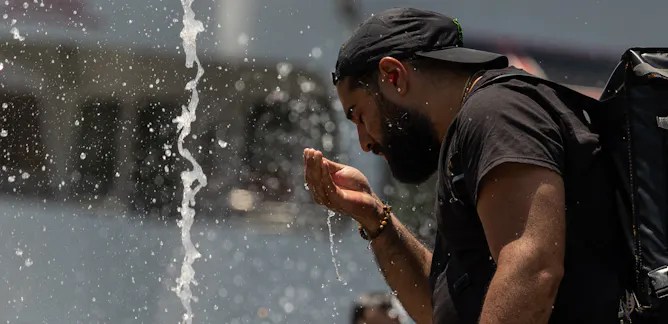
The time of day matters if you’re going for a run, or if you’re walking or cycling to work during a heat wave. Early risers or evening runners face less of a risk – the sun isn’t as hot and the air temperature is lower.
But if your normal routine is to go for a run midmorning or over lunch, you probably want to rethink exercising in the heat.
Pretty much everywhere in the U.S., the hottest part of the day is between 10 a.m. and 6 p.m. The body will gain heat from both the air temperature and solar radiation. The ground also heats up, so you’ll feel more heat rising up from the asphalt or grass.
Add humidity to the mix and that will also affect your body’s ability to dissipate heat through sweat.
Don’t forget that the body also generates internal heat when you’re active, whether you’re running or even mowing your lawn. When it’s warm to hot outside, you’re further increasing your heat gain through that exertion. The harder someone runs or cycles, the more heat they’re generating.
Outdoor workers on farms, construction sites or even walking dogs are often in the heat longer, with less flexibility for breaks.
Do our bodies eventually adapt to summer heat?
It takes about two weeks for the typical person to fully acclimatize to higher temperatures. Over that time, your body makes amazing adaptations to handle the heat.
Your sweat rate improves, dissipating heat more effectively. Your plasma volume expands so you have more blood pumping through your body, so the heart doesn’t have to work as hard. Because your cardiovascular system is more efficient, your body doesn’t heat up as much. You also retain salt a bit better, which helps you keep water in your body.
That doesn’t mean you’re ready for even higher temperatures or extreme heat, though. Even if you’re acclimatized to 80-degree weather, you might not be ready for a 95-degree heat wave. When we get early season heat waves and high humidity, that can reach a level people aren’t adapted to handle yet. And some combinations of heat and humidity are too much for anyone to safely spend much time in.
Are young children and older people at higher risk in the heat?
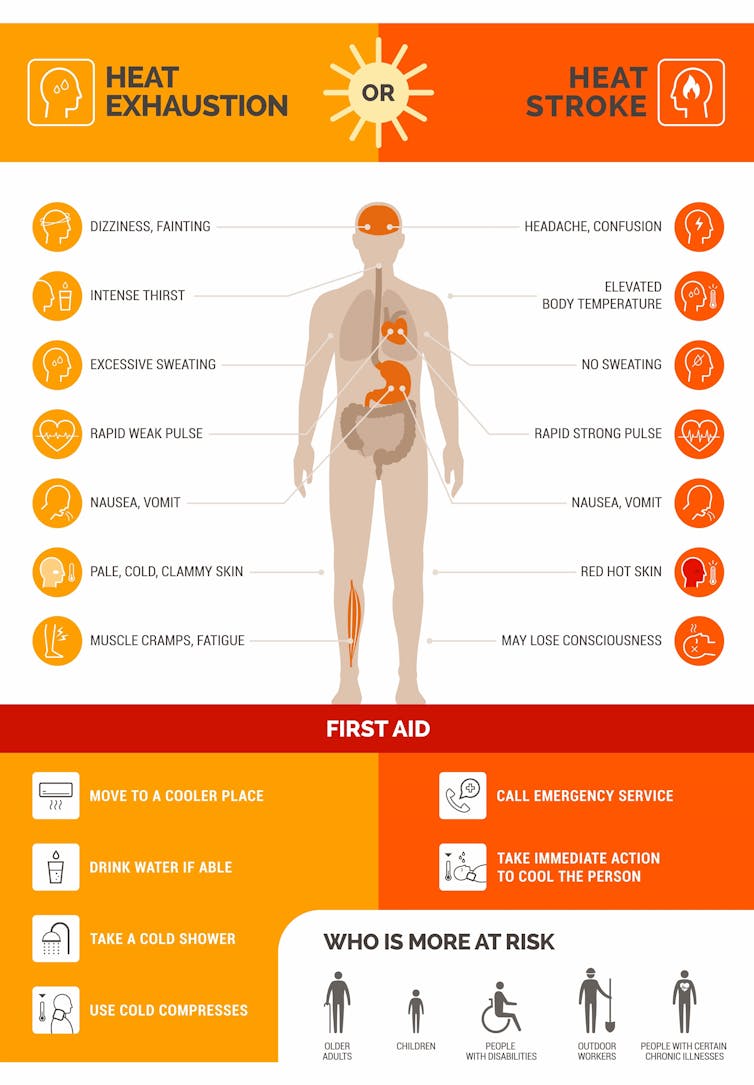
In older adults, the cardiovascular system isn’t as flexible and powerful as it used to be, so it doesn’t operate as efficiently, and sweating mechanisms decrease. That leaves older adults at greater risk for illnesses such as heat exhaustion or heat stroke.
Their thirst mechanism may also not function as well, leaving them more likely to become dehydrated. Some older adults are also less willing or able than younger people to seek out cooling centers.
Children might take a few more days to acclimatize than adults. They’re also more dependent on skin heat loss than sweating, which is why their skin can get red and flushed-looking.
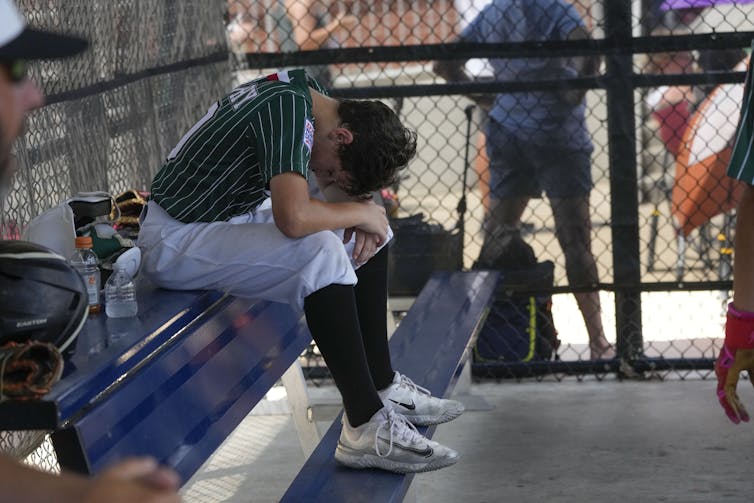
Children are probably better about complaining about feeling too hot or not feeling well, though, so listen to them and help them seek out cooler areas. They might not realize that they can take a break during soccer practice, or that they should come in from the beach.
What are your top heat safety tips?
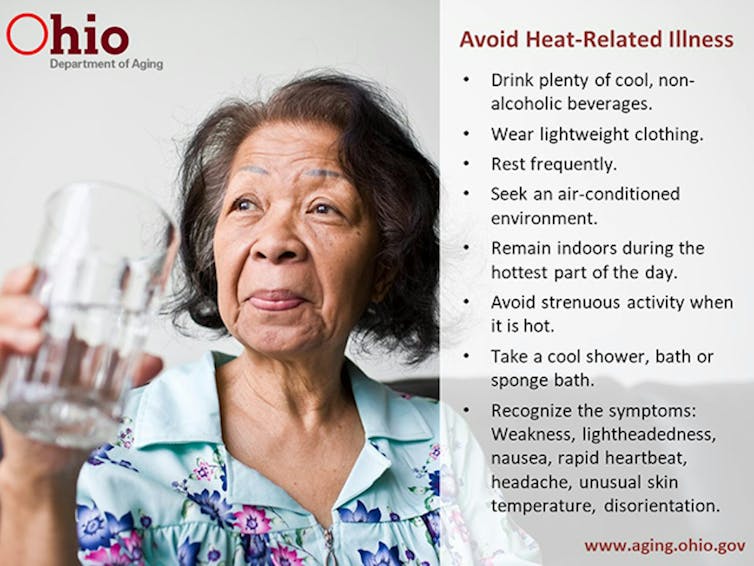
Be smart about the time of day you’re being active: People love their routines, but you need to get the workout and yard work and other outdoor activities done early in the day or late in the evening. Avoiding the hottest parts of the day is the smartest way to prevent heat illnesses. When outside and the Sun is up, seek places with shade.
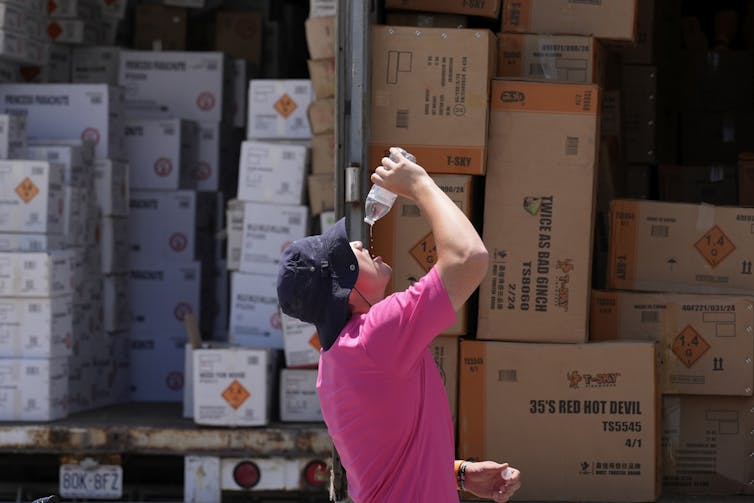
Have good hydration habits: Don’t ignore thirst – it’s your body telling you something. Hydration keeps your plasma volume higher to help your heart work less and decreases your overall risk for heat illnesses. Your brain and muscles are also composed of water, so if your body senses that you don’t have enough water, it will start to sacrifice other things, including how much you’re sweating.
Listen to your body: When you do need to be outside to work or play, your body will give you cues regarding how it’s handling the heat. If you don’t feel well, feel hot or can’t seem to push harder, your body is telling you to slow down, add extra breaks or get out of the situation.
Make smart clothing choices: Wear light-colored clothing, which absorbs less heat than dark clothes. Short-sleeved shirts and shorts can also avoid helping heat build up or impairing sweat evaporation.
Remember that helmets and sports equipment hold in heat: Construction workers often have to wear hard hats, but athletes don’t always need to practice with shoulder pads and helmets, especially in high heat. To help workers, there is a push for companies to follow health safety guidelines, such as providing cooling stations and hydration breaks.
Get a good night’s sleep: Heat exposure one day can affect your risk the following day. If you can sleep in air conditioning and get a good night’s sleep, that may help decrease the risk of heat illness.
First published in The Conversation. Included in Vox Populi with permission.
Susan Yeargin is Associate Professor of Athletic Training, University of South Carolina.
Discover more from Vox Populi
Subscribe to get the latest posts sent to your email.

This is such a practical article I’ll send it to several friends who live in very hot areas. Thanks.
LikeLike
Thanks, Mandy. I published this article as a public service announcement. I’m glad it’s helpful.
>
LikeLike
How good of you to post this, Michael!
LikeLiked by 3 people
Agree.
LikeLiked by 1 person
Thanks, Laure-Anne. Last week, I noticed a lot of my neighbors, including many children, suffering in the heat. I like Susan’s common sense approach to dealing with the problem. Climate change is here to stay, whatever happens in politics.
LikeLiked by 2 people