
Vox Populi
A curated webspace for Poetry, Politics, and Nature with over 6,000,000 visitors since 2014 and over 9,000 archived posts.
Jane Johnston Schoolcraft: Lines Written at Castle Island, Lake Superior
translated from the Anishinaabemowin
Here in my native inland sea
From pain and sickness would I flee
And from its shores and island bright
Gather a store of sweet delight.
Lone island of the saltless sea!
How wide, how sweet, how fresh and free
How all transporting—is the view
Of rocks and skies and waters blue
Uniting, as a song’s sweet strains
To tell, here nature only reigns.
Ah, nature! here forever sway
Far from the haunts of men away
For here, there are no sordid fears,
No crimes, no misery, no tears
No pride of wealth; the heart to fill,
No laws to treat my people ill.
Public domain.
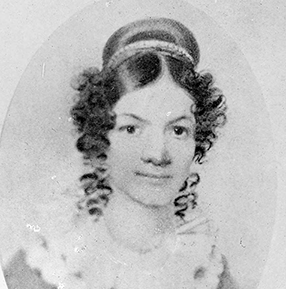
Jane Johnston Schoolcraft (1800- 1842) was born in 1800 in Sault Ste. Marie, in the northern Great Lakes region of what is now Michigan. She was also known by the Ojibwe name Bamewawagezhikaquay, which translates to Woman of the Sound the Stars Make Rushing Through the Sky. Her mother, who went by the names Susan Johnston and Ozhaguscodaywayquay, was a respected Ojibwe leader, and her father, John Johnston, was a Scotch-Irish fur trader.
Schoolcraft grew up speaking both English and Ojibwe. She read extensively from her father’s library, and she visited Ireland and England from 1809 to 1810. She is thought to have begun writing poetry around 1815. Though she never published her work, she wrote approximately fifty poems in English and Ojibwe, as well as versions of Ojibwe stories, songs, and other traditionally oral texts.
Schoolcraft is considered to be the first known Native American woman writer and possibly the first Native American literary writer. Of her vital role in American poetry, Robert Dale Parker writes, “She brought her Ojibwe and American worlds together by the unprecedented acts of writing poetry in an Indian language, writing out English-language versions of Indian oral stories and songs on a large scale, and knowledgeably integrating Indian language into English-language literary writing.”
In 1822, Schoolcraft met Henry Rowe Schoolcraft, a well-known explorer and ethnologist who had been appointed as a federal agent to the region. They were married in 1823, and he went on to publish writings about Native Americans, especially the Ojibwe, drawing from the Johnston family’s stories. These writings later became a source for Henry Wadsworth Longfellow’s famous poem “The Song of Hiawatha.”
In 1826 and 1827, Schoolcraft’s husband compiled a handwritten magazine, The Literary Voyager, or Muzzeniegun (Philip P. Mason, 1962), that contained several of her poems. In 1841, they moved together to New York City after Henry Schoolcraft was dismissed from his post as a federal agent. She died on May 22, 1842.
In 2007, Robert Dale Parker edited a posthumous collection of her poetry, The Sound the Stars Make Rushing Through the Sky: The Writings of Jane Johnston Schoolcraft (University of Pennsylvania Press). Schoolcraft was inducted into the Michigan Women’s Hall of Fame in 2009.
This post was compiled from the website of The Academy of American Poets.
Discover more from Vox Populi
Subscribe to get the latest posts sent to your email.

Interesting how an English translation of an “exotic” poem sounds like just another really lame 19th-century magazine piece. That last line kicks butt, but the rest of those couplets? Derivative and predictable.
LikeLike
Wow, what a discovery! and what a discovery the Ojibwe word for: “The Sound the Stars Make Rushing Through the Sky”. The Peruvian language quechua is built in a similar way based on their unique and gorgeous cosmovision.
LikeLike
Very cool. Thanks.
>
LikeLike
Thanks for introducing me to this fascinating writer and her story.
LikeLike
Thanks for reading the post, John!
>
LikeLike
A lovely breath of fresh air.
LikeLike
just so
LikeLiked by 1 person