
Vox Populi
A curated webspace for Poetry, Politics, and Nature with over 6,000,000 visitors since 2014 and over 9,000 archived posts.
Baron Wormser: The Dark Sky | Politics and Its Discontents
Beyond the dangerous inanity of American politics, symbolized, but hardly limited to the enormous attention paid to someone intent on acting out in every way he can act out, it’s not hard to feel that politics, worldwide, is, in a word, bankrupt. The various schemes of governance that humankind has devised, some as crude as despotism, some as relatively sophisticated as socialist democracy, seem supremely irrelevant in face of the ongoing climate issues, seasoned as those schemes are with admixtures of power that invite congregations of scoundrels and hacks. (As Nathaniel Hawthorne once put it, “Their consciences are. . . india-rubber.”) All the large concerns—how we live and how that impacts the earth, the reliance on fossil fuels, the relentless engine of capital, the belief in invention as a good unto itself, the worship of wealth, the indifference to conservation, the addiction to so-called news, the short- term view that stresses immediate financial profits, the confused connection between money and human values, the absence at every stage of education of teaching ecology and caring for the earth, the belief that business is the main human enterprise, the continuing impact of industrialism, the mischief that politics creates with its ceaseless wrangling, the continuing impact of tribalism that results in internecine wars, the extinction of species, the destruction of habitats, the menace of atomic weapons, the threat of pandemics—all this, and this is a partial litany, is beyond the reach of nation-state politics as we know it and have known it. Whether the Ukraine war, the massive corruption that money breeds, the cults of personality, or the deluge of propaganda, politics seems utterly beside the point, a sort of third-rate hoax that keeps us busy with instances of malfeasance, partisanship, thuggery, and incompetence. We shake our heads. We become indignant. Or we nurse our grievances. Meanwhile, the ocean warms up and acidifies and micro-plastic is found everywhere in everything.
I write from a Vermont city that has been devastated by flooding. For a day the sky was a deep, invincible black and it poured and poured—eight to nine inches. As the governor put it, “Water has to go somewhere.” It went into the downtown of the city and into many buildings and parked cars. One terrible sight will stand for many: rafts floating down Main Street intent on rescuing people trapped in their apartments and houses. The waters receded but the damage is immense. People are faced with loss of homes and livelihoods. After the news story was over, the reality of destruction remains in a city that was ravaged by Hurricane Irene in 2011. Here we are again twelve years later but even worse. Where do we turn; what do we do? For all the identities and persuasions we insist on, we remain the children of that dark sky.
Faced with this situation, some citizens here have pointed out that politics is cozily mired in the nineteenth century. We vote and we discuss “issues,” but the big issue—how we live on the earth—goes unremarked. This is understandable in that economics calls the tune; politics is a mere self-regarding dancer. Economics translates into the issue every politician is attuned to—jobs—but it translates also into the assumptions about living in a world devoted to what Joseph Campbell, the author of The Hero with a Thousand Faces, once called “rationalized greed.” That phrase was out-of-bounds when Campbell wrote it and still is. You won’t find it in The New York Times nor will you hear it on NPR or Fox News. Left, center, and right agree that the silent system known as capitalism is beyond reproach. Indeed, as far as managing the forces unleashed by industrialism, corporatism with its relentless devotion to profits has seemed something like efficient. Factories all over the planet have produced more for people to consume. Banks have spewed more money. If certain parts of the planet have been bequeathed the short end of the stick that, as they well know, has been their problem. They can, after all, always fight among themselves. The advanced nations have been glad to supply the weapons.
Political failures, as Octavio Paz, another lucid twentieth century commentator, noted, are moral failures. Politics, as it is governed by the pressure of immediate situations, however tangled those situations may be, will choose expediency over truth. What we face now, however, is a spiritual failure—the inability to see how the vast and bountiful earth is finite both as to its balances and resources. The belief in endless growth, however “managed,” and the craving for more of everything, despite all the pontificating and posturing at economic summits, are literally senseless. The price (to use an economic word) is being paid right now and will only get worse as one environmental calamity follows another. Again, nation-states involved as they are with their own affairs or with everybody else’s affairs, as is the case with the so-called superpowers, offer no perspective. Campaigning politicians offer flattery to their supporters and calumny to everyone else. Elections seem like numerical exercises—until the results are contested. The outcome of those elections is more legislation, a great deal of which (see “lobbyists”) abets the corporations that, after all, run the show but little of which in the United States addresses enormities like the ever-burgeoning defense “budget” or the similarly burgeoning demands of “national security.” Politics seems like a caravan headed nowhere in particular but producing much entertaining hubbub along the way, except when the hubbub turns violent, as is too often the case. See “alliances,” “military-industrial complex” and “war.”
Many human affairs have needed to be legislated, but politics, as it offers laws or decrees doesn’t have any real answers to the dilemmas of an overpopulated world that is consuming resources at a frightening rate, beyond supporting whatever technology offers and purveying as many buzzwords as it can throw at the credulous public—“carbon footprint,” “sustainable,” “clean,” “renewable,” “zero,” and that friend of everyone “recyclable.” We nod accordingly and believe we are on the right path, particularly if it is a path that doesn’t ask us to sacrifice any of our comforts, gains, nostrums, and caprices. Yes, we believe that electric cars are “better” than gasoline driven cars. Why humankind needs all these cars is very much another story.
That story goes untold because it isn’t news. That story—the story of who we are and who we might be—lives in legends and myths that spoke to human beings for millennia. Far from being fantasies, those legends and myths often focused on commonsense. The trickster figure in many cultures reminds people how gullible they are, how little they know. Similarly, the outlier who goes beyond the sensible bounds comes to grief. Impiety has consequences, so does rashness. But what preposterous words these are in a world of men and women in their suits of knowledge! The spirit world is empty, for there are no limits, no bounds, no guides. There is only the human hand manipulating whatever lever is available. All the fascination lies in the newest lever. We can take the sunrise, photosynthesis, and oxygen for granted.
If there is something that is endless, it is human self-interest. We talk about ourselves endlessly, look at ourselves endlessly, and each day purvey the viewpoint that we are at the very center of life on earth. We take this as our immodest right, whether we see ourselves as stewards, a pleasant if vague notion, or as conquerors deserving all the booty we can amass. What we overlook because we don’t know what to do with it is our capacity for the empathy that underlies love. Before I am dismissed as a soft-headed poet, please note that the crucial word here is “capacity.” Each day attests to that capacity in countless ways. There would not be a livable world without that capacity. We do not, however, see others in ourselves. I don’t just mean people. I mean all the creatures—large and small. We may, at moments, get beyond our natural egotism bred of appetite and assertion but, as a rule, whether golden or leaden, we don’t. Such empathy (or what Keats called “negative capability”) is too frightening, too inclusive, too impractical, too vulnerable. It may take a lifetime of meditation to even get near such a place. Or, to cite Keats again, it may take a deep, instinctive belief in the power of sympathetic imagination, a belief that has to be lived and tested each day.
Politics, to return to my topic, as it plays favorites eschews wisdom. Must love do the same? This seems to be the terrible pathos of the human predicament now, even if humankind denies the predicament. We don’t love the planet enough to give up anything. We wait for greater catastrophes but that is dread not love. We talk about our children and grandchildren but that is worry not love. We look for some political outlook that isn’t hopelessly enmeshed in the economics that have brought us to this place but no such outlook offers itself. On the contrary, politics, as a reflection of how we live, is, to quote a phrase from Richard Powers’s novel The Overstory, doubling down on the status quo. We look for inventions to save us from inventions. It is easy to feel that the human dimension grows smaller and smaller each overbearing, technological day. We have grown practiced in the arts of alienation. Even the pursuit of happiness, as it proclaims its possessive narrowness, attests to the selfish distances within us.
However some of us may pine for it, we cannot order up a spiritual revolution. What happened around the time of Jesus was a revolution that went beyond the messianic impulse in its recognition of the worth of each person. Of course, that impulse, once institutionalized, proceeded to pronounce others to be worthless heretics. It may be that humankind can never get beyond group structures that obviate the worth of individuals and thrive by creating enemies. It may be that the love that lives within us cannot be turned toward something as large and seemingly abstract as the earth. But the earth isn’t abstract at all. Each moment is local and real and is always a place where we might begin. Despite the clamor of ever-ultimate technology, we need the earth and we need social structures that go with our lives on earth—schools, hospitals, clinics, libraries, gymnasiums, gardens, farms, trading concerns, and, yes, policing. Politics, however, appears as something else, particularly since it offers false hope. Inside so many speeches, promises, slogans, rants, and declarations is something too self-righteous for anyone’s good, much less the planet’s.
Copyright 2023 Baron Wormser
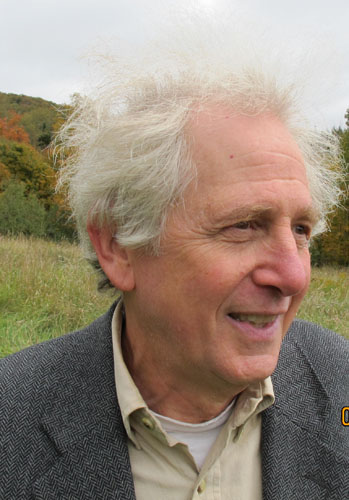
Baron Wormser’s many books include The History Hotel (CavanKerry, 2023). In 2000 he was appointed Poet Laureate of Maine by Governor Angus King. He served in that capacity for six years and visited many libraries and schools throughout Maine.
Discover more from Vox Populi
Subscribe to get the latest posts sent to your email.

I have all the answers to whatever problems may plague us. They can all be revealed! A simple 16-time donation will allow me ample time to put forward all the answers for the world to see! Note: Donations are not tax deductible but once my answers are revealed money will be of no concern or consequence! Peace!
LikeLike
Great! Where do I send the donation, Leo?
>
LikeLike
Thanks, so much! You can leave it in the hollow log at the corner of Oak and Pine streets In Redneckville, Ga
LikeLike
HA!
LikeLike
Can’t find the words. Yessssss. Spoken/written from the bottom of my troubled heart.
“For all the identities and persuasions we insist on, we remain the children of that dark sky. “
LikeLike
Amen. Amen. Amen.
Thank you for this unfortunately accurate account of of where we are.
A reflection of my increasing despair about our earth, our divides, our politics.
I grew up in the mountains with a dad who quietly respected/loved our earth. This has been passed down to me, my daughter, and now my young granddaughter. Recently when five-year-old Anna and I happened to be brushing our teeth together, she matter-of-factly prompted me to turn off the tap between rinsings. A habit that, despite being usually mindful at age 75, I had somehow missed.
A generation blink that somehow, when I think of it, carries a moment of hope.
LikeLiked by 1 person
Thank you for this, Jackie.
>
LikeLike