
Vox Populi
A curated webspace for Poetry, Politics, and Nature with over 6,000,000 visitors since 2014 and over 9,000 archived posts.
Baron Wormser: Staggering
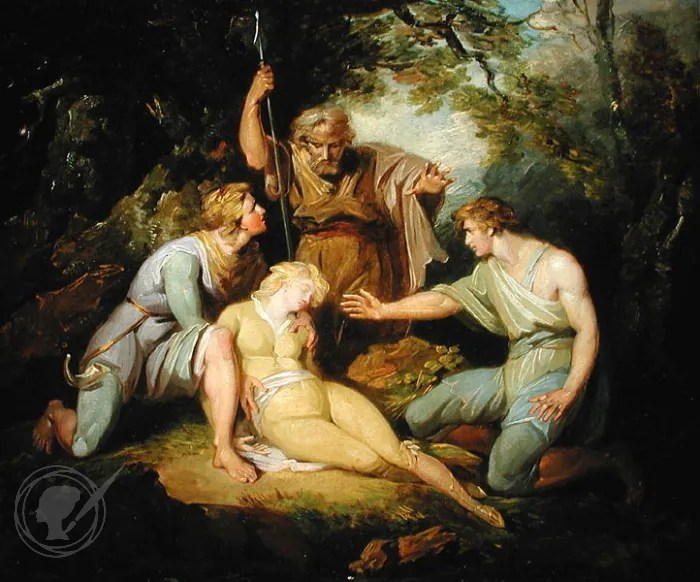
“How come these staggers on me?”
Cymbeline, William Shakespeare
.
When I was growing up, I sometimes heard the phrase, “staggers the imagination.” It could be about something positive, as with a work of art or an athletic feat, or something negative, as with the Holocaust or the atomic bomb. In either case, the phrase meant that something was at work that forced the imagination to consider its limits. Imagination was a faculty that all people possessed. It came with childhood and never left, however diminished it might seem to become in adulthood. Imagination spoke to how life at any time and place was a made-up affair. Also, it spoke to the human ability to sense how vast the unknown was, despite the human inclination to restrict and reduce the unknown, and how that unknown could make itself palpable at any moment. It was as if imagination, something seemingly illimitable, existed to be overreached because human life was so febrile—for better and for worse.
Imagination never came up in school. Why would it? We sat there each day intent on answers. Occasionally, we were called upon to do something mildly creative, some arts and crafts project related to something we were studying—cut-outs of turkeys for Thanksgiving. Mostly, we were there to buckle down and move toward the adult world while one grade level became another. Our imaginations probably went most often into our capacity for telling lies, or, as the expression went, “making things up.” Sometimes we might be indulged in this capacity, more often we were not indulged. Also, we had dreams, both night dreams and day dreams. When each of us was alone, imagination often kicked in. Where else can a child go? What else can a child do? When asked what one was thinking, a child could answer with the blessed word, “Nothing.”
Though various human matters certainly impressed my childhood imagination, the largest matter was the earth. I took the earth for granted, of course, like everyone, but underneath that familiarity the strangeness and breadth of the earth and the earth’s visible creatures, along with the plants, trees, rocks, to say nothing of the sky, all of that impressed me. I mean it pressed itself on me. I was, as I later read about in the Romantic poets, at one with the earth. I grew up in a city but each day the weather insisted upon itself. Each day I met the elements, in whatever combination they might present themselves—sun, rain, snow, fog, wind, cold, heat. The word from science fiction presented itself: I was an “earthling,” a very particular creature in that regard.
I’m old now and it strikes me that the greatest failing of human creatures, especially those living in the so-called advanced world of technology, capital, and what is loosely termed “civilization,” is our failure to connect our imaginations with the earth. Given all our failures, this one may not seem high up on the list, yet it speaks to our inability to be able to be at home on the earth in a respectful way. It speaks to all that is in the word “develop,” as in “that corporation is going to develop that land.” Develop? What a weird euphemism for the act of using the earth to make money and create something that may have a very modest value in relation to the earth and, indeed, may have none whatsoever—more asphalt. The notion of conserving is an imaginative act based on appreciation and understanding, whereas the notion of developing, even in the hands of those hired to design the buildings, is an act of appropriation. Hence the enormous imbalance the human race has created, endless development and appropriation as opposed to very little conservation. Our minds are eager to fill in the blank spaces, except that on earth there are no blank spaces.
Huge acts of development such as Levittown or what were the World Trade Center towers (to choose two in the United States) did not parley with the earth. As acts of development they were assertions and seen as practical in their large-scale way: more houses and more office space. The demands on the earth that such entities made were irrelevant. Technologies of one sort or another would take care of whatever challenges arose. To imagine the spirit of the earth, a spirit that wanted to be consulted and placated would be absurd, if not downright superstitious. A child might talk to a tree but an adult, by definition, would not. Adult power begets much narrow confidence. The initial situation, our living on a planet that staggers the imagination, is just a starting point. I suspect the staggering is precisely the difficulty. “It’s all too much,” as George Harrison once put it. Faced with the “too much” and accustomed to the “too much,” we instinctively move forward, wherever that may take us.
The failure to admit the importance of imagination, the resolute avoidance of myth, legend, and fable as ways that teach us how to live with and respect the earth, makes for much advanced mischief, be it through textbooks that reduce the imagination to meaningless gruel, banks that subsidize endless development, or academic theoreticians who invent language to reduce imagination to a series of cultural impediments. Imagination can help to answer a large human question, not definitively (an impossibility) but with feeling and insight—the question of meaning. As creatures, if we are breathing we are very much participating (check the air quality index) and imagination acknowledges that. The foremost act of imagination is to acknowledge the earth’s primacy. The myths, legends, and fables often point out how we fail, which makes them all the more valuable, for they put the “staggering” dimension in some perspective. Anyone who says we have that perspective now in the so-called first world is high on algorithms and jet fuel.
As a poet, I am particularly wedded to the imagination. Although it is easy nowadays to feel that poetry has devolved into either one more nonfiction genre based on the observations and memories of the anecdotal self or into not particularly higher forms of mystification, poetry is devoted to the imagination’s search for emotional truth. It goes without saying that the truths vary and that what may make great sense to one era may make less sense to another era. This is no matter—literally and figuratively—since the imagination refuses permanence. Canons are worthy constructs, as they are tempered by time, but they aren’t idols. For what lies at the heart of much literary imagination is the sense of life as a drama with no designated outcome. Salvation and redemption are elsewhere. One shouldn’t ask for more sense than a given situation offers—however much one wants to ask, which constitutes another drama.
The situation may be staggering, witness Picasso’s response to the destruction that led him to createGuernica. The imaginative encounter may also be staggering in its own right as with some music, be it Beethoven or John Coltrane. What seems crucial is the belief that the imagination is up to the task, that the imagination is something more than manipulation or transcription, that the imagination is truly dauntless. This transmission of feeling as to what imagination constitutes may be more than a socialized setting of the sort that a school typically handles. (Even an opportunity that honors imagination is designated as “a writing workshop” to justify the endeavor and emphasize practicality.) No glad outcomes can be predicted. We can say that the imagination is its own reward and some truth resides in that thought but, as the lives of many artists and inventors attest, only some. The world-at-large prizes order, efficacy, and duty, none of which necessarily resonates with imagination.
We don’t have to imagine to perceive the level of violence that pervades life on earth. What imagination offers is latitude, the space to consider something more than that violence, something that isn’t in the form of some abiding answer but that speaks to how variable life is and how narrow the aperture is in any life: more mystery than understanding. In that sense, however firm our steps may seem, we stagger through life. Sometimes the staggering is writ large, as in war, sometimes it is personal, as in a lover leaving. Given our mechanical, energy-fueled potency, we tend to reduce life’s terms to that aperture of the self that uses and takes, uses and takes, but imagination, since it can bring us to primal, mythic places, speaks to something more than that. Imagination can help us see how deep and wide our misunderstandings run and how hard it is to get beyond those misunderstandings. It may be harder, based on the historical record, than we can ever do, but many legends and tales speak to the value of patience, insight, and endurance as much as they speak to daring. The possibility of wisdom has nothing to do with some notion of progress, which so often is little more than conceit. To be aware of the consequences of our actions comprises an imaginative act that can connect the wanting self to the sustaining earth. As uncertain creatures, it is hard for us to grasp the steadiness of the earth and how imagination can be similarly steady, as steady as the rising sun. We have nothing to prove but we have so much to appreciate.
Essay copyright 2023 Baron Wormser
Baron Wormser’s many books include the poetry collection The History Hotel (CavanKerry, 2023).
Discover more from Vox Populi
Subscribe to get the latest posts sent to your email.

Oh, yesssss.
“The possibility of wisdom has nothing to do with some notion of progress, which so often is little more than conceit. To be aware of the consequences of our actions comprises an imaginative act that can connect the wanting self to the sustaining earth. As uncertain creatures, it is hard for us to grasp the steadiness of the earth and how imagination can be similarly steady, as steady as the rising sun. We have nothing to prove but we have so much to appreciate.”
LikeLike
Such a good essay.
We need so much imagination and perseverance and heart and devotion to save the planet (in such a way that we can continue to live on it.) As with Chernobyl, the earth will thrive without us.
LikeLike
Yes, ‘the earth will thrive without us.’ Well-said.
>
LikeLike
ssteph—I think you have put your finger on the problem: fear. Too many of us are afraid to look at what’s happening and really see what’s going on. And that includes trying to comfort ourselves with the low-grade mystifications that Wormser alludes to.
LikeLike
I stop everything to read what Baron Wormser writes. I want to read the poetry that takes on his challenge—that uses imagination (as he defines it) to show us the misunderstandings that have so harmed this Earth—but also, to show us how much we can and do already understand. Imaginative, creative poems that create or reveal patience, insight, and endurance.
LikeLike
Well-said, Maura. Thank you!
>
LikeLike
Very thought provoking essay.
If man eventually succeeds in destroying himself and what he considers as life on earth, earth will still be in existence (unless she is eaten by the sun or implodes as a dark hole) and Gaia will rebuild, creating creatures and life much stronger and more resilient than before. It seems to me, most nature is very adaptive and, for the most part, not resistant to change unlike her failed experiment of the creature we can humans.
LikeLike
Wow, Leo. You’ve given me a lot to think about.
>
LikeLike
A wonderful essay. Inspiriting to those of us whose imagination riles us and comforts us every day.
LikeLiked by 1 person
Thank you, Anne. No one would know better than you. Glad to have your voice here.
>
LikeLike
Always enjoy Wormser’s precise essays. This one does not disappoint. I find myself wondering these days why it is that we want an answer to everything, and we want it now. We don’t take the time to imagine the possibilities as he suggests. Instead, we rush in with with some quick explanation or an opinion and move on. Unfortunately opinion is substituted for reasoning these days. I actually had someone tell me that climate change was an exaggeration and a hoax recently. It was during June when temps were reaching well over 100 in states that normally did not experience those temps, and certainly not for as long as that heat wave lasted. When I asked him what made him say that, he told me he remembered plenty of hot days in summer when he was a child. This was no different. The news just liked to exaggerate and “stir things up”. When I replied that I didn’t think the folks in the Midwest could remember a week of consecutive days of 114 degrees, he just shrugged his shoulders and left the conversation quickly. I came to the conclusion he was afraid. I wonder if fear makes us so hasty and willing to strike out with any answer or act. I know sometimes when I have been afraid, I have not stopped to think carefully. Have not taken the time to imagine the reasons behind what frightened me, and have not stopped to imagine the possibilities and consequences of my own responses. I agree, we are such users and takers as Wormser suggests. And I also wonder if we are living in culture of such fear currently that many are in a flight or fight mode which is reaching a point well beyond dangerous for our planet and ourselves.
LikeLiked by 1 person
What a perceptive response. Thank you!
>
LikeLike