
Vox Populi
A curated webspace for Poetry, Politics, and Nature with over 6,000,000 visitors since 2014 and over 9,000 archived posts.
David Hassler: Vocata George
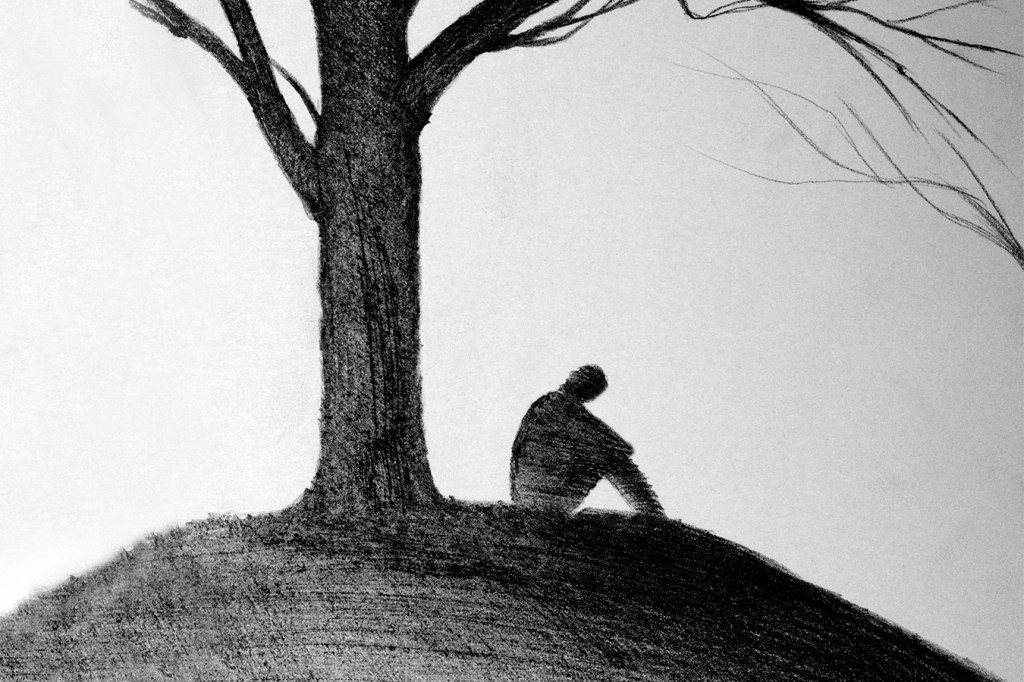
A month after my thirty-sixth birthday, on the anniversary of my mother’s death, I go back to Standing Rock Cemetery, along the Cuyahoga River in Kent where she is buried. I believe I have reached the age my mother was when she died. I still have a child’s irrational feelings of guilt (that I am somehow to blame for my mother’s death) and a fear that I cannot, should not, live beyond her age. How can I be older than my mother? Who will I be if I am not her young, grieving son? Nearly every day, at some point, I cry. It comes on like one of those sudden, summer rain showers, and catches me by surprise, then quickly passes. For months I have been feeling wobbly and off balance.
Now I stare at my mother’s gravestone and read the engraving: “August 28, 1938 – September 19, 1976,” as I have done dozens of times before. I have always believed my mother was thirty-six when she died and feared turning thirty-six myself. But today, for the first time, I subtract the date of her birth from the date of her death and realize she was thirty-eight when she died, not thirty-six.
I begin to laugh and cry at the same time. This is a moment when, as Proust says, “the calendar of facts does not correspond with the calendar of feelings.” I, who have felt late for my mother’s death, late to grieve her properly, am now two years early to face this moment, this crisis of identity. I have never, until today, correctly done the math of my mother’s death.
Yet, at only thirty-six, two years early, I am stuck and unable to move forward with my life. I have canceled all my poet-in-the-schools residencies for the fall semester in order to write about my mother, to salvage from memory anything I can, to reclaim her. My friend Pauline recommends a Jungian analyst in Cleveland. Her name is Vocata George. Her name alone disorients me, unsticks me from my usual patterns of thinking. Her last name, George, is a common first name for a man. And her first name, Vocata, is one I have never heard before. I cannot identify it with any nationality or gender. Vocata, I say to myself. I think of the words “vocal,” “vocation,” “voice,” opening one’s mouth wide in a doctor’s office and saying, “aaaah.”
My body, meanwhile, is forcing me to seek help. I have developed a mysterious jaw problem that comes on every several months. My jaw seizes up on me, as though I have put a muzzle or a bit in my mouth to keep myself from talking. As if my body were in “lock down,” trying not to breathe my mother out of my belly, where she has been stoppered, kept down, out of reach of my conscious thoughts, since that morning I swallowed her in the kitchen in front of my grandfather. My clamped jaw, in its extreme symptoms, is like a fire door, a castle gate that has slammed shut.
Each time I sit on Vocata’s sofa, I want to pull myself out of the dark place I now inhabit, but I need her help. She begins our sessions with the same simple question—“So, how are you doing, David?”—and invariably I begin to cry. When I speak, it is with a small and frightened voice, as if a spell has been cast on me. As if I barely have a voice. For the next hour of our session, I can only whisper. Once our session is over, while driving home, my voice returns.
This is my own interrogation room, where I defend my father, where I exonerate my stepmother, where I try to see myself as a boy again. I have to testify as a witness to this boy, who is inside me still, and who needs to be coaxed out by the helpful energy of Vocata.
At every one of our sessions, I feel Vocata’s love and attention. This safe space is full of color and strange, little statues and figurines on the shelves and walls. It’s a room where time stands still, one that invites dreaming.
With her bright red hair, her purple and mauve cottony blouses, and her blue suede shoes, Vocata is my fairy godmother. She breaks the spell cast over me. She draws out the voice of that twelve-year-old boy who couldn’t speak for himself, who didn’t realize the cost of swallowing the memory of his mother on that morning long ago.
For several years, I meet with Vocata to do this labor. Like a midwife or a doula, she remains by my side, patiently hearing me into speech, as I slowly birth my mother, the genie in my belly.
David Hassler directs the Wick Poetry Center at Kent State University. He is the author or editor of nine books of poetry and nonfiction, including Red Kimono, Yellow Barn; Growing Season: The Life of a Migrant Community; and Speak a Powerful Magic: Ten Years of the Traveling Stanzas Poetry Project.
Copyright 2023 David Hassler
Image: (iStock/Getty Images Plus)
Discover more from Vox Populi
Subscribe to get the latest posts sent to your email.

I don’t know you but I used to know Vocata, back around when she changed her name. At the time, I was in my 20s and she was about 40. I met her in California, initially at an astrology gathering, and we became friends. I really looked up to her for her courage in leaving the midwest and beginning a new life. I was privileged to visit her in Cleveland back in 1980 something … she had come so much into herself!
Please, if you are so motivated, give Vocata my warm regards and my gratitude for her friendship. I’m so glad that she is still alive and practicing her vocation.
Lee Rowen
LikeLiked by 1 person
Thanks, Lee!
>
LikeLike
I love this deeply moving essay. My mother died when I was thirty-six and I don’t know if I’ll ever be done writing about her.
LikeLiked by 1 person
I love your poems, Lisa.
>
LikeLiked by 1 person
Thank you❤️
LikeLike
I am so glad you have Vocata. I have Pat and someday I’ll tell you the weird story of how I learned she was moving to New Mexico, a story that cannot be explained.
LikeLiked by 2 people
Such intense loneliness & sorrow.
LikeLiked by 3 people
yes, the author delayed feeling his grief so long, the grief was destroying him. The therapist wisely helped him discover those feelings.
LikeLike
Another strong piece.
LikeLiked by 2 people
Yes, I love David Hassler’s writing.
>
LikeLiked by 1 person