
Vox Populi
A curated webspace for Poetry, Politics, and Nature with over 6,000,000 visitors since 2014 and over 9,000 archived posts.
Dr. Neta C. Crawford: Costs of Wars through 2016 — $4.79 Trillion and Counting
Summary of Budgetary Costs of US Wars in Iraq, Syria, Afghanistan and Pakistan and Homeland Security
Wars cost money before, during and after they occur — as governments prepare for, wage, and recover from them by replacing equipment, caring for the wounded and repairing the infrastructure destroyed in the fighting. Although it is rare to have a precise accounting of the costs of war — especially of long wars — one can get a sense of the rough scale of the costs by surveying the major categories of spending.
As of August 2016, the US has already appropriated, spent, or taken on obligations to spend more than $3.6 trillion in current dollars on the wars in Iraq, Afghanistan, Pakistan and Syria and on Homeland Security (2001 through fiscal year 2016). To this total should be added the approximately $65 billion in dedicated war spending the Department of Defense and State Department have requested for the next fiscal year, 2017, along with an additional nearly $32 billion requested for the Department of Homeland Security in 2017, and estimated spending on veterans in future years. When those are included, the total US budgetary cost of the wars reaches $4.79 trillion.
But of course, a full accounting of any war’s burdens cannot be placed in columns on a ledger. From the civilians harmed or displaced by violence, to the soldiers killed and wounded, to the children who play years later on roads and fields sown with improvised explosive devices and cluster bombs, no set of numbers can convey the human toll of the wars in Iraq and Afghanistan, or how they have spilled into the neighboring states of Syria and Pakistan, and come home to the US and its allies in the form of wounded veterans and contractors. Yet, the expenditures noted on government ledgers are necessary to apprehend, even as they are so large as to be almost incomprehensible.
The United States government’s definitions of the threat and the scope of the wars, the size of US commitments to these wars in terms of numbers of troops and equipment, and what counts officially as war related expenditures have shifted over time. Congress and the Executive Branch describe the wars in Afghanistan, Pakistan, Iraq, and Syria as Overseas Contingency Operations (OCO). The scope of the wars has widened into Syria, and the US has slowed the pace of its withdrawal from Afghanistan. These are the major OCO discussed below. (Smaller operations are underway in Africa, Central America and Europe.) The Budget Control Act of 2011 and sequestration (automatic across the board spending cuts) has made it difficult to track how money is actually spent.
War spending has occurred in several categories. A large portion of the costs of these wars are Congressional appropriations for the State Department and Department of Defense (DOD). If one simply highlights these budgetary allocations so far in the major war zones and for defense of US airspace and bases, the US has spent more than $1.7 trillion for combat and reconstruction. There is other global war on terror related spending — including additions to the Pentagon base budget and spending in the Department of Veterans Affairs. Further, Homeland Security spending has increased by more than $500 billion for missions related to preventing and responding to potential terrorist attacks.
In addition, any reasonable estimate of the costs of the wars includes the fact that each war entails essentially signing rather large promissory notes to fulfill the US obligations for medical care and support for wounded veterans. These future obligations will total approximately an additional $1 trillion in medical and disability payments and additional administrative burden through 2053.
—
Copyright 2016 Neta Crawford. This is a summary of Dr. Crawford’s paper which was published in September, 2016 by The Watson Institute for International and Public Affairs at Brown University. To read a pdf of the complete paper, click here.
.
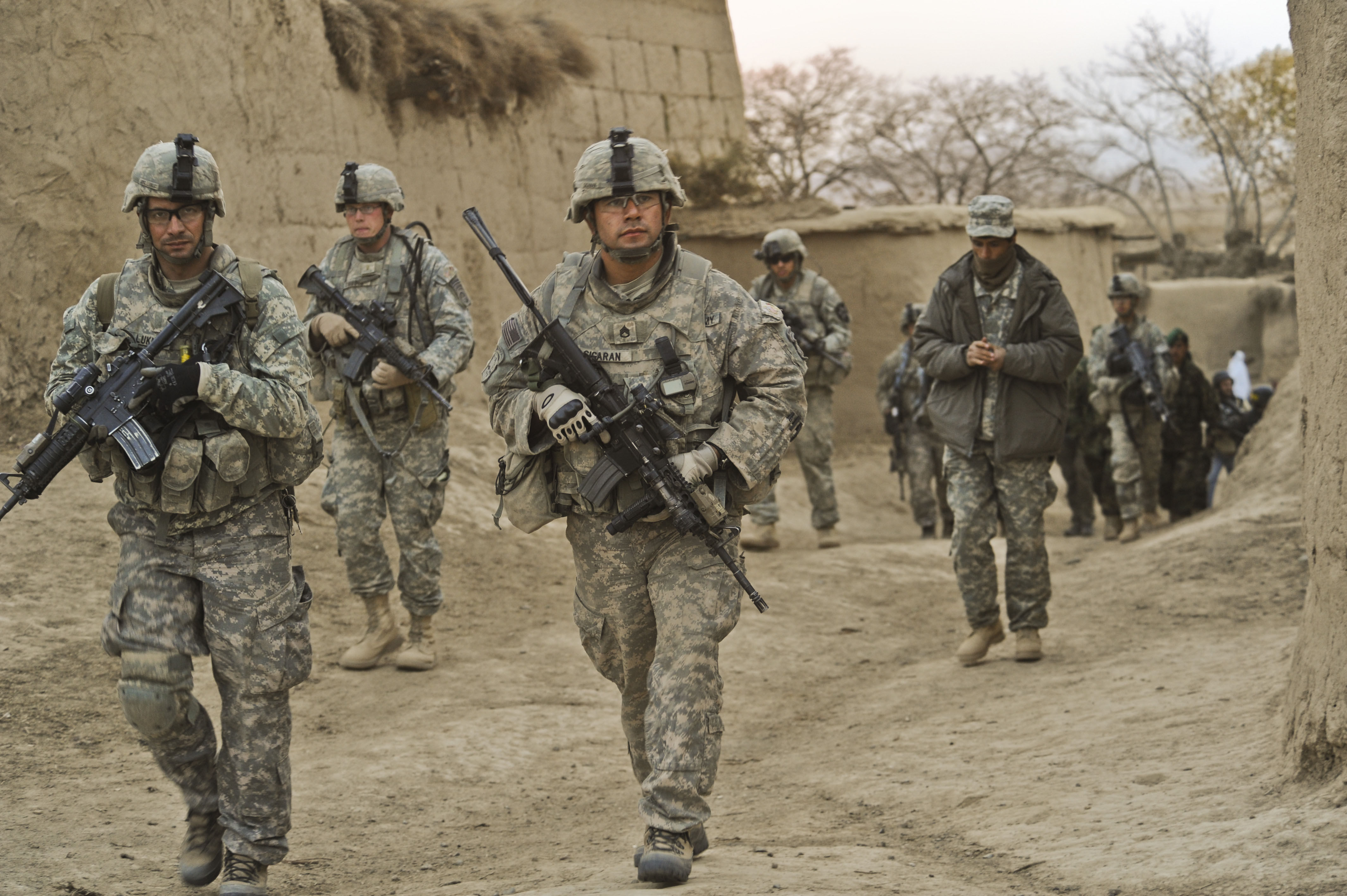
U.S. soldiers and Afghan National Army soldiers conduct a patrol in the village of Shabila Kalan, Afghanistan in 2009. (Photo by Tech. Sgt. Efren Lopez, U.S. Air Force, released by DOD)
Discover more from Vox Populi
Subscribe to get the latest posts sent to your email.

Dear!
I’d like to announce you that me and my family are moving, you may find more information here http://sadaqaou.com/evaluate.php?fdfc
Sent from a prehistoric stone tablet, daudarasaq
LikeLike