
Vox Populi
A curated webspace for Poetry, Politics, and Nature with over 6,000,000 visitors since 2014 and over 9,000 archived posts.
Michael Simms: What is Poetry For?
A few days ago, an old priest who was a colleague of my wife’s passed away, and Eva came home from work angry at the world. I was worried; Eva doesn’t anger often, and her grief seemed huge and unbearable. I couldn’t console her, so I asked Scott Staples, a friend who knew and admired the old man, to stop by our house. The three of us sat in the kitchen, Eva sipping milk, Scott and I icewater, toasting the old priest’s life, remembering picnics at his farm, his love of poetry, his kindness to Scott during a painful divorce, the old man’s struggle with homosexuality, his coming to peace with desire in his final years. His last weeks were spent in a hospital bed, ranting fragments of Shelley and Yeats, mumbling worries about his fall classes, ripping at his clothes full of bees, he said.
In the long shadows of the kitchen, we lifted glasses to the old man, his love, his fear, the final blessing of death, and as William Stafford says, we thought hard for us all.
—
For ten years I didn’t write. Other ambitions that seemed more important at the time called to me. I raised kids, taught school, built a publishing company, and learned how to be a grown-up. Although I wasn’t writing, I did feel the pull of the spirit toward a life of the imagination. I prayed, I read philosophy, I took my kids to the art museum. I had long conversations with friends that lasted well into the night. I felt love and fear, and I experienced an occasional insight into larger patterns that inspired awe, but these feelings and insights disappeared without my recording them. A stone falls into the water and the ripples push out to the edges until the surface is smooth again, leaving no mark.
What I missed most was a sense of completion. When I write a poem, the desire for a pleasing aesthetic experience compels me to fill in the details, to continue the rhythms, to find closure. Without artistic ambition, the reverie stays half-completed, unsatisfied.
The last six months I’ve been writing like a madman, poems tumbling out one after another like a family of circus acrobats. Every poem I haven’t written over the last ten years is standing in line at the door, waiting for its name to be spoken.
—
So we write poems in order to give form to our imaginings, to make discoveries in our emotional terrain, to understand life in a way that nothing else makes quite as clear. And poems live in the vital center, made of the raw stuff of life. They reside in every small important thing we do: holding a newborn baby, teaching a child to read, consoling a friend in grief.
But why read poetry? What can these exploratory images and extended rhythms mean to someone other than the writer?
During my ten years of silence, I often read poetry for pleasure. Many poems delighted me with their music, wit, and color, but a few I kept returning to because they gave me something more than merely postcards from the poet’s inner travels. Epiphanic narratives such as James Wright’s Northern Pike, Naomi Shihab Nye’s Coming to Cuzco, and Jack Myers’ Jake Addresses the World from the Garden gave form to my own awakenings. I need these poems the way a vine needs a trellis. We might say that poets, in devoting their lives to the act of imagination, engineer the soul of our culture, designing and building the spiritual scaffold we must all climb as we struggle toward the light.
.
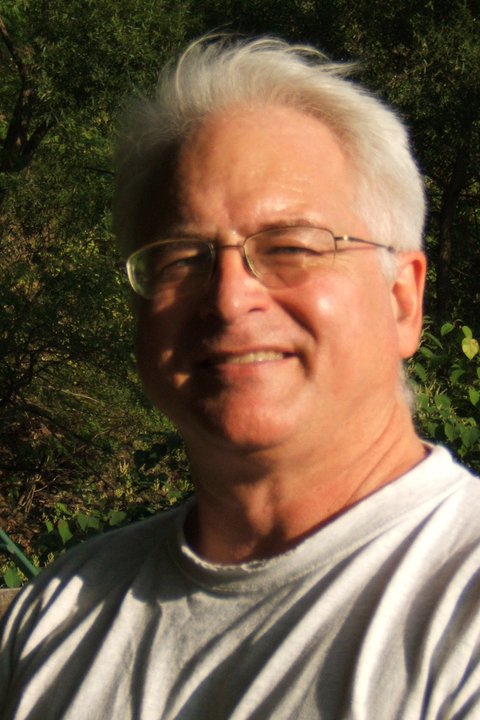
— Michael Simms writing for Vox Populi
Discover more from Vox Populi
Subscribe to get the latest posts sent to your email.

Thank you Michael — I had missed that piece — and thank you for the response, Sean. And yes, yes, like a vine needs a trellis! I read somewhere, and many decades ago that the vine’s motto is: “I cling or I die, I die where I cling”
LikeLike
Thanks, Laure-Anne. I wrote that piece many years ago. It’s nice to see it in circulation again.
>
LikeLike
Michael: I’ve been having trouble with the site: I’ll write something, get half finished and it all resets suddenly, erasing everything. I meant to say below how I’d missed somehow your post (above) from long ago, and wanted to acknowledge how much I liked it. An inspiring morning.
LikeLike
Thanks, Sean. I always appreciate praise from you. I admire your poetry so much.
Sorry you are having trouble with the VP website. It is temperamental. If you ever have a comment that you can’t post, send it to me and I’ll post it under your name.
>
LikeLike
my poetry has been like a frozen pond in the woods all season, left alone unvisited. Yesterday I told a young man and woman it was the equinox. Do you know what that is? They shook their heads. It is the moment night and day are the same, everything is in balance, a perfect day for you. And even though there was a cold wind, and the woman had taken off uncomfortable shoes and her small white feet looked like hands, and even though the young man had had forgotten his jacket but seemed impervious to the elements, and everyone at the gatherings were freezing, we followed them along their path, my wife and I walking side by side, down to the river to be married
LikeLike
What a beautiful prose poem, Sean. Thank you!
>
LikeLike
Somehow I missed this at the time of publication. So beautifully written – lyrical prose. And for me, it answers the larger question of why do we write?
LikeLike
Thanks, Patricia!
LikeLiked by 1 person
Michael, we write it because it is beautiful; there are no guarantees; it cannot be rigged. It is as children in a swimming race: No influence or promise to them of blandishment can enter the arena to corrupt, putrefy or petrify it. There is no changing the naturalness of poetry. I had to smile inwardly at the part of your post about the priest’s passing. He may have been quoting Shelley and Yeats near his end, but his story sounds very much like Manley Hopkins’s… There is something unbearably honest and uniquely insightful within his ‘Terrible Sonnets’. We wrestle, all the time, as Jacob did, except that today, it’s a whole passel of angels we’re trying to pin. We try to pin them to become them; to remove the silken ties. “And as to the existence of angels / well, yes, but these days / they are manacled / by the knots that are life.” So we posit other territories, other domains, other full-philosophied reasons, do we not? The best of these — ‘the best talking’ (Welch) — are poetry. It is unusurpably thrilling, all the time; the beat of the heart leads us to unforeknown grandeur, and always will.
LikeLiked by 2 people
Well-said, Mr. McCormack!
LikeLike
Re: Michael Simms, What is poetry for?
Amen.
I used to ask, seriously, where would the world be without Little Gidding by T.S. Eliot? Michael answers that question, beautifully, here.
LikeLike
Thanks, Leonard!
LikeLike
Keep writing! Clearly during that long patch of time, you were paying good attention. And, according to Mark Strand’s thoughts on creativity, you’ve been quiet long enough (‘Keep you mouth shut as long as you can’) so that it is more likely your words will not be quick, superficial clichés. Instead, they will offer a transformation – as in your image of a vine and trellis.
LikeLiked by 1 person
Thanks, Jacqueline!
LikeLike
Keep writing! Clearly during that long patch of time, you were paying good attention. And, according to Mark Strand’s thoughts on creativity, you’ve been quiet long enough (‘keep your mouth shut as long as you can’) so that it is more likely your words will not be quick, superficial clichés. Instead, they will offer a transformation – as in your image of a vine and trellis.
LikeLike