
Vox Populi
A curated webspace for Poetry, Politics, and Nature with over 6,000,000 visitors since 2014 and over 9,000 archived posts.
Djelloul Marbrook: What is Poetry For?
To say the unsayable is the province of poetry in society—to say it in such a way that it occupies the rafters, the eaves, the cantilevers, cornerstones, ogees and Palladians of the mind, in such a way that it constitutes the mnemonics of a culture.
Poetry is society’s dervish, wandering the world of illusion, rending the veil of illusion. The job of the poet is to get out of poetry’s way, to disappear before its grandeur but not in grandeur’s wake. In this sense the contemporary contest industry operates as an impediment, whatever its arguable merits.
Poetry is the enemy of the state and at the same time the measure of its tolerance and its aspirations. The state that cannot aspire to the heights of its rhapsodes like Walt Whitman and Hart Crane inevitably chooses the diatribes of its ideologues and wallows in the resultant squalor. Poetry is the nth estate in relation to the Fourth Estate because it achieves what the Fourth Estate only claims to achieve; poetry not only sheds light but shows where the shadows are, what they are, and how they shape us as much as the spotlight.
Poetry is society’s heretic, and its auto da fé becomes the cherished goal of press and state. Its heresies are the songs sung at the barricades, forbidden songs that crack windows and walls and explode crystal.
Poetry is silence’s passion. It respects its lover. It grants its lover silence and equality, and thereby stands as a constant, intolerable rebuke to all abusive relationships.
Poetry puts the lie to false witness and is therefore always the prey of assassins.
What Paul Cézanne saw as essential to the painting—the flash, the glance, the underwear of bare canvas—poetry sees for language, not only in its caesuras but in its reticence, its restraint, its taciturnity. Herein is poetry’s reverence for the ideas, emotions and recognitions that ignite it—its reverence for the lightning of life. Poetry is therefore epiphanic and ecstatic even when it speaks about a common red wheelbarrow. This aspect of poetry is well illustrated by Gian Lorenzo Bernini, the Renaissance sculptor, in his Ecstasy of Saint Catherine. When I was in college a young instructor asked our class, What is going on here? A friend who had attended Catholic schools before coming to Columbia said, She has heard an angel speak. Of course, I thought. For some reason, a reason that has shaped my life, the young instructor looked straight at me and said, On the other hand she could be having an orgasm.
I was as horrified as my Catholic classmates. Blasphemy.
Poetry always blasphemes somebody, something. It always holds up the alternative and the possibility that the alternatives and the authorized version are not necessarily exclusive; it depends on how broad our worldview is, how alchemical our approach.
I remember saying to my friend, also my fond baseball teammate, Jack, it can be both. Are you fucking kidding me? he said. No, I’m not. Long conversations ensued about his quitting Columbia and going to some place less heretical. He was still there holding on, talking to me about Saint Catherine, when I quit in my junior spring, not because of heresies or blasphemies, which I loved, but because a traumatic childhood caught up with me and swamped me.
Poetry is the elixir that ennobles base metals in the alembic of prosody. The baser, the more discarded, the more despised and discounted the elements, the better for poetry’s manufacture of angels’ wings. But poetry is also like the alchemist’s cover story, the one he or she tells rulers to withstand their greed. I’m turning lead into gold, the alchemist says. But the alchemist knows damned well the real purpose is the transmutation of the human spirit, the manufacture of angels’ wings whose flight we cannot begin to approximate.
In the 1951 Alfred Hitchcock film Strangers on a Train the actor Robert Walker with famous nonchalance pops a child’s balloon with his cigarette, showing us unforgettably one of poetry’s sacred tasks. Conversely, poetry is that face without which we can no longer imagine the world. That indispensable face, that moment that needs to be recovered, that glance that changed everything, because it announced its immortality at birth and the ringing of it became crucial to the architecture of the world.
While ideologies quarrel with the amplitudhedron poetry is one of its superintendents and therefore provokes the ego and presumption of the popular press in its whoredom to power. Poetry is mightily opposed to keeping anyone out, correspondingly comporting with Albert Camus’ insistence that churches, ideologies, clubs, societies and institutions operate in defense of something and against something or someone. They parse us into insiders and outsiders, while poetry—even at its most obscure and daunting—is unutterably, unspeakably democratic. It is far more interested in what we don’t know than in what we claim to know. It is far more inclined to celebrate quest than discovery. And when critics accuse poetry of inaccessibility and opacity they raise far more questions about themselves and what they are defending than about the poem at hand. They should remember that dogs hear forty times more than humans, and take it to heart regarding poets. But too often their desire is to rip off the poem in behalf of their own ego.
Plato was no fool to ban poets from his republic, but that was the problem, that is what gives away his game—it was not his republic, as the poem is not the poet’s, and poets who do not know this fall short of their mark, just as poems always fall short of their highest aim, accounting for their interplay between hush and suspense. Plato knew how dangerous poets are, questioning everything, determined to feel what others waste whole lives not to feel, hearing the hollowness of every peal, the glory of the ordinary. There would be no taming, no modulating the poets in the republic, so Plato banned them, proving their essentiality and our yearning not to be hoodwinked by any of the usual dodges and constructs.
The family that fears the poet in its midst, and many do, is like the society that marginalizes its poets not because it finds them extraneous but because it finds them dead on and therefore too subversive to tolerate. The poet is the messenger we shoot. We may make nice, offering food, rest and even honors, but we will find a way to dispose of the poet with as little decorum as possible. Or, failing that, we will honor him or her to death, as we have W.B. Yeats, ignoring all the darknesses in the cracks that he inhabited, all the untoward light he cast, all the ideas that disturbed us. We welcomed W.H. Auden putting him to rest—Earth receive an honored guest/William Yeats is laid to rest—in the forlorn hope that his ghost would not haunt us with his outré ideas, with his insistence that poetry inconvenience and disconcert us. Not that Auden himself did not notice our eagerness to be done with Yeats as the poet of unrest, not just Ireland’s unrest, but the soul’s unrest.
The poet is that child in our midst who attracts the inappropriate uncle, who is molested by the uncle everyone else loves—and lives to talk about it, spreading malaise and discomfiting everyone. It is for that reason, among so many others, that all too much poetry today reassures us that the poet will not bring up the awful subject, will not say the one true thing we would move heaven and earth not to hear, will not mention the elephant in the room. It is for that reason that young editors are choosing so much harmless, so much timid poetry, and we should be asking ourselves what happened to them that they should have such pleasant intolerance for the unsayable.
We should be asking ourselves why these young editors have accepted the role of burial detail for the most searching, the most subversive, the most seditious poetry in favor of the most palatable. Why in fact they have joined the popular press is attending to the burial of poetry if only because they know themselves to be in the crosshairs from the pales of the cemetery of the very poets they seek to put under. The ground does not keep such poets. That is why George Chapman and his horrific and magisterial The Shadow of Night keeps rising up and haunting us. No matter how many times in their smart-assery the magazine scholars call him minor he does not rest in the category, he rattles their presumptions. His oeuvre was too little, too speculative, too metaphysical, too this and too that, they say, and the more they say it the more we doubt what they say. Why have they needed so much to nail him? What was their desperate need to marginalize Hart Crane, to mark him down as a gibberish-speaker, when even a dilettante could see he was with Yeats and Sylvia Townsend Warner, for example, one of the best rhymers of the 20th Century? What was it in his rhapsodic ode, his spiraling vision that offended them? Like Chapman, he demanded too much. A society that prides itself on its individualism struck him down with its leveling instinct.
It has befallen poetry in our era to be about winning prizes, honors and notoriety, whereas the poet is at once as lowly and more requisite than the plumber or the electrician because the poet is the keeper of our eternal impulse to give voice to inmost apprehensions, to sing, to make words convey the most fey and vital ideas. The poet is at some invisible level the embodiment of all our trades, the patron saint of all our guilds, the high priest of our adytums.
When we praise poetry we incline to call it a godsend, but it is the god in the operations of our commerce with each other, and poets can withstand only so much of its face, its holy terror. They are not unlike the rabbis tying a golden cord around their waists when they enter the holy of holies so that they will be able to find their way back out, back from the abyss. And some never do—poets like Ivor Gurney, Rosemary Tonks and Sylvia Warner, who disappear, and sometimes if they are lucky are found again by fellow poets and scholars like Claire Harman, Warner’s rescuer.
Poems are saddled with poets’ names; I foresee a society unshackling them from such baggage. They are stuffed into pigeonholes made for them by desk clerks, assigned their rooms and their keys. But they will burn the place down, arsonists and bomb-throwers that they are. No one should rest assured they are in their proper boxes, weighted with their designated genres. They are as volatile as nitroglycerin. They are the Semtex and C-4 of the culture, and authority acts as a bomb squad to put out their threat.
Nothing we call the news is as news-infused as poetry. Foreign correspondence—even when we had correspondents instead of bean-counters—was an illusion, a conceit, because nothing is foreign or extraterrestrial in poetry, and a culture that countenances foreign correspondence announces its wish to live in a fortress and keep others out. That is the reason translations number no more than three percent of America’s annual publication schedule. Our minds are bolted shut as we yammer about globalism while we really believe our manifest destiny is to exploit ”the others.” Poetry is about the other, about otherness, and poets are otherlings.
The daemon in poetry challenges the authorized version of everything, the consensual account, the rationalization. It pulls out the cornerstones of societal edifices, it picks the mortar out of the bricks of consensus. It gives the Bronx cheer to Hollywood and press bromides claiming that they are just giving the people what the people want. Nothing, no one is safe around poetry. Under no circumstances should children be left in its care unless you are prepared to consort with changelings. Poetry is a sea raider. It will carry your children and your polished chalices away with it.
Plato understood all this, but that it concerned him so mightily renders his own motives suspect. What kind of republic did he desire without its witches and warlocks, without its alchemists, its divinely mad magi? Surely a fearful one.
Poetry huffs tycoons away in typhoons. It is the dread tsunami that leaves presumptions in its debris. It is the fool one has to be truly noble to tolerate—a test too many contemporary editors fail in their zeal to publish what will be popular and turns out merely vulgar.
Poetry is the gargoyle with the best-seller list in its maw. It mocks the top ten this, the five worst that, and the six reasons why, for the loony hoot they are. It calls them what they are: the mine-is-bigger-than-yours mindset of a decadent male dispensation. Poetry is the feminine principle this dispensation is so desperate to suppress that no higher impulse is safe in its fear. Poetry is the vagina dentata that terrorizes terrorists and all ideologues. Do not enter it intending to return. Do not enter it intending to prevail. Do not enter it intending.
Now, observe the implausibility of poetry being and doing all I ascribe to it here, if you haven’t already. Savor the implausibility, because poetry juggles the implausible, the improbable and the impossible. Poetry is the great jongleur of illogic, the catalyst of things that have no possible relationship to one another.
Poetry is the unaccountable quickening, a kind of divine impending, in which humanity takes heart that one way or another it can confront what is happening and what is about to happen. Poetry is one foot in the door of what is happening, and that is more, much more than ever can be said of what we call news.
—
©Djelloul Marbrook 2015
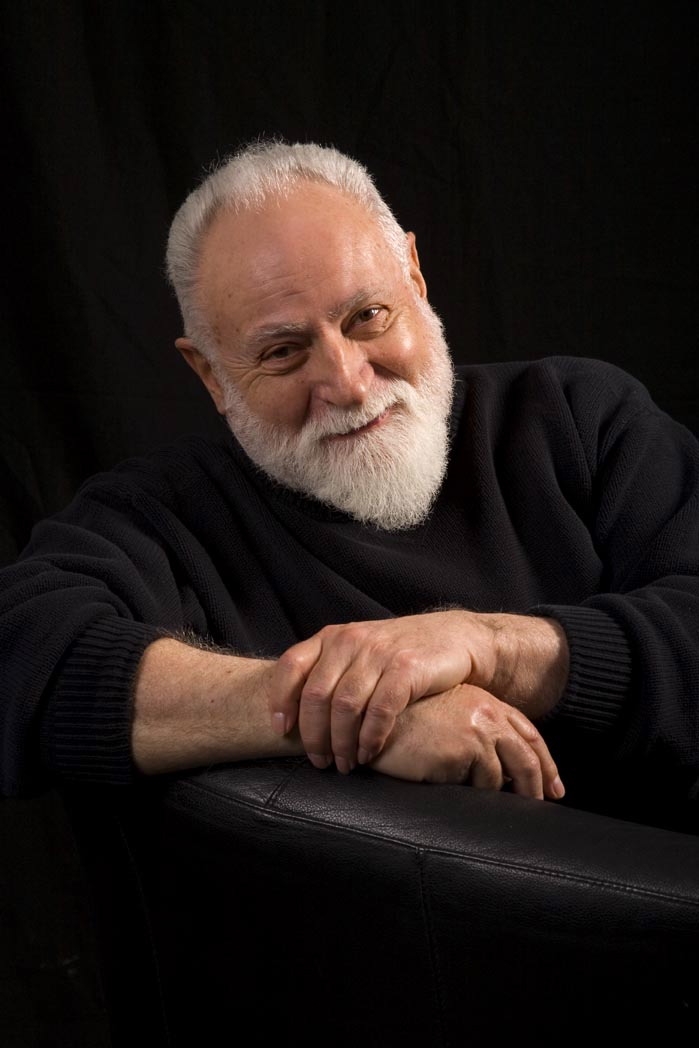
Djelloul Marbrook
Discover more from Vox Populi
Subscribe to get the latest posts sent to your email.

Pingback: Michael Simms: All Time Most Popular Posts in Vox Populi (2014-2025) | Vox Populi
Brilliant.
LikeLike
Brilliant, brilliant and so deeply thought and true!
LikeLiked by 1 person
Admiration and gratitude! I am passing this essay along to my students.
LikeLiked by 1 person
Poetry is for…language-repair, conversation-healing, future-determination, emotional-heading (or bearing, if you prefer), empyreal-climbing, star-combustion-approximation, head-over-heeling, wounding-then-wealing. It is stylized language written on the spur, off of it, by those who live their lives extraordinarily spontaneously, improvisationally, both IN AND OUT, warp-and-wax to wane-and-woof, without concern or minimal consideration of saying, or believing, that any of the above is so. Because it isn’t ours. Individual talent and intellect are only sidebars to the majesty of the messianic force and moment which move it into onen of the intelligible languages. It is the ultimate gift to anyone, by anyone. A mnemonic prescience. Godard: “What happens next is from long ago.”
LikeLiked by 1 person
I absolutely love this piece–and suspect I will return to it often. The essay offers both hope and the courage to continue writing, and boldly pronounces that, even in the face of dwindling readership and a world gone sound-bite, that poets have a raison d’etre. I think Neruda, Hikmet, Mandelstam, Lorca, et al… are smiling. Thank You Vox Populi and Djelloul Marbrook!
LikeLiked by 1 person
Oh, this is fabulous! Thank you, Vox Populi! Sharon Doubiago From: Vox Populi To: sharondoubiago@yahoo.com Sent: Sunday, February 1, 2015 2:01 AM Subject: [New post] Djelloul Marbrook: What is Poetry For? #yiv7098328710 a:hover {color:red;}#yiv7098328710 a {text-decoration:none;color:#0088cc;}#yiv7098328710 a.yiv7098328710primaryactionlink:link, #yiv7098328710 a.yiv7098328710primaryactionlink:visited {background-color:#2585B2;color:#fff;}#yiv7098328710 a.yiv7098328710primaryactionlink:hover, #yiv7098328710 a.yiv7098328710primaryactionlink:active {background-color:#11729E;color:#fff;}#yiv7098328710 WordPress.com | Michael Simms posted: “To say the unsayable is the province of poetry in society—to say it in such a way that it occupies the rafters, the eaves, the cantilevers, cornerstones, ogees and Palladians of the mind, in such a way that it constitutes the mnemonics of a culture.Po” | |
LikeLiked by 1 person