
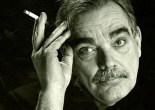
Larry Levis: Family Romance
Abstaining clouds that passed, & kept
Their own counsel, we
Were different, we kept our own counsel.
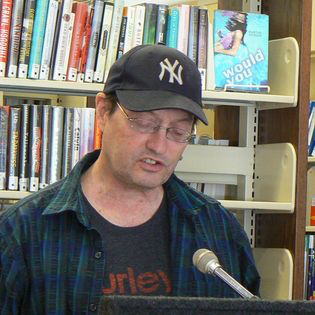
Tony Gloeggler: Fade Away
In 1964, my father and uncle
loaded the U HAUL and we left
Bed Stuy with all the other white
people and moved to Long Island.

Baruch November: A Gift in the Shallows of the Sea
One night, on Riis Beach,
years ago, I suddenly
proposed to your mother
in the moonlight

Richard Krawiec: The Eyes of Hiroshima
My father was a sailor in the first group of ships to land in Hiroshima after the atomic bombs were dropped in WWII.

Margo Berdeshevsky: God Bless the Child That’s Got His Own
He says — you will let go he will let go the branch when he is
Ready I nod, yes, he says, climbing the hill from the sea
Where he has gone to wash distance and salt before it comes
Tony Gloeggler: Anyway
After we dropped dirt
on my father’s coffin
the long line of cars
drove back to the house.

Fred Johnston: With My Father on Broadway in the Rain
I wanted to be back in our hotel room
Looking out the single window from that height
Knowing I could not fall, that if all gave way I could always fly

Majid Naficy: Stomach Ulcer
The night that Father packed his suitcase
To travel to America
I ran to the alley shops
And bought a package of barberry candies

Joshua Michael Stewart: Functional
Because the dead
remind him that splinters in his palms
are gifts, he builds cabinets, chairs, houses.
His life is work, no room for self-indulgence

Dion O’Reilly: Luke Johnson’s Heroic Journey
Luke Johnson’s debut poetry collection portrays a dream world linked to a stark reality, where generational trauma is recognized as an artifact of mind, a collection of leaping memories that haunt and possess.

Mike Vargo: Truck Drivers Who Hitchhike
I met my first hitchhiking truck driver one morning on a freeway near Columbus, Ohio.

Sydney Lea: But-cept
From a half-century ago, I remember wishing my oldest son would continue saying ‘upslide down’ at least until first grade.

Tony Gloeggler: Some of the Things
Bean once told me, he never
hit a woman, as if it was a big
accomplishment.
Larry Levis: Childhood Ideogram
Where did he go, that autumn, when he chose
The chaste, faint ideogram of ash, & I had
To leave him there, white bones in a puzzle
By a plum tree, the sun rising over
The Sierras?
