

Ariel Dorfman: Judgement Day for America’s Worst Supreme Court Justice
Lady Macbeth Has Words for Clarence Thomas and His Wife Ginni from the Other Side of Death.

Heather Davis: Spare No Detail | Three Poems about Gaza
Imagine a smart phone with crystal clear transmission
set in every corner of Auschwitz in 1943. Surely, we
would have saved them, every one.
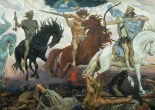
Andrea Mazzarino: America’s War on Terror and the Wasting of Our Democracy
The rapid pace of Gaza’s descent into famine is remarkable among conflicts.

Jim Minick: To Spoon
To spoon is to slip into sleep
and the same soft, slow breath,
to listen to the rain
with one ear.

Charles Davidson: The Supreme Court and the Death of American Democracy
By granting presidents “absolute” and “presumed” immunity before the law, the high court crowned the occupant of the office of the presidency with unfettered dictatorial powers.

Mandy Fessenden-Brauer: Two Poems About the Orchards of Gaza
Although it’s one of the most densely populated areas in the world, Gaza’s always had a distinct rural quality. Everyone grew something, some in agricultural areas away from their homes. Even in the very crowded refugee camps there were small atriums with a tree and potted plants.

Jason Irwin: Blaze of Glory
I remember sitting on the floor watching my parents dance to Chubby Checker’s “The Twist,” their bodies bending and gyrating as Checker called out: “Round and round and up and down we go” like a shaman, beckoning them to partake in this ritual of body and soul…

Laure-Anne Bosselaar: The Worlds in this World
Elsewhere, somewhere, a tide recedes,
incense is lit, an infant sucks from a nipple,
a grenade shrieks, a man buys his first cane.

Patricia Spears Jones: Discontented Summer
Every picture tells a story but which story and who makes the picture

Edward Harkness: Left-handed Set Shot
Poems, stories, travel tales: he taught intelligence.
His art was life, how to dance with it, how to play,
how to take or not take the shot.

Gerard Manley Hopkins: Pied Beauty
Fresh-firecoal chestnut-falls; finches’ wings;
Landscape plotted and pieced – fold, fallow, and plough;
And áll trádes, their gear and tackle and trim.
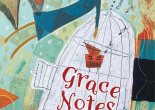
Angele Ellis: “I lived in the dark” | In Grace Notes, Naomi Shihab Nye finds the music in poems about families and the incidents and accidents of personal history
All poetry begins in song, as Naomi Shihab Nye reminds the reader, starting with the title of her latest collection, 117 mostly brief free verse poems that like songs, are both accessible and mysterious.

Patricia Nugent: No Time for Memes
There is a current meme imploring us not to lose friends over politics. This is becoming impossible for me. I would not have been able to continue a friendship with someone who began wearing a swastika armband in the late 1930s.

Jose Padua: A Poem for Jimi Hendrix and All the Superheroes of My Youth Who Lacked the Power to Live Forever
what was really interesting
wasn’t what they could do
but what they couldn’t do
