
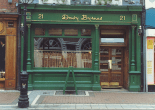
Majid Naficy: Dublin
Tomorrow we go to Blarney Castle
To kiss the Irish stone of eloquence.
But tonight in our warm bed
In memory of James Joyce and Nora
We will chase each other
Bernardine Watson: Freedom
the colored hotel was named for Crispus Attucks
a runaway slave, and the first man to die
for the America dream

Walt Whitman: On the Beach at Night
Something there is more immortal even than the stars,
(Many the burials, many the days and nights, passing away,)
Something that shall endure longer even than lustrous Jupiter
Longer than sun or any revolving satellite,
Or the radiant sisters the Pleiades.
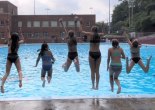
Michael Simms: The Summer You Learned to Swim
The summer you learned to swim
was the summer I learned to be at peace with myself.

Scott Silsbe: Listening to Music with You
And there’s something about your presence
that changes the music—makes it more,
makes it greater than, enhances it, I guess.
Mary Jane White: When Was I Ever So Happy
No, I agreed with you, soberly,
It would not be good if I fell. To wind up
In the hospital in Venice, when, yes,
I had just escaped the hospital at home.
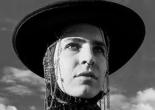
Video: Julián Delgado Lopera | The Poetry of Everyday Language
In a captivating, poetic ode to the beauty and strength of mixed languages, writer Julián Delgado Lopera paints a picture of immigrant and queer communities united not by their refinement of language but by the creative inventions that spring from their mouths. They invite everyone to reconsider what “proper” English sounds like – and imagine a blended future where those on the margins are able to speak freely.

Wendy Cope: After the Lunch
On Waterloo Bridge, where we said our goodbyes,
the weather conditions bring tears to my eyes.
I wipe them away with a black woolly glove
And try not to notice I’ve fallen in love.

Michael Simms: Strangers at the Door | Robert Gibb, Laure-Anne Bosselaar and Jose Padua
Here I want to call attention to three mature poets who have done extraordinary work, but have not, in my opinion, received the attention they deserve, and in the process explore different ways one can be an “outsider” in the poetry field.
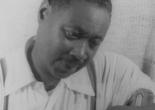
Claude McKay: The Lynching
The ghastly body swaying in the sun:
The women thronged to look, but never a one
Showed sorrow in her eyes of steely blue
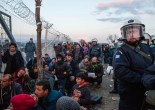
Majid Naficy: Escape to Lesbos
In Ma’arra, the poet Abul ‘Ala
Was called a death-worthy infidel
And a thousand years after his death
His statue was beheaded.

Barbara Crooker: In the Middle
Each day, we must learn
again how to love, between morning’s quick coffee
and evening’s slow return.
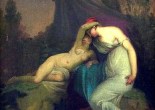
Sappho: Fragments, on Love and Desire
Like the sweet-apple reddening high on the branch,
High on the highest, the apple-pickers forgot,
Or not forgotten, but one they couldn’t reach…

Al Ortolani: Picking Ticks Off the Dog
Pulling ticks is not for the faint at heart.
