

Rachel Hadas: Lessons of Poetry
It is easier to lecture about the time and place of a book, the culture that produced it, the special historical or linguistic problems involved in it. It is harder…to face the book as a masterpiece and to help the student understand why it is a masterpiece….

Jose Padua: In Proclamation to the Emperors of Agony
Seeing an audience in Central Park holding up their middle fingers in unison is one of my fondest memories—even though I wasn’t among those for whom the finger was intended.

Doug Anderson: The Gravestone and the Continuing Self
When I was in my twenties I thought old age was an island only accessible by a bridge I’d never cross. But I’ve crossed it, and at seventy-eight the subject … Continue reading

Doug Anderson: Negative Capability
…art that honors the art and artist as well as its content, and apprehends it as more than its socio-political reality. Art is hard to do and not everybody can do it. It is not merely a pretext for theory.

Video: Poetry and Immortality in Keats’ Ode to a Nightingale | Belinda Jack
John Keats’ “Ode to a Nightingale” — a lecture by Oxford Professor Belinda Jack

Joe Kadi | Good Poetry: A Force To Be Reckoned With
As soon as I became an activist, as soon as I connected with Arabs and feminists and queers and folks with disabilities and poor people fighting to re-make the world, poetry demanded my attention.

Jennifer Johnson: A Haunting Novel of Childhood Trauma
The novel takes a hard look at how children who endure growing up in dysfunctional families, suffer dire consequences and are left to a lifetime of personal struggles.

Sarah Boon: Finding the Mother Tree
In “Finding the Mother Tree,” forest ecologist Suzanne Simard illuminates the complicated and intimate world of trees.
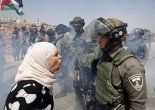
Daniel Burston: An Open Letter to Steve Kowit on his poem “Intifada”
Right now, civil conversation on these subjects is difficult to impossible to sustain because both the Zionist and the Palestinian narratives have been carefully curated to highlight the harms that each side inflicted on the other, and to minimize or ignore the harms that they inflicted on their adversaries.
Arlene Weiner: You’re Not Doing Enough!
A response to The Ministry for the Future, a novel by Kim Stanley Robinson. Orbit. 563 pp. I hope this is an important book. It’s speculative fiction, the term an expansion of … Continue reading

Daisy Fried: So Much Depends on WCW
William Carlos Williams was a furious poetic revolutionary — furiously working over a lifetime to reinvent American poetry, furious at poetry he considered backward, and at critics and editors who … Continue reading

Sydney Lea: Sunday Morning
…his left ring finger was hewn at the knuckle quite some years ago. If I think hard enough, I can remember when he was secretive about that injury. He kept the disfigured hand in his pocket or behind his back as much as he could.
Angele Ellis: from Four Way Books / Leonard, Torres, and Cohen
“Poetry is not an expression of the party line. It’s that time of night, lying in bed, thinking what you really think, making the private world public.” –Allen Ginsberg

Sharon Fagan McDermott: On Memory and Writing
In one of my favorite memories, I am peeking through my fingers, shivering, as New York Harbor, the heliport, the bustling-streets of New York City, and–even the skyscrapers— plummet away … Continue reading
