

Barbara Crooker: Patty’s Charcoal Drive-In
First job. In tight black shorts
and a white bowling shirt, red lipstick
and bouncing ponytail, I present
each overflowing tray as if it were a banquet.

Jessica Corbett: Spain Joins Italy in Sending Ship to Protect Gaza-Bound Sumud Flotilla
The UN special rapporteur for the occupied Palestinian territories implored other countries “to mobilize their fleet to grant the flotilla safe sailing to Gaza, and deploy a real humanitarian convoy to break the blockade.”

James Crews: Light and Dark
Half-awake, I lose myself in a pool
of late morning sun and leaf-shadows
flashing on the floor outside my bedroom,
what the Japanese call komorebi—light
and dark held in the same container
of a single moment, as we hold them in us,

Chana Bloch: A Marriage
Theirs was the one with the noisy bedsprings.
How does a child solve a riddle like that?
Scritchity-screech
—are they fighting again?
John Guzlowski: Hope Is Our Mother
A question I get often about my Polish parents is what kept them going during the war and after the war.

Video: A Kind Favor
On the magical coast of Central California, a grandmother reflects on a life filled with art, love, and tragedy.
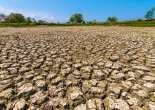
Tom Engelhardt: A Potentially World-Ending President
A Coming Hell on Earth?

Bradley Blankenship: I’ve Seen States Collapse; Now I See It Happening Here
After years reporting from post-authoritarian states, I now see the same patterns in my own backyard—where justice has collapsed, truth is suppressed, and power no longer answers to the people.
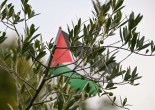
Hend Salama Abu Helow: Olive Trees Tie Palestinians to Our Homeland. Israel Treats Them as a Threat
They feared the olive trees — the trees that know, more than anyone, who the true owners of this land are.

Sean Sexton: Plea
An evening has passed, and a young cow is still
crying among the herd this morning like the widow
in the Bible who wouldn’t leave an ill-tempered
judge alone.

Charlotte Matthews: Draw With Your Eyes Closed
On Fridays, we drew animals with our eyes closed. Mrs. Plath said it could be anything we wanted. So, there we were: 25 six-year-olds bent over manila paper, crayons in stubby … Continue reading
Video: The Medallion
In Ruth Hunduma’s short documentary “The Medallion,” a mother’s memories serve as a window to a history of genocide and survival in Ethiopia.
Gary Fincke: The Book of Numbers
Ten thousand and one, I thought,
Ten thousand and two, and went
Outside, after that fever,
To bounce a ball off the roof
Wayne Hsiung: The 10,000-Year Famine
The failure of storytelling leads to calamity. Hannah Arendt, in her studies of atrocities, notes that they are typically the result of inattention rather than malice.
