
Vox Populi
A curated webspace for Poetry, Politics, and Nature with over 6,000,000 visitors since 2014 and over 9,000 archived posts.
Carolyne Wright | Ghazal: Mid-Teens
Dr. King in Lincoln’s marble presence at fourteen.
I have a dream! rang in my premonitions at fourteen.
“The poet Roethke’s dead,” my English teacher said in home room.
I read his “Elegy for Jane…” and trembled, at fourteen.
The Flying Horseshoe Drill Team! Our serpentines
Thrilled crowds at Northwest horse shows at fourteen.
The Boeing daughters on hunters, bay and roan,
I watched them sail over jumper courses at fourteen.
The Supremes glittered from my tiny radio at dawn
KJR Seattle! under my covers at fourteen.
The Boeing girls swept horse shows on hunters of their own.
I mucked stalls for riding lessons at fourteen.
My favorite rent horse sold, the drill team circled down.
I won my first and last blue ribbons at fourteen.
***
Malcolm X’s steely eyes stared down the nation. At fifteen
On TV, he drilled me through black-framed glasses at fifteen.
My first boyfriend cornered me in shadows at the drive-in.
Dear Bob! First kiss in his Pontiac at fifteen.
“Movie next week?” he asked. “I’d love to . . .” (see the film, I mean).
He heard I love you—romance’s first miscues at fifteen.
Malcolm after Mecca, in gun-sights of that dream—
Marked man with a wife, and girls not yet fifteen.
Bob begged me to run away—to Coeur d’Alene?
I begged my folks to ground me: saved by a curfew at fifteen!
Dylan glowered at Town Hall, on stage, alone—
“Masters of War.” That spotlight made me shiver at fifteen.
Dylan’s “Visions of Johanna” kept me up past dawn.
I sat at Joan’s feet onstage, “Rust and Roses” at fifteen.
***
Roethke’s “Dolor” sifted through my studies at sixteen.
Rituals of textbooks and desk lamps at sixteen.
What peace for Malcolm’s daughters? Their father slain,
Their Night of Destiny a thousand years. At sixteen
Dylan at Newport went electric: “Like a Rolling Stone.”
I unplugged those amplifiers at sixteen.
Something was happening in that decade’s smoky room,
But I didn’t know what it was, did I? at sixteen.
My restless dreams and wakeful nights began—
At 3 a.m. I stalked down the hall. “You’re just sixteen,”
My father sighed—awake, too, in the living room.
He had to get up earlier than I did, at sixteen.
“The world’s work is done by tired people, hon.”
Malcolm, Martin, and Maurice—an early lesson at sixteen.
~~~~
Copyright 2026 Carolyne Wright
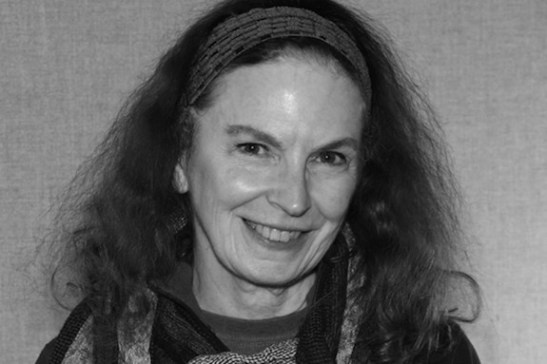
Carolyne Wright’s most recent books are Masquerade, a memoir in poetry (Lost Horse Press, 2021); and This Dream the World: New & Selected Poems (Lost Horse, 2017), whose title poem received a Pushcart Prize and appeared in The Best American Poetry 2009.
Discover more from Vox Populi
Subscribe to get the latest posts sent to your email.

What a powerful poem and rocking ghazal, Carolyne! It’s joyful, deep in courage and affirmation, and it’s loaded with great details.
LikeLiked by 2 people
Oh thanks so much, John! I’m seeing this just now — it’s been a cascade of “New & Selected Things Taking Place” in the last few weeks — all good! This is such a wonderful forum — people reading poems and commenting! And yes, even though two of the M’s were martyred in the Civil Rights era, I so admired their courage even back then, so yes, affirmation. And my own father, who did not at all agree with my nascent political views, nevertheless affirmed and supported my early artistic / literary ventures . . . and lived to see and read the first couple of books. Amazing how much we can recall — so many key details! — when we turn our attention and memory to them.
LikeLike
Just the ticket, Carolyn. The experiences fit right into the form. The details of my backward glances are different, but the feeling of being a teenager in those times comes straight back as I read your poem.
LikeLiked by 2 people
Oh thank you so much, coleraine12065!! Yes, the details are unique to each of us, but the overarching tone and spirit of that era was for all of us! And look where we are now . . .
LikeLike
Oh, that’s just a dandy ghazal.
My favorite bit:
Bob begged me to run away—to Coeur d’Alene?
I begged my folks to ground me: saved by a curfew at fifteen!
LikeLiked by 3 people
she is great, isn’t she?
LikeLiked by 1 person
Thanks so much, Michael!
LikeLike
Thanks so much, Penelope! Yes, I really did pretend to have a curfew, which I could plausibly blame on my parents. I did that a few times . . . so I could come home from boring dates and get back to reading Dylan Thomas, or Dostoyevsky, or Maya Angelou, or . . . 🙂
LikeLike
How deftly Carolyne uses the ghazal — (thank you very dear and very much missed Agha Shahid Ali for bringing it to the American poetry world) — and how fluidly she weaves so many cultural and personal moments through that repetitive structure!
LikeLiked by 2 people
yes, she does use the ghazal well. In her hands, it becomes a narrative form.
LikeLiked by 2 people
Thanks so much, Laure-Anne, Michael, and Penelope! The ghazal has become one of my favorite forms . . .
LikeLiked by 2 people
I remember exactly where I was when I first heard “Masters of War,” too. I’d have been eighteen, on the steps of the Antioch College Union.
LikeLiked by 3 people
Thanks, Terry. Strange how songs trigger memories…
LikeLiked by 1 person
Thanks so much for this memory, “destinyquickly8f2bd80d0f”!!
LikeLike
Nicely touches on 60s culture with Roethke and Dylan, and more. Roethke has been such an influence on poetry in the US. His students included James Wright, Carolyn Kizer, Jack Gilbert (all in his MFA class together), Richard Hugo and many others. I can see undertones of their work In Carolyne’s poem. James Wright found translation to be a powerful meditative tool for a poet. Perhaps Carolyne Wright finds that true with her translating work, too?
LikeLiked by 3 people
Yes, indeed, I have learned more from translation of poetry than I can recount! Thanks for your comment here! J.M. Newsome (correct?)!
LikeLiked by 2 people
Jim Newsome, actually. I’m almost finished reading a fascinating biography of poet James Wright. He would often get together with a second poet, often Robert Bly, and they would translate together. Make it the centerpiece of a sort of writer’s retreat. Ever do anything like that? Their discussions must have been fascinating.
LikeLiked by 2 people
Thanks so much, Jim! Yes, in every collaboration I have undertaken with other poets — to complete a translation project, or read and critique each others’ work in depth, or even to be translated into Spanish or Portuguese (none of this material published as of yet) — the discussions were profound and far-ranging, very mentally stimulating and inspiring!
LikeLike
A dance through memories, a return to teenage mind, the seriousness, the innocence, Baez, Dylan, Supremes, death, war Takes me back with wonder and questions of what really was and what might have been if
LikeLiked by 3 people
yes, we experienced life through music, didn’t we?
LikeLiked by 2 people
Veru much so, Michael and Barbara. Music in a way had the answers, back then . . . and also poetry, where the questions were more nuanced, and the answers more equivocal . . .
LikeLiked by 2 people
Thanks so much, Barbara! I have not had a chance to come back to this site to read and reply to all the comments, but I very much appreciate them!
LikeLiked by 1 person
And we are enriched by your words.
LikeLiked by 1 person
Thanks so much, Barbara!
LikeLiked by 1 person
Carolyn’s craft is superb; or should I say Supreme? There are both an ache and a claim in her poem. “Elegy for Jane” and “Dolor” also spoke to teenage me. It’s touching to be reminded of the poems and my own youthful susceptibility to them.
LikeLiked by 4 people
“An ache and a claim” what a wonderful juxtaposition. Thank you, Luray.
LikeLike
Thanks so much, Luray! For the last several days, I have not had a chance to come back to this site to read and reply to all the comments, but I very much appreciate them! Yes, those Roethke poems spoke to me, and though I didn’t know it until after he passed away (August 1963), he had been nearby, teaching at the U of Washington, just about a mile or so south of my high school!
LikeLike
Carolyne has a gift for using the ghazal, a challenging fixed form, while making the poem sound as if it is part of a rapid-fire conversation, a lyrical explanation as it were. She captures the feelings of the teenage girl while holding onto her adult point of view. Brilliant!
LikeLiked by 2 people
Thanks so much for this comment and insight into the language of this poem. (I may wish to use this and some of the other comments here as *blurbs* in future . . . if I may!)
LikeLike
Carolyne’s ghazal is not only increasingly interesting and expansive in its movement but opens up to a touching and empathetic moment with her father near the end. What a treat. Roberrt Stewart
LikeLiked by 4 people
Thanks, Robert! You have an editor’s eye…
LikeLiked by 1 person
Robert! Thanks so much, and wonderful to see you here! I loved your thoughtful prose piece a few months ago about digging with a jackhammer, and the insights about doing careful work!
And yes, after the heaviness of the sacrifices made by those other fathers (of children of their own, of the Civil Rights movement), that moment of insight into my father was key, I never forgot it.
LikeLike
Such a terrific use of the form.
LikeLiked by 3 people
isn’t it?
LikeLiked by 2 people
Thanks so much, Rosemary!
LikeLike
A masterful use of the ghazal form and such a wonderful weaving of the personal with the political. Thank you, Carolyne Wright. Thank you, Michael, for another fine pairing of poetry and prose today.
LikeLiked by 4 people
Thanks, Christine. You are a ‘double threat’ as they say: you have the mind of an engineer and the heart of a poet. So glad you are one of us!
LikeLiked by 2 people
Thank you so much, Christine. Very heartening.
LikeLike
i love every moment of these poems, and the trip they take me down on my own memory lane. They stop short of Janis Ian’s ballad (only by a year, most certainly not in poetics) but move full beyond my childhood experience and pastoral setting of work and aloneness. These are lovely—i treasure each of them and spread them like a veil upon my past.
LikeLiked by 5 people
Sean, it is wonderful to see you back here! We’ve missed your lyrical brilliance. The barn is built, I take it?
LikeLiked by 1 person
Still at work on that, but we’re interrupted just now doing “Spring” marking and branding as its called, 2 days work on the entire herd. We pick our bulls to save, give vaccinations, worm medicine. Somehow I got my Ms. off in the mail by day’s end—enough time after work before the PO closed. Milestone!
LikeLiked by 1 person
Congratulations, Sean! When is the new collection scheduled for release? I want a copy!
LikeLike
Autumn 2026. You’ll be first to receive one!
”Works & Days”
LikeLiked by 1 person
Thanks so much, Sean! Much appreciated in a dark time . . .
LikeLike