
Vox Populi
A curated webspace for Poetry, Politics, and Nature with over 6,000,000 visitors since 2014 and over 9,000 archived posts.
Jerome Bergland: The Dreaminations of Jianqing Zheng
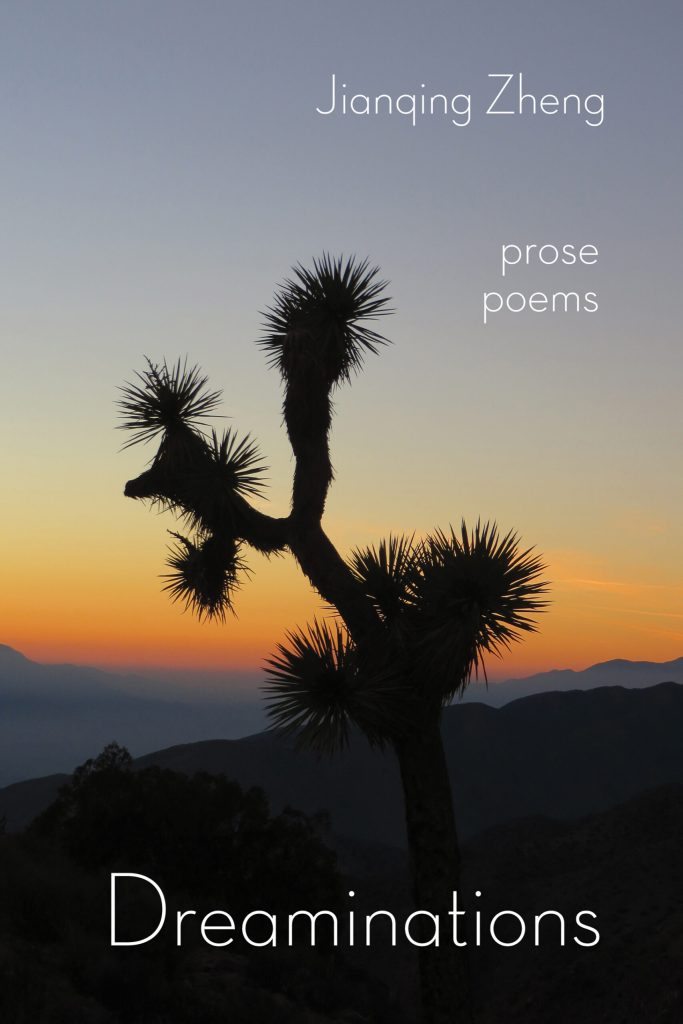
Dreaminations: Prose Poems by Jianqing Zheng
Madville Publishing: 2026
92 pages, 6” x 9”.
ISBN 196-3695496.
Available as E-book for $9.99 and Paperback for $19.95
~~~~~
fleeting clouds
the moon’s grin
on and off
It’s such an exciting event when an acknowledged poet of a given form unveils his outstanding work. Jianqing Zheng long ago established himself as one of the most thrilling and gifted writers of haibun and tanka prose, cementing his reputation with award winning magnum opus A Way of Looking and continuing to collect the most compelling and provocative illustrations of prosimetric approaches to creative nonfiction blended with superlative Japanese inspired micropoems in more recent stunning volumes including Dog Years and Visual Chords. While the author certainly shines and excels prolifically across a remarkable variety of modes and styles (in sequence, hybrid artworks, photography and free verse), it’s a consummate delight to find him returning to the tradition he so memorably has made a mark, carved a privileged position amongst the most capable figures in the forefront and loftiest echelon of greats practicing prose poetry in the English language today.
His stomach growls like a baby’s hunger whimper.
Visionary French innovator Charles Baudelaire was one of the first contemporary poets to vocally advocate for the capabilities, champion the introduction of and imbuing of things poetic within potentially vulgar prose, and in his new collection from Madville Publishing Zheng has taken such advice to “be poetic even in prose” thoroughly to heart with poignant and memorable results.
The damp, slippery path by Windsor Ruins leads nowhere but to the bony, mud-brown vibes that tangle in the bleak February wind.
Across four sections Zheng demonstrates a command of the literariness and eloquence possible to wring from our English language with astonishing gusto and defies the tendency to limit flourishes to his isolated verses, compellingly blurs the distinction between elements causing the reader to reevaluate their assumptions about core components and mechanics, also evidencing a distinctive flair for titles which set the scene, anticipate and augur contents to follow, and “leave the door ajar” for linking and shifting, enhancing with potent toriawase. And indeed, in this collection Zheng is visibly no slouch at, demonstrates admirably time and time again such core concepts in the notion of maintaining “slightly open” and “[suggestively] misleading”, generating an almost tangible charge or tension of palpable intrigue in such captivating headers as “Road to Death Valley,” “Goat,” and “Killing Time.”
halfway to the point
tourist’s names carved
in cactus leaves
Similarly, Zheng conjures no shortage of that mythical and miraculous poetic prose Baudelaire so idealized, evincing unexpected “music without rhythm or rhyme” which veritably reflects “the jolts of consciousness”.
I have stopped eating meat…
Another acclaimed pioneer of prose poetry from the French schools was iconic Arthur Rimbaud who entered the form in pursuit of a fresh new “universal language” of “the soul” to converse in, a view centered upon ideas of the author as seer and clairvoyant, locating new and foreign tongues through which to communicate lofty truths, “stealing fire” as ambitious mythic Greeks of longstanding lore once managed at great risk and ultimate cost to their persons. This methodology and invocation was achieved through figurative and literal sacrifices and travails in physical and emotional senses both, a process Rimbaud characterized as being achieved via “long, immense, and rational derangement of the senses”, something the epicurean achieved through a strict regimen of chemical and lusty bacchanal, but which more refined and studious Zheng managed on his own incredible journey via empathy and immersion, from his vivid and jarring youth contending with the hardships of enforced rustication in his native birthplace under the harsh policies of Mao to engaging with similar patterns, histories echoing across the Mississippi Delta he has long called home, summoning and engaging with the prevalent and mournful ghosts which continue to linger about, and regularly interact daily, presences never fail to be felt by, advise and caution inhabitants of this ill-gotten, accursed land we find ourselves ambivalently residing on unstable, ever shifting footing.
floating in the river
of memories
a houseboat
Zheng’s connection to his environment, informed, observant, interdisciplinary, holistic, channels and evocative things that few possess the eyes, ears, noses to discern, or the vocabulary to explicate. In text of unparalleled clarity and specificity he seizes upon deducible zeitgeists, unearths pressing truths from the fallow fields of ubiquitous fodder, perceives the elevated from subjects (underappreciated vistas, neglected corners of creation with remarkable insights to be located) otherwise gratuitously ignored, underestimated, written off by the bourgeois arbiters of taste who determine the narratives prevailing in a culture, cast its leading roles, determine the most desirable settings and viewpoints to model ourselves upon. Thus, when Zheng dares to break out of such spurious molds, step beyond such restrictive boxes and expand our poetic horizons there is something very significant and revolutionary contributed to the larger conversations, and paradigms great and small can be felt gradually expanding outward, testing the limits courageously like a network of underground roots seeking fresh frontiers.
The word rolls like a coin across the table.
If you want a preview of the thrilling intersection, a crossroads of base and sublime, where art and language are heading in their actuated egalitarian forms, prose poetry and hybrid verse, haibun generally and this poet’s work in particular point and exciting way, and augur a promised land to come if we continue following the dangling thread out of our labyrinths of ignorance and obliviousness into a better place of perception and understanding, fellowship and harmony with our fellows of the species and the environment we share our lives with, should this observation become the norm it can’t be underestimated how much might improve for the better in untold, innumerable ways.
looking back
my muddy footprints
run towards me
Jerome Berglund has published book reviews and essays on poetry and poetics in Fireflies’ Light, Frogpond, Haiku Canada, Hooghly Review, the Mamba, North of Oxford, Setu, Valley Voices, also frequently exhibits poetry, short stories, plays, and fine art photography in print magazines, online journals, and anthologies.
Jianqing Zheng is the author of The Dog Yars of Reeducation, A Way of Looking, and five poetry chapbooks and e-books; editor of seven scholarly books, including Conversations with Dana Gioia and Sonia Sanchez’s Poetic Spirit Through Haiku; and coeditor of four scholarly books, including Dana Gioia: Poet & Critic. He received the 2019 Gerald Cable Book Prize, 2001 Slapering Hol Press Chapbook Award, and three poetry fellowships from the Mississippi Arts Commission, among other honors and awards. He is a professor of English at Mississippi Valley State University, where he serves as editor of the Journal of Ethnic American Literature and Valley Voices. His poems have appeared in numerous magazines, including Another Chicago Magazine, Birmingham Poetry Review, Louisiana Literature, Mississippi Review, Vox Populi and Spillway.
Discover more from Vox Populi
Subscribe to get the latest posts sent to your email.

I look forward to getting his book.
LikeLike