
Vox Populi
A curated webspace for Poetry, Politics, and Nature with over 6,000,000 visitors since 2014 and over 9,000 archived posts.
Eva-Maria Simms: An Ordinary Christmas
My family has lived in Siegen, an old town in Germany, for generations. My grandfather, a small business owner, bought a townhouse with three apartments in 1936. My father was raised in the ground floor apartment, while the other two were rented out to families. The neighborhood had all the amenities of communal life, from bar to ballfield, grocery store, butcher, baker, and protestant and catholic churches and schools and a hospital run by nuns. Life in the quarter was lower middle-class and neighborly, and my grandparents and their children made new friends and felt at home.
By the time my family bought the house, the German government had begun to creep into people’s lives. Life under Nazi rule became more intrusive and restrictive. The catholic hospital was required to engage in forced sterilization of people with down syndrome and resisted; the priest, Pastor Wilhelm Ochse, was hauled before a tribunal and incarcerated in 1936. People began to disappear from the neighborhood: neighbors who had belonged to the communist or social democratic party were taken to the Nazi headquarters in the next quarter, known as the “Brown house”, to be interrogated and tortured, many of them never to be seen again; the two disabled sons of the Stern family were deported to the insane asylum Warstein, date of death unknown; the rest of the family were taken away in 1942 to the Jewish Ghetto in Zamosc in Poland– never to be seen again because they were murdered in the Majdanek extermination camp. The neighbors believed the propaganda that all these vanished people were sent to places where they would be reformed – the alternative was unthinkable to the good catholic and protestant burghers. A public air raid shelter was built the next street over, right across from a converted garage where a neighbor operated a steam-heated mangle for pressing linens.
Daily life went on despite frequent air raid warnings. Before the holidays the press-shop was always busy, and the men gathered there to pick up the heavy laundry baskets and chat with each other in the steamy warmth of the shop. Herr Greiner, one of my family’s renters, was waiting for his laundry to be finished. He had a wicked sense of humor, and because he thought himself in the company of good men, told a joke that made Hitler look ridiculous. Then he took his laundry basket and went home to his family dinner. The next morning the GESTAPO rang the doorbell and picked him up for seditious behavior. He spent 6 months in prison for telling a joke and came home a broken man.
Who of the neighbors alerted the secret service?
Essay copyright 2025 Eva-Maria Simms
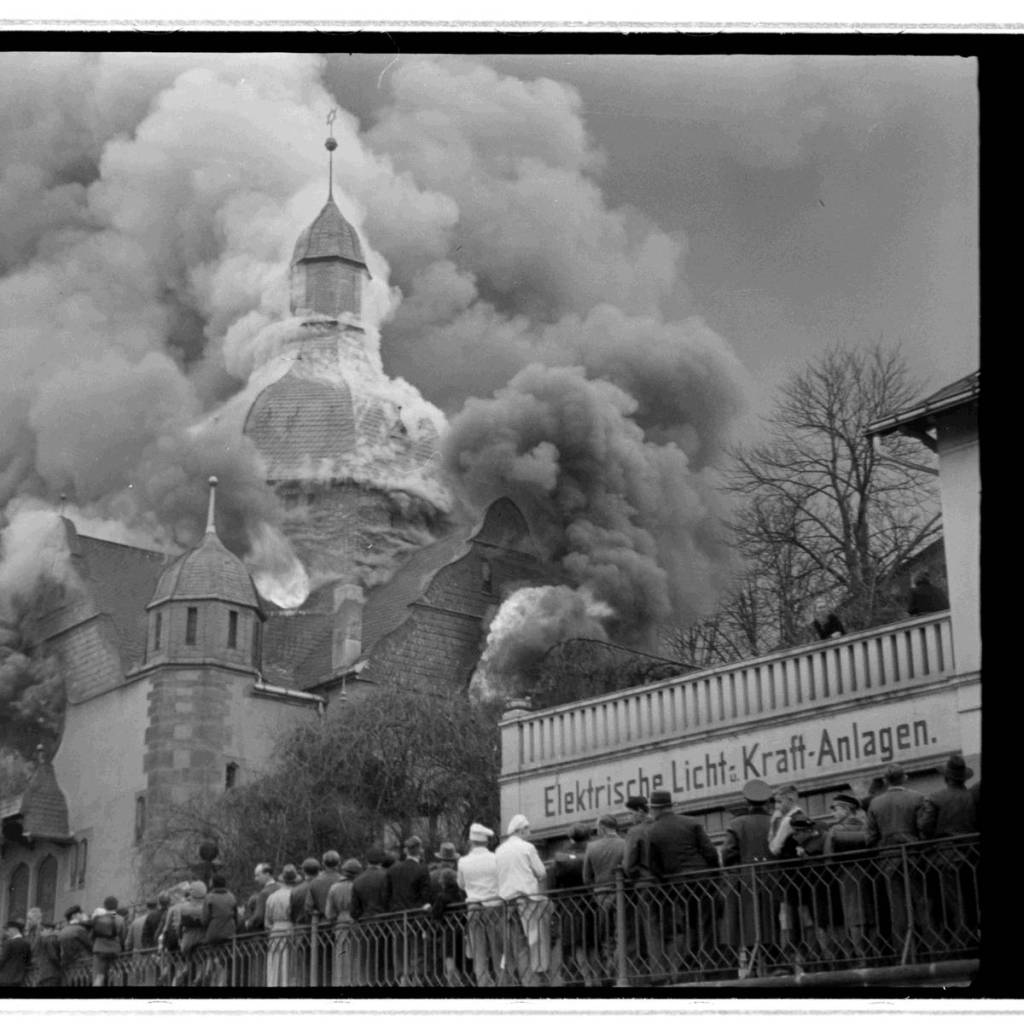
Kristallnacht (the Night of Broken Glass) on November 9-10, 1938. (Source: Yad Vashem Photo Archives)
~
Eva-Maria Simms is Distinguished University Professor Emeritus at Duquesne University in Pittsburgh. She has worked at the intersection between philosophy and psychology, with a particular interest in phenomenology as it applies to qualitative research, early childhood, community violence, and trauma.
Discover more from Vox Populi
Subscribe to get the latest posts sent to your email.

Eva, your essay reminds me of a story I heard in the late 1980s, when I was conceptualizing and organizing classes and seminars for the Pittsburgh Peace Institute.
We were discussing the Nazi propaganda film Hitlerjunge Quex (Hitler Youth Quex), shown widely to German schoolchildren in that era. Linda Mizejewski <https://wgss.osu.edu/people/mizejewski.1>, then a graduate student, was leading the discussion.
A woman named Leonora Cayard shared that when she was a child in Nazi Germany, her family belonged to a trusted circle of neighbors who disliked Hitler, and spoke about this freely among themselves. One day, a man who was part of this group was arrested, interrogated and beaten for hours, and then released with a chilling warning.
The informant turned out to be the man’s teenaged son (shades of Orwell’s 1984!).
Leonora used a nuanced German word I don’t recall to describe the community that was shattered that day.
LikeLiked by 2 people
Thank you for your reply! That is a chilling story. The Soviet Young Pioneers had as their hero and guiding light a boy who denounced his parents to the secret police!
LikeLiked by 2 people
Dreadful yet not surprising. The State über alles, whether totalitarian or fascist. In Hitlerjunge Quex (Hitler Youth Quex), the angelic boy protagonist, his lumpenprole parents disposed of *, dies as a Nazi martyr in a battle with immoral socialists.
LikeLiked by 2 people
So beautifully written. I think of your lives intertwined devoted to Author-ity and am so impressed with how you’ve chosen to make this life together. Her “Lovestruck” piece is so fabulous! I wrote a long reply yesterday about our Church Minister and all of us being children of God and his time spent in his hometown in Georgia, drawn into to influences of Dr King’s remaindermen, then all that suddenly disappeared as I was editing a phrase, so I’ll send this now this morning with Christmas love.
LikeLiked by 4 people
Thank you, Sean. Sorry you lost your post….
>
LikeLiked by 1 person
There’s something timeless and comforting in stories passed down through generations.
LikeLiked by 3 people
Yes, and this story has so much relevance today.
>
LikeLiked by 1 person
And now, Arendt’s “Banality of Evil” is right here in America! Will we find a peaceful way to stop it? It better happen soon.
LikeLiked by 3 people
We’ll see…
>
LikeLiked by 1 person
Eva has painted such a clear picture of what I fear is happening again. How much do we need to keep shaking people before they wake up? I refuse to think it is too late.
LikeLiked by 3 people
Our time rhymes with Hitler’s.
>
LikeLiked by 1 person
A dire warning (and a brilliant memory of those days we thought would never come again). Sharing.
LikeLiked by 4 people
Never again, we said. Not so fast, History replied.
>
LikeLiked by 2 people
Thank you, Eva, for this account, both sobering and moving. Thank you, Michael for posting it.
LikeLiked by 3 people
I’ve known since I first met Eva in 1986 that she is a great writer.
>
LikeLiked by 2 people
Such an important essay, Eva — one to forward to friends, to students, to family — which I will do tomorrow: I just returned home from being away for 4 days, and will catch up with all the emails etc., starting in the morning, but your essay made me want to reply right away: your writing as a witness gives me that extra little bit of faith that every gesture, every action does count. Brilliant, intelligent, clear, informative, original — writings such as yours need to be read by many. Thank you!
LikeLike
Thanks for this, Laure-Anne!
>
LikeLike
Thank you for this. Coincidently, I’m reading Hans Fallada’s Every Man Dies Alone: Based on a True Story of the Courage of Ordinary People in Germany During WWII.
Do you know Mimi Schwartz’s Good Neighbors, Bad Times?
It’s so important, now, to consider and prepare ourselves to make harder choices than we’ve had to make so far.
Thanks again for this reminder.
LikeLiked by 3 people
Thanks, Richard. The parallels between fascist Germany and Trump’s America are shocking.
>
LikeLiked by 2 people