
Vox Populi
A curated webspace for Poetry, Politics, and Nature with over 6,000,000 visitors since 2014 and over 9,000 archived posts.
Ma Yongbo: A Dream at the Beginning of Winter (English & Chinese)
The broad leaves of the sycamore tree fall onto the small car,
once all the leaves have fallen, the car’s colour turns white,
receiving signals from the stars of the departed,
causing the dashboard to flicker in the darkened interior.
For many days, my elder sister and I
have been repairing a large stove in the courtyard,
Spring Festival is near, it seems many guests are coming to eat.
After a long time, my mother finally returns,
and I, like many Chinese, shyly go to hug her.
She is still small, her blue coat dusted with snow,
I brush it off with my hat, and as I do, it melts,
leaving her blue cotton jacket mottled with stains.
She says nothing, her face calm and solemn.
Where has she been? It seems something remains unresolved.
And often, late at night, returning home,
passing the small car beneath the sycamore tree,
I can still feel the metal’s lingering warmth,
like the body of a lover who has just calmed down.
~~~
入冬时的梦 马永波
梧桐树的阔叶落在小轿车上
等树叶落光,那车的颜色就会变白
并从星星那里接受逝者的信号
让仪表盘在变暗的车内开始闪烁
许多天,和大姐在院子里修一个大灶台
春节要到了,好像有很多人来吃饭
很久,母亲终于回来了
我像中国人那样有些害羞地去拥抱她
她还是小小的,蓝衣服上落满了雪
我用帽子给她掸雪,一边掸雪一边化
让她的蓝棉猴蓝色斑驳
她什么也没说,表情平静而严肃
她去了哪里,似乎有什么事悬而未决
而往往是这样,深夜回家
路过梧桐树下的小汽车
还能感觉到车体微微发热
好像刚刚平静下来的情人的身体
~~~~~
Poem and translation 2026 Ma Yongbo
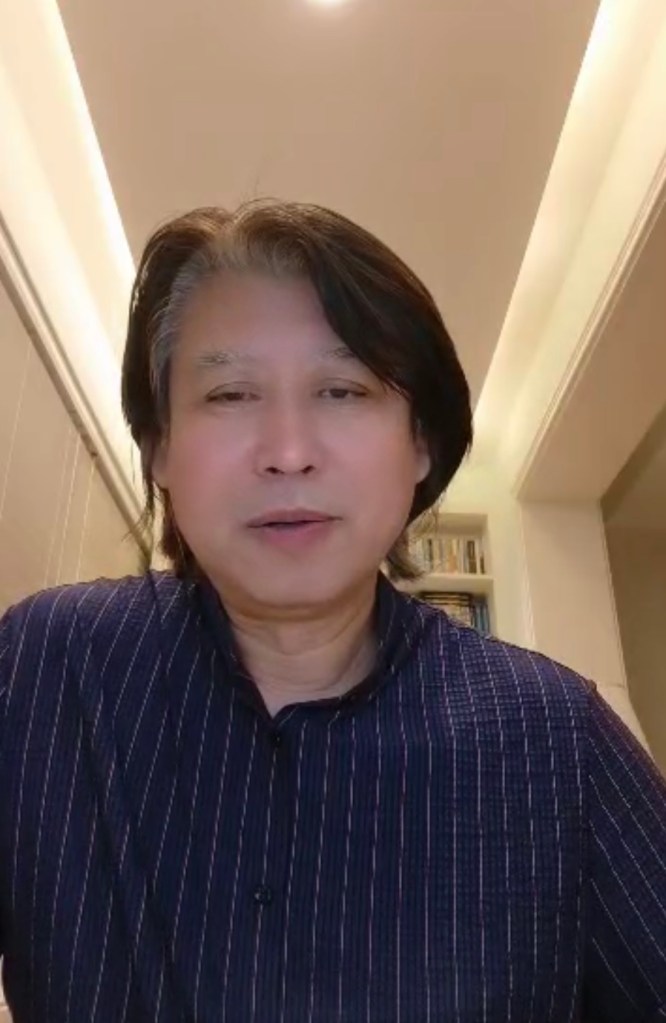
Ma Yongbo 马永波 was born in 1964, Ph.D, representative of Chinese avant-garde poetry, and a leading scholar in Anglo-American poetry. He is the founder of polyphonic writing and objectified poetics. He is also the first translator to introduce British and American postmodern poetry into Chinese. He has published over eighty original works and translations since 1986 included 9 poetry collections.He focused on translating and teaching Anglo-American poetry and prose including the work of Dickinson, Whitman, Stevens, Pound, Amy Lowell, Williams, Ashbery and Rosanna Warren. He published a complete translation of Moby Dick, which has sold over 600,000 copies. The Collected Poems of Ma Yongbo (four volumes, Eastern Publishing Centre, 2024) comprising 1178 poems, celebrate 40 years of writing poetry.
Discover more from Vox Populi
Subscribe to get the latest posts sent to your email.

Yongbo writes:
Dear Michael,
It fills me with immense joy to see this poem come out on the Winter Solstice.
What makes it even more special is that it touches on the memories of my childhood,
when as the year drew to a close, my mother would go out striving to make ends meet
for the family yet returned empty-handed.
These bitter memories have now become something
we cherish dearly—and perhaps this is the solace and gift that time bestows.
The Winter Solstice is the shortest day of the year,
the long, quiet night is perfect for simmering tea by the hearth, watching the fire flicker and fade.
In this season of short days and long nights,
may warmth embrace you, and may the words flowing from your pen
remain full of power—just like the steadily lengthening days
after the Winter Solstice, gently unfolding with vitality and hope.
Wish you all well.
Warmest winter greetings.
yongbo
LikeLiked by 2 people
I wish you well, poetry & peace, Yongbo!
LikeLike
Lovely!
LikeLike
thank you Laure-Anne
LikeLike
I love how without explanation these dreams, this dream, comes to us. It’s like magical realism, and quiet in its beauty. I’m reassured by this poem, lifted, for it is so true that our dead don’t leave us, though many of us may resist feeling their presence.
LikeLiked by 1 person
What a lovely response to the poem, Mary. Thank you!
LikeLike
“our dead don’t leave us”,How comforting!
LikeLike
Magnificent ! You actually journey through his dream poem, as if you are walking beside him. Yongbo creates a complete landscape and portraits within it, simultaneously, with ease, and all his poetry is as intricately composed as this one beautiful poem.
LikeLiked by 1 person
Well-said, Helen. Thank you!
>
LikeLiked by 1 person
I like to depict the scene in which the subject is situated, which may be related to classical Chinese poetry.
LikeLike
Oh yes, I think you have a strong presence in the classical tradition.
>
LikeLike
Dear Mr Ma,
I am Peter Thompson, editor of Ezra, in which your poems (translated) appeared in 2025. I would like your email address (which I have lost) as part of the submission process for the Deep Vellum anthology — a good press and an honor, if we succeed with the submission.
I need your email address tonight, if possible.
With my thanks–Peter Thompson pthompson@rwu.edu
LikeLike
Hello Peter, because of the time difference, I am not sure if Ma Yongbo will have read this yet, so here is his email address : 451796884@qq.com just in case. I am Ma Yongbo’s co-translator, Helen Pletts
LikeLike
“ Something remains unsolved” and the mind stretches back to the sycamore leaves and the sky and the snow to water and hungers for what is left unsolved and finally acknowledges the hunger as a gift.
LikeLiked by 1 person
“Unresolved”
LikeLike
Yes, unsolved and unresolved. Both.
>
LikeLiked by 1 person
thank you Barbara, as the year draws to a close, I always want to settle everything, but I can’t actually do it. My mother can’t either.
LikeLike
Awestruck. ❤️🙏
LikeLiked by 1 person
Yes, me too, Donna.
>
LikeLiked by 1 person
thank you
LikeLike
This poem left me with feeling of the permanence of love and impermanence of being. It’s a ‘small’ poem with a BIG heart and a BIG story to tell.
LikeLiked by 1 person
Yes, it is a small poem with a big heart. I like that phrase as a general aesthetic as well.
>
LikeLiked by 2 people
“the permanence of love and impermanence of being”,just as I know poetry won’t last forever, I stubbornly continue writing it. It’s as if what’s written will never disappear; this is my obsession.
LikeLike
How beautifully the fragility of certain relationships is described by Yongo. How snow can “mottle” an old mother’s blue coat with stains. How she is shyly hugged. How she remains calm & solemn. Such quiet restraint and love in this poem!
LikeLiked by 3 people
‘Quiet restraint and love’… perfectly said, Laure-Anne.
LikeLiked by 1 person
Oh, yes.
>
LikeLiked by 1 person
“quiet restraint and love ”,thank you Laure-Anne!
The main body of this poem is my record of dreaming about my mother,although the scene in my dream was quite bleak, I felt comforted.
LikeLike
I am knocked back into the present by the last line too. Totally unexpected! Not until I stop thinking about it, will I read another line of anything.
LikeLiked by 3 people
Yes!!!!
LikeLiked by 1 person
I deliberately blurred the lines between reality and the dream (about my mother).
LikeLike
I laughed at the last line of this sweet poem.
LikeLiked by 2 people
the simile catches us by surprise, doesn’t it?
LikeLiked by 1 person
I feel gratified if I can bring a little laughter to my friends.
LikeLiked by 1 person
Yongbo: You never fail to take me in your poetry to places here at hand I never knew about. It happens by your word and heart and I’m ever so grateful! What perfect poetry for this moment of the dying year, Winter’s Advent, and our prayers for warmth and sustenance. I’m so grateful to have lived in your time.
LikeLiked by 2 people
Yes. I believe Yongbo is one of the great poets of our time.
LikeLiked by 1 person
Many poets here are role models for me, including you, Michael!
LikeLike
What a generous thing to say! Thank you, Yongbo.
>
LikeLike
Thank you Sean for your sincere and warm words. Wishing you all the best in the New Year!
LikeLike
love this memory.
LikeLiked by 2 people
Yes. Me too.
LikeLiked by 1 person
A desolate dream, yet it brought me comfort.
LikeLike
I feel this way when I write about my parents and their horrific experiences in the war. The pain they experienced brings me closer to them, keeps them with me.
LikeLiked by 1 person
Yes, there’s something universal about the suffering caused by war….
>
LikeLiked by 1 person