
Vox Populi
A curated webspace for Poetry, Politics, and Nature with over 6,000,000 visitors since 2014 and over 9,000 archived posts.
Murray Silverstein: Dante in Auschwitz, Ulysses in Hell
“The world is going to hell.” “Going?”
—overheard in a café
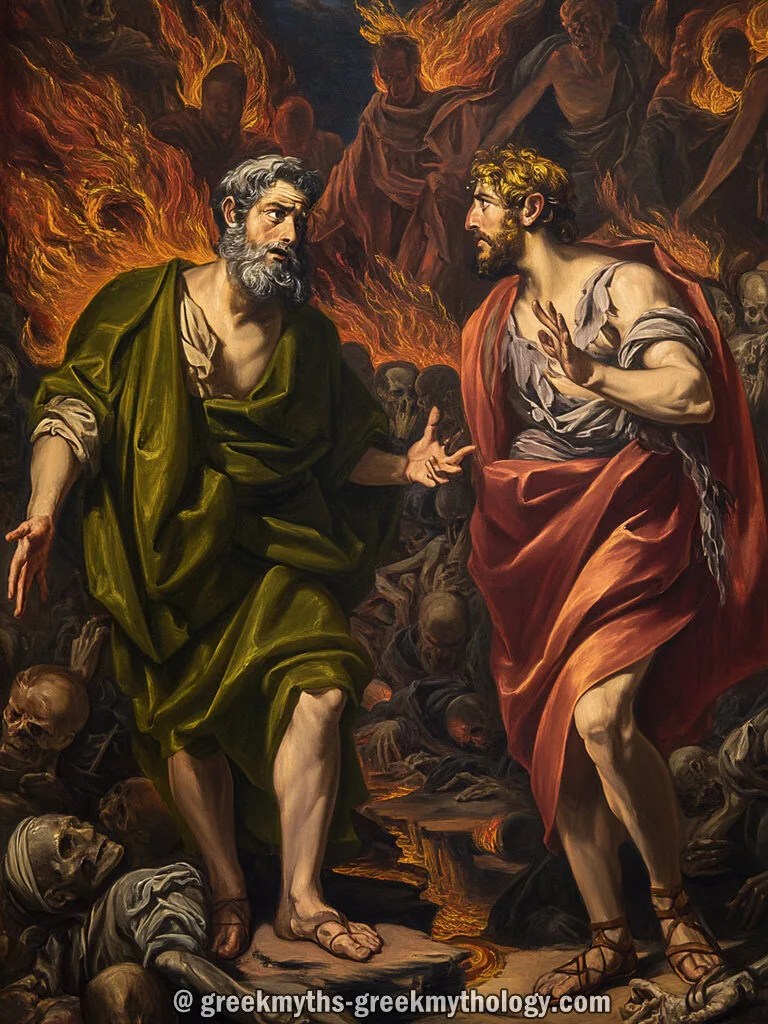
Within the flames are spirits, each one here / Enfolds himself in what burns him…
—Dante, INFERNO, xxvi, 50-51
Making your way through hell, you come upon flames
that, like flickering tongues, begin to speak.
You being Primo Levi, an Italian Jew in Auschwitz,
and you being me, yesterday, at home in my comfortable chair,
asking, why did poet Dante place Homer’s Ulysses in hell?
I’m reading If This Is a Man, Levi’s account of his year
in Auschwitz, the chapter, “The Canto of Ulysses,”
in which, on a sunny day, crossing the death camp’s plain,
lugging a pot of what was called soup, Levi recites
his schoolboy Dante to Frenchman Jean, who’d said,
“Help me, please, to feel human again.” And so,
that sunny day in Auschwitz, me in my comfortable chair,
the Inferno. “Why that passage came to mind,”
Levi writes, “I cannot say. Who is in that fire?
I wanted Jean to know, to become, the two of us,
if for a moment, men again.” I am Ulysses,
says the flame, that complicated man. Why am I
in hell? Because, says Dante (to Levi to Jean
to me in my Oakland chair), I altered my course,
did not return to Ithaca and Penelope, no,
the Odyssey’s a lie. I sailed instead into unknown seas.
Seeking to know what cannot be known
and still be a living man, I arrived at . . . .
Auschwitz. A word he didn’t yet know.
Whispers in the boxcar, “Where are we going?”
No one knew. No one yet knew how to know.
The storm that swirls in God’s dark heart,
our poor boat tossed, and sank, my crew & I all lost.
Why this passage came to mind a sunny day
in the death camp, reader, you tell me. What I know
reading it, trembling in my American chair:
Where are we going? Whispers; no one knows.
No one now knows how to know—retributions
without end, system collapse, the insects, the seas,
this master race of clowns…words can embody
but cannot say—Dante in Auschwitz, Ulysses
in hell—only that, making our way through hell
we come upon flames, and, to be human, try to speak.
Oakland, 2025
~~~~
Copyright 2025 Murray Silverstein
Red Studio (2024) is Murray Silverstein’s third book of poems from Sixteen Rivers Press. A practicing architect for forty years and coauthor of four books on architecture, including A Pattern Language (Oxford University Press) and Patterns of Home (The Taunton Press), Silverstein lives in Oakland, California.
Discover more from Vox Populi
Subscribe to get the latest posts sent to your email.

“no one knows.
No one now knows how to know—retributions
without end, system collapse, the insects, the seas,
this master race of clowns…words can embody
but cannot say”
True, true, true.
LikeLike
Yes, Murray has described our age perfectly.
>
LikeLike
I would like to begin my comment by wishing all those who are about to celebrate Hanukkah to have a happy fest. Let the light shine. I carry Auschwitz in my DNA and Gaza in my heart, Trump’s racist deportations in my tears, the Hutus and Tutsis are my worst nightmare come true – and so on, for ever. And I remember flatlining during my ten-hour tumour operation (on 26 December will be my 25th birthday) that in those minutes, when I was dead, I met the divine light and unconditional love. It wasn’t Christian, it wasn’t Jewish, it wasn’t Muslim… it just was. Didn’t have a name, didn’t have favourites. That’s what ‘unconditional’ means. This experience and new knowledge changed my life.
LikeLiked by 2 people
Thanks, Rose Mary!
>
LikeLiked by 1 person
Amazing Rosemary! I believe in that light.
LikeLiked by 1 person
On a more positive note, John Edward Simms writes: “In all of the wonder of Creation, to me the most amazing is the profound choice of Faith. Some extremists seem to forget that it IS a choice. The prophet Mohammed said there can be no compelling in religion. Jesus ate with sinners and was condemned for it, then sent his followers out to spread the word. It was an invitation. Later people made it a command. I absolutely believe in God. In other countries, the word is Dios, Dieu, Allah, the IS, Yahweh, and many others. My personal favorite is Logos. Are any of those words less or more than the others? I don’t think so. I have come to the realization that standing outside and feeling the light breeze and the warm sun on my face rejuvenates my soul, clears my mind, and reminds me that we are all part of this astonishing Creation, undeserved and often under-appreciated.
Take a moment to feel the sun. Repeat as needed.”
LikeLiked by 2 people
Ponder the ethical and moral responsibilities of poetry in the face of absolute atrocity and ongoing human suffering. Does it have any reason to carry on (a rhetorical question)? I believe Murray Silverstein’s and John Guzlowski’s poems here (and many others) demonstrate how poetry can turn our attention to atrocities as part, but not all of the human condition.
Poetry can bring hope, healing, inspiration and love to the broken world we have to mend over and over. At least, that is my wish and belief.
LikeLiked by 2 people
Beautifully said, Jim. Thank you.
>
LikeLiked by 1 person
I’m with you in this Jim. I seek and need poetry every day in my life. This has only become more so as time has passed.
LikeLiked by 1 person
I will read again, wanting to read it again, not wanting. So much to fear, to contemplate, feeling the earth tipping under our feet because we did, didn’t, could, couldn’t ?
LikeLiked by 2 people
Yes. All of those.
>
LikeLiked by 1 person
I am speechless. Such amazing, sad, incomprehensible pondering. All of this cast in terms I’m afraid to give praise that I might further condemn the whole human race to hell. Its become a preoccupation for me of late—whether we’re worthy of anything else.
LikeLiked by 3 people
Sometimes, we must speak of the unspeakable.
LikeLiked by 2 people
brilliant.
here’s another poem about Auschwitz.
Kafka Dreams of Auschwitz
Kafka dreams he’s in an oven.
Flames exploding around him.
His skin blackened & his eyes
blind with pain.
He wakes up. The bed
is wet with his sweat.
He wonders about the oven.
How strange it was.
Like that crazy fable
from those German writers,
the Brothers Grimm,
The Iron Stove.
Will a princess come
and save him from the flames
bring him joy and childhood dreams
or will the Germans
burn him into a toad?
LikeLiked by 3 people
Powerful. Thank you, John.
>
LikeLiked by 1 person
I give poetry readings about my parents and their experiences in concentration and slave labor camps. Half the students at these readings know almost nothing about the camps. Often, before I start, a teacher has to do 4-5 minutes of background.
LikeLiked by 3 people
If we don’t remember, we will repeat history.
>
LikeLiked by 1 person
Hannah Arendt, who wrote the Origins of Totalitarianism, called the concentration camps and their kin, “holes of oblivion”: places to erase individuals and even their memories. Writing after Auschwitz can restore the humanity of those erased individuals. Today’s attempts by some to deny history are also holes of oblivion.
LikeLiked by 1 person
OMG. You nailed it, Jim. Thank you.
>
LikeLike
We ARE repeating history.
LikeLiked by 1 person