
Vox Populi
A curated webspace for Poetry, Politics, and Nature with over 6,000,000 visitors since 2014 and over 9,000 archived posts.
Holocaust Encyclopedia: How Hitler Came to Power
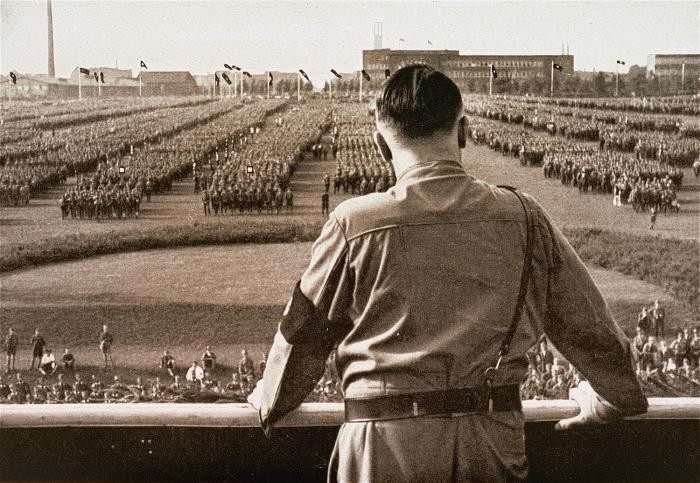
On January 30, 1933, Adolf Hitler was appointed chancellor of Germany by German President Paul von Hindenburg. Hitler was the leader of the Nazi Party. The full name of the Nazi Party was the National Socialist German Workers’ Party. Its members were often called Nazis. The Nazis were radically right-wing, antisemitic, anticommunist, and antidemocratic.
There are some misconceptions about how Hitler came to power. It is important to understand that:
- Hitler did not seize power in a coup; and
- Hitler was not directly elected to power.
Rather, Hitler and the Nazi Party came to power through Germany’s legal political processes. According to the 1919 German constitution, the position of chancellor was appointed by the president.
When Hitler was appointed chancellor in January 1933, the Nazi Party was popular in Germany. However, the Nazi Party was not always so popular. In fact, when the Nazi movement first began in the early 1920s, it was small, ineffective, and marginal.
What was Germany like in the early 1920s?
The early 1920s in Germany were a time of social, economic, and political unrest. This unrest was a direct result of World War I (1914–1918). Germany lost the war. Germans were shocked and horrified. Many people, including Adolf Hitler, refused to believe that the loss was real. They falsely blamed Jews and Communists for Germany’s defeat.
As a result of losing the war, the German Empire collapsed. It was replaced by a new democratic republic. This new German government was called the Weimar Republic. In June 1919, German leaders of the Weimar Republic were forced to sign the Treaty of Versailles. This treaty required Germany to accept responsibility for starting World War I. Germany also had to make huge payments for damage caused by the war (known as war reparations). In the early 1920s, the Weimar Republic (1918–1933) faced political and economic problems. Wartime devastation had resulted in an economic crisis. German war debts and reparation payments led to hyperinflation and the devaluation of currency.
There were also political movements that tried to overthrow the new government. They ranged from the far left to the far right on the political spectrum.
Their members were reacting to post World War I discontent in Germany. But they were also fostering and sowing more discontent, and sometimes even violence. One group that caused particular alarm was the German Communist Party. A much less prominent new political group was the Nazi Party.
What was the Nazi Party like in the 1920s?
The Nazi Party was one of many radical new political movements active in Germany during the early 1920s. Although the Party was based in the city of Munich, it gained national attention in November 1923. That month, the Nazis—led by Adolf Hitler—attempted to overthrow the government using violence. This failed coup is known as the Beer Hall Putsch. It resulted in Hitler’s arrest and a temporary ban on the Nazi Party.
Hitler and the Nazis changed tactics after they failed to violently seize power. Beginning in the mid-1920s, they focused their efforts on winning elections. But the Nazi Party did not immediately succeed in attracting voters. In 1928, the Nazi Party won less than 3 percent of the national vote in elections to the German parliament.
Beginning in 1930, however, the Nazi Party started to win more votes. Their success was largely the result of an economic and political crisis in Germany.
What was the German economic and political situation like in the early 1930s?
In the early 1930s, Germany was in an economic and political crisis.
Beginning in fall 1929, there was a world economic crisis known as the Great Depression. Millions of Germans lost their jobs. Unemployment, hunger, poverty, and homelessness became serious problems in Germany in the early 1930s.
The German government failed to solve the problems caused by the Great Depression. Germany was politically divided. This made passing new laws almost impossible because of disagreements in the German parliament. Many Germans lost faith in their leaders’ ability to govern.
Radical antidemocratic political groups like the Nazi Party and the Communist Party grew in popularity. They became more and more visible in the press and on the streets. These groups took advantage of the economic and political chaos and used propaganda to attract Germans who were fed up with the political stalemate.
How did Adolf Hitler and the Nazi Party attract voters in the early 1930s?
In the early 1930s, the Nazis campaigned in national, state, and local elections in Germany. Their major breakthrough came in September 1930, when they won 18 percent of the vote in the national parliamentary elections. They also did well in state and local elections that year. This shocked some Germans, especially those who recognized that the Nazis were an extremist, fringe political movement.
During election campaigns, Adolf Hitler and the Nazis won followers by playing on people’s hopes. The Nazis promised to:
- fix the economy and put people back to work;
- return Germany to the status of a great European, and even world, power;
- regain territory Germany had lost in World War I; and
- create a strong authoritarian German government.
But the Nazis also played on people’s fears and prejudices. They falsely claimed that Jews and Communists were to blame for all of Germany’s problems. The Nazis promised to unite Germans along racial and ethnic lines. The Nazis planned to exclude Jews and others from German society.
How did Adolf Hitler come to power in 1933?
Adolf Hitler came to power through Germany’s legal political process. The Nazis continued to win over voters in the early 1930s. In the July 1932 parliamentary elections, the Nazis won 37 percent of the vote. This was more votes than any other party received. In November 1932, the Nazi share of the vote fell to 33 percent. However, this was still more votes than any other party won.
The Nazi Party’s electoral successes made it difficult to govern Germany. Hitler and the Nazis refused to work with other political parties. Hitler demanded to be appointed chancellor. German President Paul von Hindenburg initially resisted this demand. However, he gave in and appointed Hitler Chancellor of Germany on January 30, 1933.
Hindenburg appointed Hitler to this position as the result of a political deal. Certain conservative politicians convinced President Hindenburg to make the appointment. They wanted to use the Nazi Party’s popularity for their own purposes. They mistakenly believed that they could control Hitler.
In January 1933, Hitler did not immediately become a dictator. When he became chancellor, Germany’s democratic constitution was still in effect. However, Hitler transformed Germany by manipulating the democratic political system. Hitler and other Nazi leaders used existing laws to destroy German democracy and create a dictatorship.
In August 1934, President Hindenburg died. Hitler proclaimed himself Führer (meaning “leader”) of Germany. From that point forward, Hitler was the dictator of Germany.
From The Holocaust Encyclopedia published by The United States Holocaust Memorial Museum.
Discover more from Vox Populi
Subscribe to get the latest posts sent to your email.

I’ve gifted several friends over these past years with the book, The True Believer, a 1951 book by the longshoreman philosopher, Eric Hoffer. This book was a required reading for an American History course at Kansas University. The essence of the book is partly summarized in this piece from the encyclopedia. During those times,the same thing was happening in Italy and Spain. It’s a wonderful book that should be requiired reading for every Junior High student in America.
LikeLike
Does this not ring a bell?
LikeLike
Trump is following the fascist handbook.
LikeLike
Succinct and scary. Will post on other platforms.
LikeLiked by 1 person
Thanks, as always, Barb. Your support means everything to me.
LikeLiked by 1 person
I think of this history frequently. When fascists come to power, in whatever way, they will do anything possible to hang onto it.
LikeLiked by 2 people
We’re living it now.
>
LikeLiked by 2 people