
Vox Populi
A curated webspace for Poetry, Politics, and Nature with over 6,000,000 visitors since 2014 and over 9,000 archived posts.
Jane Kenyon: The Beaver Pool in December
The brook is still open
where the water falls,
but over the deeper pools
clear ice forms; over the dark
shapes of stones, a rotting log,
and amber leaves that clattered down
after the first heavy frost.
Though I wait in the cold
until dusk, and though a sudden
bubble of air rises under the ice,
I see not a single animal.
The beavers thrive somewhere
else, eating the bark of hoarded
saplings. How they struggled
to pull the long branches
over the stiffening bank…
but now they pass without
effort, all through the chilly
water; moving like thoughts
in an unconflicted mind.
~~~
Copyright 1986 Jane Kenyon. From The Boat of Quiet Hours (Gray Wolf, 1986)
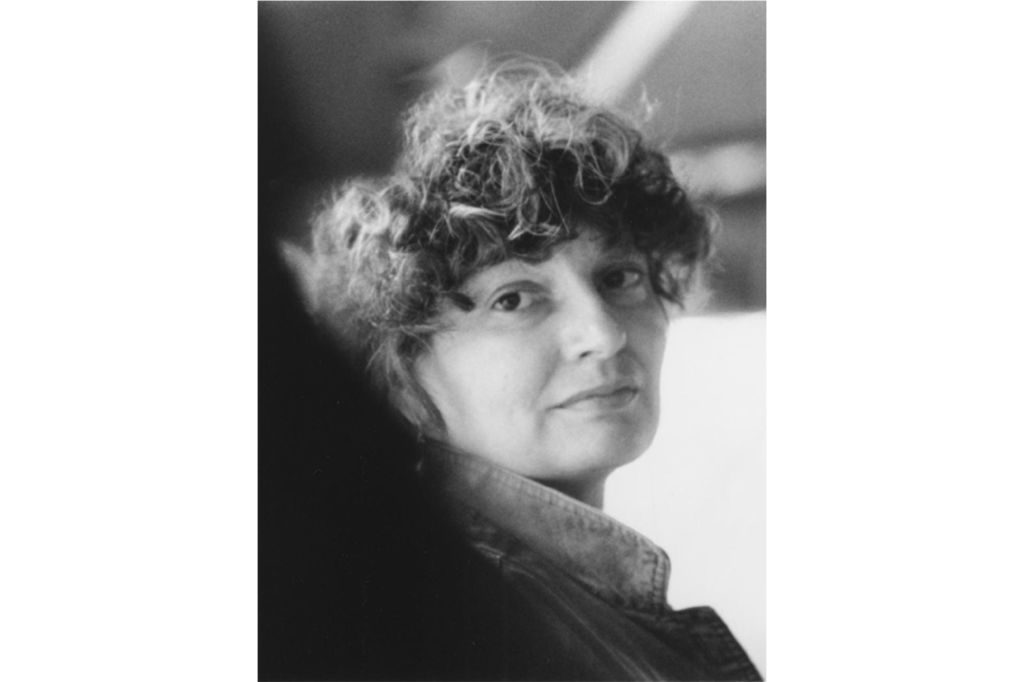
Jane Kenyon (1947 – 1995) was an American poet and translator. Her work is often characterized as simple, spare, and emotionally resonant. Kenyon was the second wife of poet, editor, and critic Donald Hall who made her the subject of many of his poems.
Discover more from Vox Populi
Subscribe to get the latest posts sent to your email.

How gratifying and sweet and painful-but-delicious to encounter Jane here. Thank you for keeping her work alive. For anyone interested in knowing more about Jane and her legacy, a few brave (or crazy) souls are restoring the farmhouse she shared with Don all those years, with a mission to be able to offer it as a center for writers and other artists. The website is beautiful and full of good Jane stuff: ateaglepond.org.
LikeLiked by 1 person
How lovely!
LikeLike
Oh, Jane! One of the first poets I fell I love with completely.
LikeLike
She has a simple elegance that I admire.
>
LikeLike
Thank you for offering us this gift by Jane Kenyon – a poem I’d not known. I, too, am struck by the ending, which opens us up to the stunning clarity of her reverie at the beaver pond. A transcendent poem for early December.
LikeLiked by 1 person
Thanks, Bonnie.
>
LikeLike
I love the way the poem takes its time and arrives at the end with the speaker’s imagining what is not right there, the beavers’ life elsewhere.
LikeLiked by 1 person
Thanks, Miriam. I love the pacing of this poem as well.
LikeLike
O my, when I first read the three stanzas of Jane Kenyon’s “The Beaver Pool in December.” I found the description of the pool so crisp and clear, I could almost feel the cold, where “clear ice forms, over the dark
shapes of stones…Though I wait in the cold
until dusk, and though a sudden
bubble of air rises under the ice,
I see not a single animal”
I take pleasure just writing down these exquisitely created verses, as well as saying them, and whispering them in my mind. The sound of the poem takes one into a mood of contemplation. I could almost see the glitter path of the moonlight over the cold pool.
Then I got to the last stanza,
“but now they pass without
effort, all through the chilly
water;” then I finally read the last line, “moving like thoughts
in an unconflicted mind.“
The last line of the poem made me stop and re-read the first three stanzas again. And yes, the formation and movements of the pool described by Jane Kenyon in her poem, moved in the same way as my thoughts. I thought, yes, I am also nature as is the pool, changing, searching, reformulating and transforming. “The beavers”, I thought, “are like questions, looking for the answer”…
“but now they pass without
effort, all through the chilly
water, moving like thoughts
in an unconflicted mind.“
~~~
LikeLiked by 1 person
Thank you for this, Luz.
>
LikeLike
Thank you, Michael, for so carefully hunting, and bring us these Gems…mat there be many blessings back to you.
LikeLiked by 1 person
CORRECTION: Thank you Michael, for so carefully hunting, selecting and bringing us these Gems. What can be the greatest gift, and the greatest healing given to a person then to have their thought aligned with the greatest light of knowledge and the greatest good. May there be many blessings returned to you.
LikeLiked by 1 person
“[…] moving like thoughts / in an unconflicted mind.” What an image!
LikeLiked by 6 people
Oh yes.
>
LikeLiked by 1 person
Both she and Hall are beautiful poets. This poem is a reminder of the complexity of a simple yet powerful image: the hidden animal and its sacred life in the dead of winter.
LikeLiked by 3 people
Thanks, Dion. I agree that Kenyon and Hall are both beautiful — and very different — poets. Her career was short and brilliant like a comet passing over the sky. His career was more like a long New England fall, productive and varied. I can’t imagine either of their careers without the other one’s.
>
LikeLiked by 5 people
Hall wrote some lovely recollections of their life in rural New Hampshire (I think it was New Hampshire).
I just read that Kenyon’s final poem, The Sick Wife, was dictated by her to Hall as she was on her deathbed dying of leukemia. They spent several days working it to a finish, till she could communicate no more. So a team effort, their life together ending with a poem…
In one of his poems, read now at random, he called her “dear wrinkled face.” What do you make of that?
LikeLike
She was dying for eight months, and yet he still found her beautiful.
>
LikeLike
I’m glad to join the chorus and sing Jane Kenyon’s praises. Like Leo, I much prefer her work to D. Hall’s — & I so love that portrait of her you publish, Michael. As well as this particular poem, with her keen observations of nature, & her simple, open imagery SO full of exquisite detail never cease to delight me — like:
Though I wait in the cold
until dusk, and though a sudden
bubble of air rises under the ice,
I see not a single animal.”
that one, “sudden” air bubble under ice, how she gives it life: amazing, amazing!
LikeLiked by 7 people
Amazing. Amazing.
>
LikeLiked by 4 people
I remembering reading her work and her husbands, Donald Hall, around the same time and much preferring hers. It speaks to me in a gentle caring voice.
LikeLiked by 5 people
A favorite poet, for sure. I once audited a class that was devoted to two poets: Emily Dickinson and Jane Kenyon. Both had their own ways to snag a reader. My favorite Kenyon poem among many is her last: The Sick Wife. Its final stanza, as she had become too weak to carry on:
The windows began to steam up.
The cars on either side of her
pulled away so briskly
that it made her sick at heart.
LikeLiked by 4 people
Thank you, Jim. Yes. She is a master of lyrical understatement.
>
LikeLiked by 2 people
A favorite poet whose words resonate with me.
LikeLiked by 2 people
She is one of my favorite’s as well, Ruth. Thank you.
>
LikeLiked by 3 people
From lovely Jane to Akhmatova, (and John Balaban) I am so gratified by my poetry search through these VP pages this morning. How I adore this site!
LikeLiked by 4 people
Thank you, Sean. Your work is an important part of the site.
>
LikeLiked by 2 people
Ditto, ditto!
LikeLiked by 2 people
I agree, Sean. Sometimes it is the only way I can get myself to leave my warm bed of forgetfulness.
LikeLiked by 1 person