
Vox Populi
A curated webspace for Poetry, Politics, and Nature with over 6,000,000 visitors since 2014 and over 9,000 archived posts.
Nasser Rabah: The War That Just Won’t End
Translated by Alfred Corn
If you put your heart under your bed like worn-out shoes you’re done with,
the dust of war won’t settle there and you won’t have to think about it.
If you put your heart on the shelf like an old, busted clock,
the jolt of war won’t run through you and you won’t be harmed.
**
In wartime the heart expands, becomes a boat for little kids.
An hour of peace and quiet is pure heaven for writing.
In wartime the heart suffocates, stripped of words.
At its margins sparrows melt into reddish dew.
The heart waves high up on a high pole, known as the homeland.
In wartime you don’t bother with your heart, you look for your papers:
that old photo of you standing by the school door,
documents rescued from the blown-up house, your son’s birth certificate.
Right now, sorry, the heart just doesn’t matter all that much.
~~~~
Translation copyright 2025 Nasser Rabah and Alfred Corn
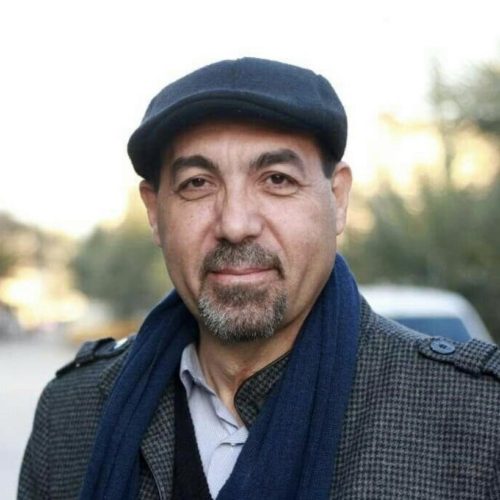
Nasser Rabah is a Palestinian poet born in Gaza. He has published several books of poetry in Arabic, and Gaza: The Poem Said Its Piece with a foreword by Mosab Abu Toha will be released by City Lights in May, 2025.
Alfred Corn is an American poet and essayist who has received many honors including an Award in Literature from the Academy of Arts and Letters. The Returns: Collected Poems by Alfred Corn is available from Press 53.
Discover more from Vox Populi
Subscribe to get the latest posts sent to your email.

Oh! Thank you for this extremely moving poem and its translation!
LikeLiked by 2 people
Thanks, Meg. Nasser is great, as is Alfred.
>
LikeLiked by 2 people
Ah, Alfred, your newly found Portuguese air and your global mind twine with Nasser Rabah“s solid-as-old shoes grieving to make a memorable poem. Obrigato ! xxm
LikeLiked by 3 people
Thank you for this translation. This poem ends with what we live right now, the war only just beginning: “In wartime you don’t bother with your heart, you look for your papers: / that old photo of you standing by the school door, / documents rescued from the blown-up house, your son’s birth certificate. // Right now, sorry, the heart just doesn’t matter all that much.” And as I remember, I prepare for the repeat.
LikeLiked by 2 people
Yes, you’ve seen this before, haven’t you, Rose Mary?
>
LikeLiked by 2 people
Thanks to Nasser Rabah for his wrenching poem, and to you, Michael, for hosting the translation.
LikeLiked by 2 people
Alfred, thank you! Someone told me that you have relocated Portugal?
>
LikeLike
I couldn’t get an extended visa, only a 90-day tourist visa, so I have to keep moving, The facts are on Facebook.
LikeLike
That sounds difficult, to keep moving. I’ve been banned from Facebook for some time, so I seem to be the last to know what is going on with my friends. Hope everything works out for you.
>
LikeLiked by 2 people
Maybe there is a reason to resuscitate old metaphors when there is only emptiness. I will read this poem again and again. There is something there that needs to be felt again if only for the knowledge of its loss.
LikeLiked by 2 people
Poetry about the heart knows no end, but this poem, and the understated power of the last line – wow! Put the heart somewhere, because to keep it is too painful. The heart matters so much, and yet, in wartime it cannot find a place to be, a safe place, a place where that it matters so much is acknowledged and understood. But is it better to put it on a shelf? Under the guise of simplicity, this poem ties me in knots. Poems like this about the heart know no end…
LikeLiked by 4 people
Rabah takes the dead metaphor of the heart as the center of life and love and turns it into something both contemporary and timeless.
>
LikeLiked by 5 people
Sometimes a dead metaphor returns to life or a resemblance to life, as does the poem’s heart-beat. But it then finds us tied into knots by the chaos and grief surrounding it’s life force. Maybe it’s now only a witness or bystander to the dreadful knots which tighten our bondage, while wars and murder ravage and rage.
In a genocidal world, broken hearts are a scant remedy.
LikeLiked by 3 people