
Vox Populi
A curated webspace for Poetry, Politics, and Nature with over 6,000,000 visitors since 2014 and over 9,000 archived posts.
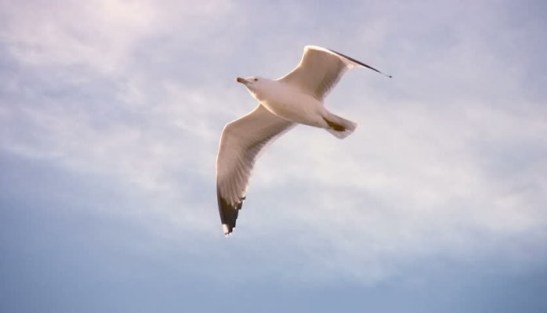
Laure-Anne Bosselaar and Kurt Brown: “Just as this island belongs to the gulls” by Herman de Coninck
Just as this island belongs to the gulls
and the gulls to their cry
and their cry to the wind
and the wind to no one,
so is this island the gulls
and the gulls their cry
and their cry the wind
and the wind is no one’s.
***
“Zoals dit eiland van de meeuwen”
Zoals dit eiland van de meeuwen
is en de meeuwen van hun krijsen
en hun krijsen van de wind
en de wind van niemand,
zo is dit eiland van de meeuwen
en de meeuwen van hun krijsen
en hun krijsen can de wind
en de wind van niemand.
~~~~
Translation copyright 2025 Laure-Anne Bosselaar and the estate of Kurt Brown
Herman de Coninck (1944 – 1997) was the editor of the popular Belgian weekly radio and television magazine HUMO between 1970-83. His first volume of poetry, De Lenige Liefde, became the best-selling volume of 20th-century Flemish poetry, winning several literary prizes.
Discover more from Vox Populi
Subscribe to get the latest posts sent to your email.

Quite simply beautiful in every way.
LikeLike
I think so too, Lisa. Thank you for saying so.
>
LikeLike
this eight line poem brings me so much peace–the kind of peace that comes when we touch the truth. Wow. thank you.
LikeLike
This little song is hypnotic. The way it doubles back on itself from line to line and stanza to stanza gives me pleasure.
>
LikeLike
This poem–its translation–centers me in a magical way. Thank you, Laure-Anne and Kurt.
LikeLiked by 2 people
Such a lovely collaboration; it fills my heart.
LikeLiked by 2 people
I love the passage of a poem from its mother-tongue to a borrower-tongue, being able to understand and see how it moves, like the gulls, and becomes an English poem. Beautiful translation.
LikeLiked by 2 people
Translation is a form of magic.
>
LikeLiked by 2 people
I re-read this exquisite translation several times, inviting its multi-layered mysteries to unfold. This musical and haunting translation reminds me of the swirling Yin/Yang wheel (two interlocked fish): the poem’s logic of analogy at interplay with the mysticism of intuition; human sensation and perception at interplay with interpretation; the existential verb “to be” at interplay with the possessive implications of “to be-long to” , plus the kinship of the generative “of” and “from.” Communion in the skies and/or isolation on the island. The sound of the wind carrying the sound of the gull-cry, and the sound of wind-cry carried to us by the sound of human thinking carried on the poem. Can people share emotions with nature or only project them?
LikeLiked by 3 people
It’s a little gem, isn’t it?
>
LikeLiked by 3 people
Yes, it’s a fine line between empathy and projection, isn’t it?
>
LikeLike
With its short two stanzas, this poem is rather profound and liberating. I do love the original, even though the translation is faithful and works well. It just might be because I LOVE the Dutch language and its endless playfulness.
LikeLiked by 3 people
You are incredible, Rose Mary. Thank you.
>
LikeLiked by 1 person
Thank you.
LikeLiked by 1 person
Gulls are literally visionaries– wind-hoverers– The poem mirrors those attributes. Bravo to all involved in helping us soar to this poetic Gull Island, their home.
LikeLiked by 3 people
“Wind-hoverers” — a lovely Hopkins-like coinage.
>
LikeLiked by 4 people
The poem is a consoling mirror to me, as I am broken these days, not by vision—out across fields of grass, but disturbing voices bespeaking the world of humankind.
I turn to this mirror for solace grateful for things “belonging to no one.”
An owl just called in the dark outside from the yard the moment I wrote “no one.”
LikeLiked by 5 people
From gulls to owls to hawks we gain solace these days from avian calls, from their graces and soaring lives. How they navigate the windy places. And last night I finished a poem with the words: watched by a sharp-shinned hawk.
LikeLiked by 3 people