
Vox Populi
A curated webspace for Poetry, Politics, and Nature with over 6,000,000 visitors since 2014 and over 9,000 archived posts.
Baron Wormser: David Lynch (1946 – 2025)
~
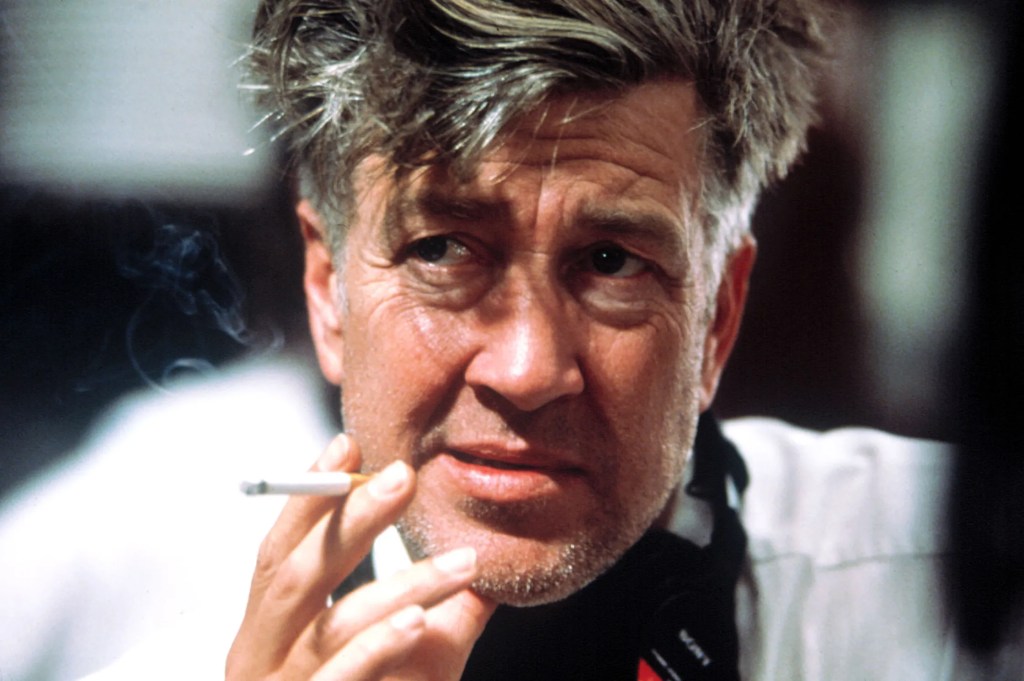
I had read that his health had gone from bad to worse but the news of David Lynch’s death still hit me hard. As a relentless inquirer into the nature of the ongoing American nightmare, his forebears include Melville and Poe, artists who were driven to take on the perplexities that went with a permanently unsettled society, perplexities that centered around the dilemma posed by Fred in Lost Highway: “It’s my head.” So, as Ahab had monomania in his head and various Poe characters had dread in their heads, Lynch’s characters are assailed not only by what is inside them but by the spirit world. In that invisible regard, Lynch was timeless. Although he used all manner of technology to make his art, he never quite believed in the modern age. His movies are like that drawing of Goya’s entitled “The Sleep of Reason,” where bats and owls hover over the dreamer’s head. (Owls actually figure importantly in Twin Peaks.) The modern age, based on a notion, however ludicrous, of workable reason that rationalizes the juggernaut of industrialism (to say nothing of the prospect of nuclear obliteration), had no mystifying charm for Lynch. He was after the deep mysteries and used whatever settings were available to him – Los Angeles, for instance, in all its now-seedy, now-upscale but always lit-up glory. No one penetrates those mysteries utterly but Lynch evoked them as well as anyone. One curiosity of his careful yet febrile art is his insistence that we are pilgrims in this world. He never lets you forget it.

Lynch came to movies via painting and art school and he was in love with cinema as moving pictures. One pleasure of watching Lynch’s work is how he grasped the genius of discontinuity that is built into cinema, a genius that few directors have understood as well as Lynch did. The inclination in a movie is to let the images tag along with the plot, since typically the focus is the doings of human beings who are both actors and spectators in their lives. We hear them speak and watch them move around. The camera chooses what to show us but one starts to feel with Lynch that any image, including one that is briefly seen, may have a life of its own. Many a frame contains something ominous yet beautiful. The images insist on their totem-like integrity and can make the action feel slightly off-kilter since they propose a crucial Lynch question: What are people doing here?
Lynch was as willing to tell a story as the next guy or gal but he had no interest in stories for the sake of stories. Part of his talent for inquiry was downright metaphysical, as in: What is the nature of reality? If each human consciousness is subjective, where does that leave us? If there is no one governing myth, is there any real agreement about anything? Are we, by definition, bound to be ships in the night? All those scenes in Lynch where, behind curtains or in enormous board rooms, decisions are made by very various powers deftly parody the notion of someone controlling everything in a god-like manner yet, at the same bewildering time, give credence to the notion. Someone is running the show somewhere but there are many different shows, a fact Lynch delighted in as he turned one character into another and one scenario into another. A shape shifter, he realized how identity, despite all the declarative human protests to the contrary, was very fragile. The woman at the beginning of Mulholland Drive who suffers amnesia from an auto accident could stand in for many Lynch characters. Nameless, she literally doesn’t know who she is.
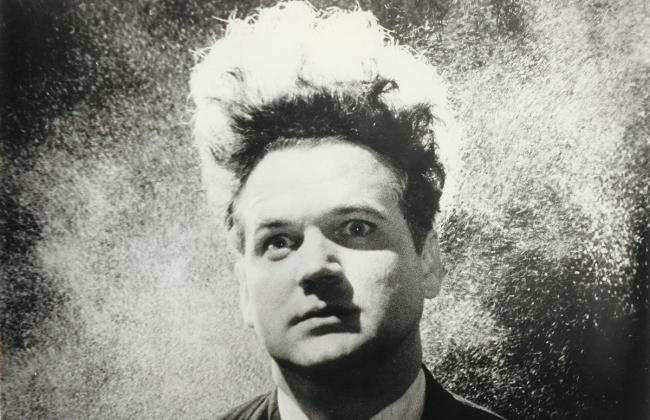
It’s hard to say that Lynch had what the world calls a “career,” when one considers the almost fortuitous nature of his body of work. Possibilities turned up or did not while one inquiry led to another, from the cult mannerism of Eraserhead through the serial saga of Twin Peaks and into the sheer darkness of Mulholland Drive (to say nothing of Inland Empire). Lynch was fond of detectives, straight sorts who use their limited, gum-chewing wits to face the inexplicable. As in Poe, the inexplicable turns out to be explicable but time and space have to be bent accordingly. Lynch was prone to showing us not so much scenes as visions. The governing myth has, as I noted, failed everyone, even if they don’t know it. Or, rather, they go with whatever myth is at hand – high school sweetheart, Hollywood star, doting father. Such myths have an ugly underside that Lynch studiously attended to. That Diane, who is assailed by hallucinations (as in Goya’s drawing), kills herself at the end of Mullholland Drive makes terrible sense. The forces arrayed against her, including her own desires, are too formidable. If one way or another, we come to terms with those forces by a shoulder shrug or outright fatalism, that is our seeming choice, a choice Lynch was only too glad to eviscerate.
Accordingly, a number of characters in Lynch are literally possessed. This strangeness, this weirdness that would have been comfortable in the world of Macbeth, is one prominent place where Lynch left the main highway. Then again, he may never have been on the highway to begin with. Leland (Lynch was a fiend for these staunchly American names), Laura Palmer’s murderous, abusive father, is possessed by an evil spirit but no one believes in possession and he goes free for a long time. How could the forces of law and order believe in such a thing given the mundane environment of Twin Peaks, one exemplified by that shiny yet well-used diner Lynch lovingly depicted where the locals hung out? Detectives are looking for clues and leads not for other dimensions of existence. Yet what we grandly call “life” was for Lynch a tissue of those dimensions, all those visions in all those heads colliding and then all those forces that are beyond us that we may intuit or may not but that can spook us at any moment.
In Lynch’s world, human beings are, so to speak, flammable animals whose electrical nature can be set off by a carnal gaze or by sinister forces that roam the ether and can turn one person into another with a mere zap. The zap can seem both hokey and terrifying. Since he was creating the rules, which meant the absence of rules, Lynch was always willing to take his chances when it came to probability. Why not? People can fall in and out of love in a matter of moments. People can change their minds. People can walk out doors and not come back. Finality is always dancing with transience except in Lynch’s world finality isn’t final. Yes, death occurs but the feeling Lynch promotes is how much keeps occurring and reoccurring with humans and with the planet. A sort of pageant is being performed, though it’s hard to say for whom.
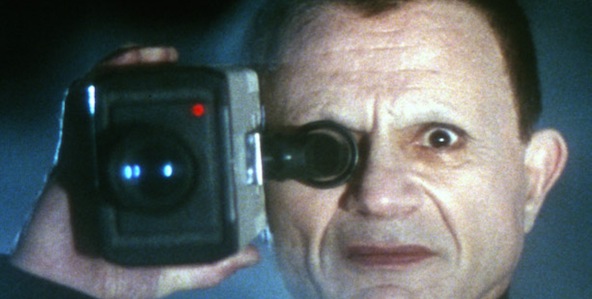
Amid the zaps and lurches, money and sex have their say. It’s almost to be expected that the amnesiac woman opens her purse after the accident and finds it stuffed with cash. Where did that come from? What was she doing with it? People are willing to kill for money, as witnessed by the scruffy contract killer in Mullholland Drive. Money connects people as a medium of exchange but each person is somehow holding onto a notion of money that can’t be exchanged and that has to do with whatever fantasies and grievances are floating around in their beleaguered yet grasping heads. Sex connects people but the story is similar in that each person remains separate. Every merging is temporary and the degree of the merging is bound to vary. Given the sense of the solitary that Lynch pursued, as when Fred is looking around the house at the opening of Lost Highway and of course not finding anything, his view of sex is skewed to the frustration side of the street. Then again ecstasy does happen but it is hard to fit into the scheme of daily doings – the world of the garage mechanics in Lost Highway. No surprise that people are plagued and haunted.
Lynch’s works feel almost ritualistic in that somewhere along the line a sacrificial murder is going to occur. Laura Palmer is offered up to the gods of ruined innocence. Camilla Rhodes is offered up to the gods of Hollywood. Her success and pending marriage are unbearable to her vengeful erstwhile lover. Something primal is being enacted, something that goes with those dark woods in Twin Peaks, something that humans partake of but that is much larger and deeper than human beings. Lynch was always keen to portray a humdrum moment – two detectives bantering – but some common tragedy was nearby. All those questions that people exhaust themselves with each day and that then turn into opinions go up in a kind of cosmic smoke in Lynch. We really don’t know much of anything. That certainly doesn’t stop us from acting out. All that we may be good for is drama. Like the writers, I cited at the beginning of this piece, Lynch was unafraid to go that place. Like them, he left us a remarkable legacy.
~
Baron Wormser has received the Frederick Bock Prize from Poetry and the Kathryn A. Morton Prize along with fellowships from Bread Loaf, the National Endowment for the Arts and the John Simon Guggenheim Memorial Foundation. In 2000 he was writer in residence at the University of South Dakota. Wormser founded the Frost Place Conference on Poetry and Teaching and also the Frost Place Seminar.
Copyright 2025 Baron Wormser
Discover more from Vox Populi
Subscribe to get the latest posts sent to your email.

Brilliant.
LikeLike